Have you ever wondered how fresh moringa leaves from a farm become the fine green powder that you can add to your morning smoothie, glass of water or everyday meals? Understanding this journey can help you make more informed decisions when choosing natural, farm-based food products.
Farm grown moringa powder is made from the leaves of the moringa tree, also known as Moringa oleifera. The leaves are harvested, cleaned, dried, ground into powder and packed for convenient use. However, the quality of the final product depends on how carefully each stage is managed.
For Indian households looking for convenient ways to include plant-based ingredients in their daily diet, moringa leaf powder offers a versatile option. It can be added to selected drinks and dishes without requiring extensive preparation.
At The Harbaaz Farm, the focus is on bringing Moringa Leaf Powder closer to consumers through a farm-to-home approach centred on careful handling and quality. In this guide, we explore how moringa powder reaches your home, what to consider when buying it, and how to use it in everyday life.
What Is Farm Grown Moringa Powder?
Moringa powder is produced by drying moringa leaves and grinding them into a fine powder. The moringa tree grows in tropical and subtropical regions, including India, where it is commonly known as the drumstick tree.
While the tree is also valued for its edible pods, moringa leaf powder is made specifically from its leaves.
Farm grown moringa powder refers to a product sourced through agricultural cultivation rather than being treated as an unidentified, generic ingredient. The term highlights the connection between the farm, the harvested leaves and the finished product. However, the phrase alone does not guarantee a particular farming method, organic certification or quality standard.
When selecting moringa powder, consumers should consider the source, processing, packaging, ingredient information and available product details.
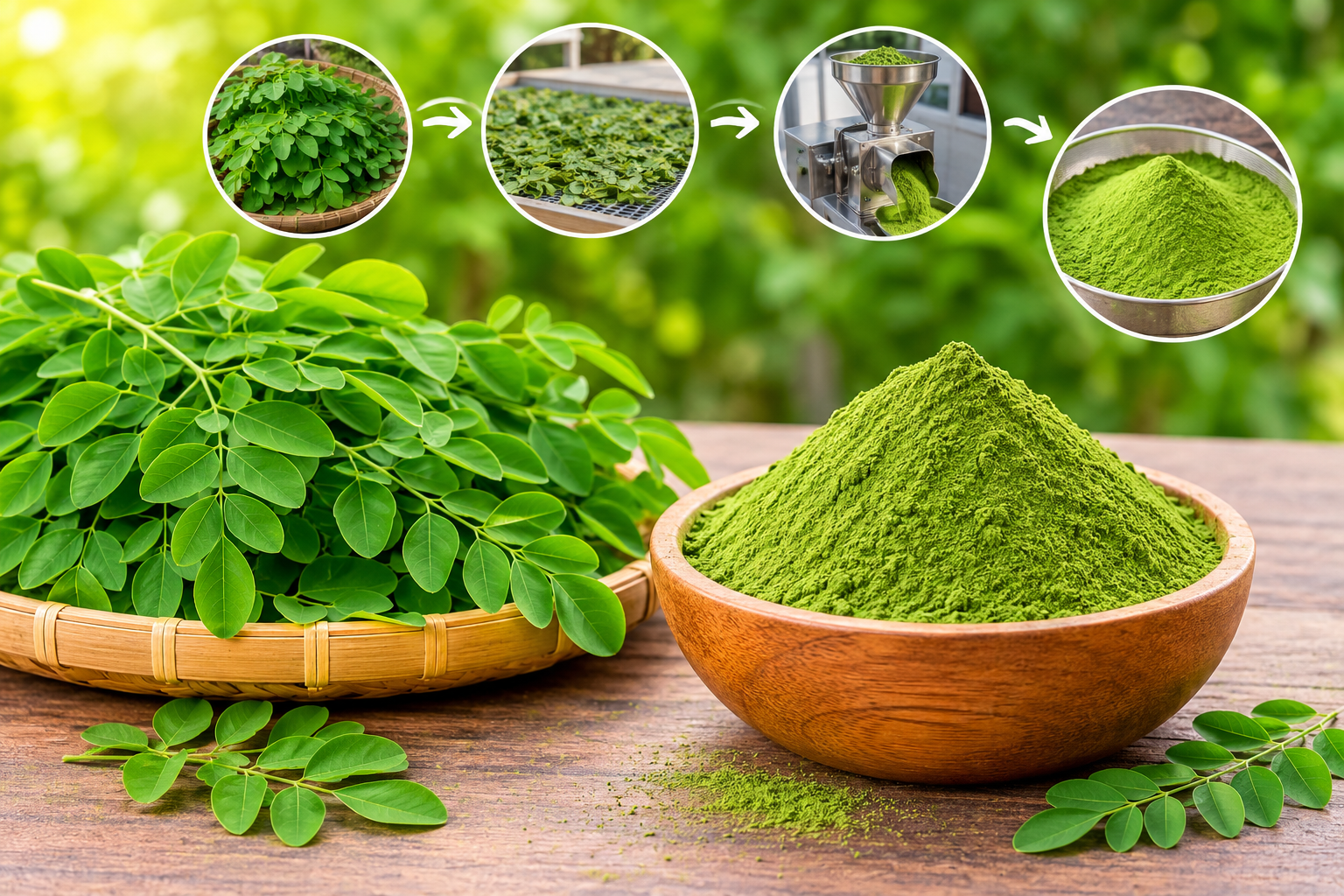
How Moringa Leaves Are Turned Into Powder
Fresh moringa leaves are perishable and require appropriate handling. Processing them into powder creates a convenient format that is easier to measure, store and incorporate into different recipes.
Moringa leaves naturally contain various plant nutrients, including vitamins, minerals and other compounds. The nutritional composition of the final powder depends on factors such as the leaves, growing conditions, drying method and processing.
It is important to remember that moringa powder is a food ingredient, not a substitute for a varied, balanced diet.
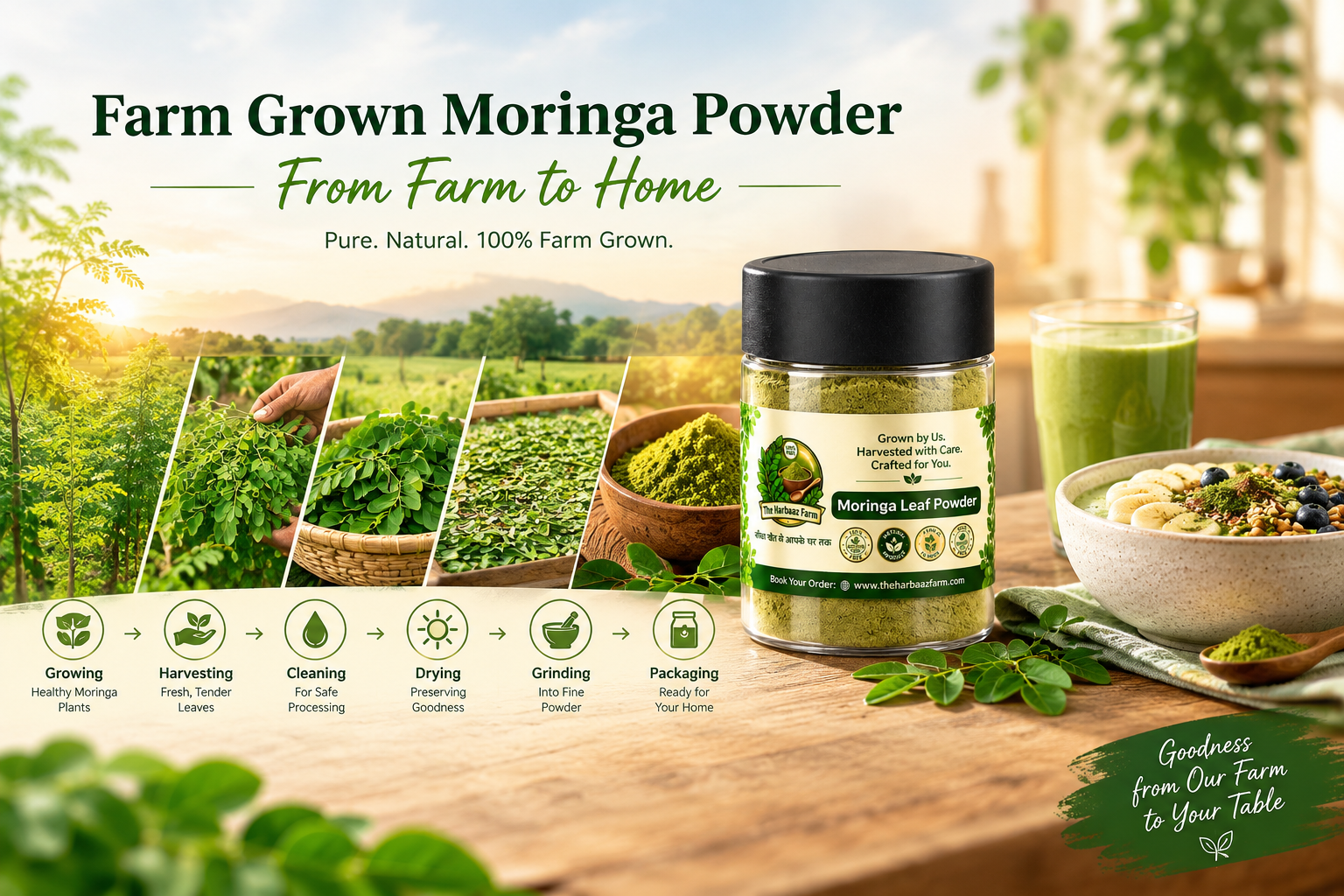
From Farm to Home: How Moringa Powder Is Made
The journey from fresh leaves to a finished pack involves several stages. Understanding these steps helps consumers appreciate why careful handling matters.
1. Growing and Selecting Moringa Leaves
The process begins with moringa cultivation. Healthy plant growth depends on suitable growing conditions, appropriate agricultural care and the management of pests and other crop-related challenges.
Leaves intended for food processing should be selected carefully. Their condition matters because damaged, contaminated or poorly handled leaves can affect the quality of the finished product.
For consumers, knowing who produces a product and whether the business provides clear information about its sourcing is a useful starting point.
2. Harvesting the Leaves
Once suitable leaves are ready, they are harvested with care. Harvesting practices should help minimise unnecessary damage and contamination.
The time between harvesting and further processing can also matter. Fresh leaves need appropriate handling to maintain their condition before they are cleaned and dried.
This is one reason a clearly explained farm-to-home process can help consumers understand how a product moves from its agricultural source towards the kitchen.
3. Cleaning Before Processing
Cleaning is an important food-handling step. Leaves must be handled appropriately to remove visible dirt and reduce contamination risks.
The process should use suitable water and hygienic handling practices. Clean working surfaces, equipment and utensils are also important throughout food production.
Consumers should remember that a product’s appearance alone cannot confirm whether it has been handled safely. Clear product information and appropriate food-safety practices are more meaningful indicators.
4. Drying the Leaves
After cleaning, the leaves are dried under suitable conditions before grinding.
Drying helps reduce moisture, making the leaves easier to process into powder. However, the method and conditions matter. Excessive heat, moisture exposure or unsuitable storage can affect colour, aroma and product quality.
The finished powder should be protected from moisture and contamination. Consumers should not assume that every green powder has been dried using the same method.
5. Grinding Into Fine Powder
Once adequately dried, the leaves are ground into a fine powder. Grinding makes moringa easier to mix into drinks, breakfast dishes and selected cooked recipes.
The texture may vary according to the processing method. A fine powder can be convenient for smoothies and water, although it may still settle at the bottom of a glass.
A natural, leafy aroma is common, and moringa generally has an earthy, green taste. Colour and aroma can offer useful observations, but neither can independently establish purity or safety.
6. Packaging for Everyday Use
The final stage is packaging. Proper packaging helps protect the powder during storage, transport and handling.
A well-presented food pack should provide useful information such as the product name, ingredients, net quantity, manufacturer or marketer details, batch information, applicable dates, storage instructions and relevant regulatory declarations.
Before buying, check that the seal is intact and the package is suitable for food storage.
At The Harbaaz Farm, the product journey is presented around harvesting, cleaning, drying, grinding and packaging. This farm-to-home approach helps explain the main stages involved in preparing its Moringa Leaf Powder.
What Makes Quality Moringa Powder Worth Considering?
Not all moringa powders necessarily have the same characteristics. Before purchasing, look beyond marketing descriptions and consider the following factors.
Clear Ingredient Information
Check whether the ingredient list identifies moringa leaf powder clearly. If you want a single-ingredient product, look for a declaration that matches that expectation.
Avoid assuming that a product is free from additives, fillers or other ingredients unless its packaging or reliable product information confirms this.
Suitable Colour and Aroma
Moringa leaf powder often has a green appearance and an earthy, leafy smell. However, natural variations can occur.
An unusual smell, visible moisture, mould or signs of contamination should not be ignored. Do not consume a product if you suspect that it has spoiled or been contaminated.
Packaging and Storage Information
Packaging should protect the powder from moisture and contamination. Check the seal, date markings and storage instructions before opening the pack.
Products that arrive damaged, unsealed or with unclear labelling should be treated cautiously.
Transparent Product Details
A trustworthy product listing should help buyers understand what they are purchasing. Look for clear information about the product, ingredients, quantity, storage and ordering process.
Terms such as “natural”, “farm fresh” or “premium” can describe a product’s positioning, but they should not replace specific, verifiable information.
Appropriate Food-Safety Information
In India, packaged food products must comply with applicable food-safety and labelling requirements. Consumers can check the relevant declarations on the package and verify available details where necessary.
Do not assume that a product is certified organic simply because it is farm-grown or described as natural.
How to Use Farm Grown Moringa Powder in Everyday Indian Meals
One practical advantage of moringa leaf powder is its versatility. You can add it to familiar foods and drinks without changing your entire meal routine.
If you are trying it for the first time, start with a small quantity and follow the product’s directions. Moringa has a distinct taste, so you may prefer to adjust the quantity according to your recipe and personal preference.
1. Add It to a Banana Smoothie
A banana smoothie is a convenient option for people who prefer mildly sweet drinks.
To prepare one:
Add a ripe banana and milk or your preferred smoothie base to a blender.
Add a small amount of moringa leaf powder.
Blend until smooth.
Taste and adjust the flavour if needed.
The banana can help balance moringa’s earthy taste. You can also experiment with other fruits that suit your preferences.
2. Mix It Into Water
For a simple drink, stir a small quantity of powder into water. Mix thoroughly and drink soon after preparation.
Moringa powder does not necessarily dissolve completely, so some particles may settle. Stir again if needed.
Adding lemon may change the flavour, but there is no need to treat the drink as a detox or medicinal preparation.
3. Add It to Dal and Vegetable Dishes
Moringa powder can be incorporated into everyday Indian cooking.
Try adding a small amount to dal, vegetable preparations, soups or sauces. Mix it in thoroughly and adjust the quantity to suit the dish.
For recipes involving cooking, follow appropriate food-handling practices and avoid assuming that the powder can replace fresh vegetables or other ingredients in a balanced meal.
4. Sprinkle It Over Breakfast Foods
You can mix moringa powder into plain yoghurt, oats or a breakfast bowl.
Start with a small quantity because the flavour can become noticeable quickly. Stir well to distribute the powder evenly.
5. Experiment With Suitable Homemade Recipes
Moringa powder can also be explored in selected homemade dips, savoury mixtures and other recipes.
The key is to use it as an ingredient rather than expecting it to transform the nutritional quality of an otherwise unbalanced meal.
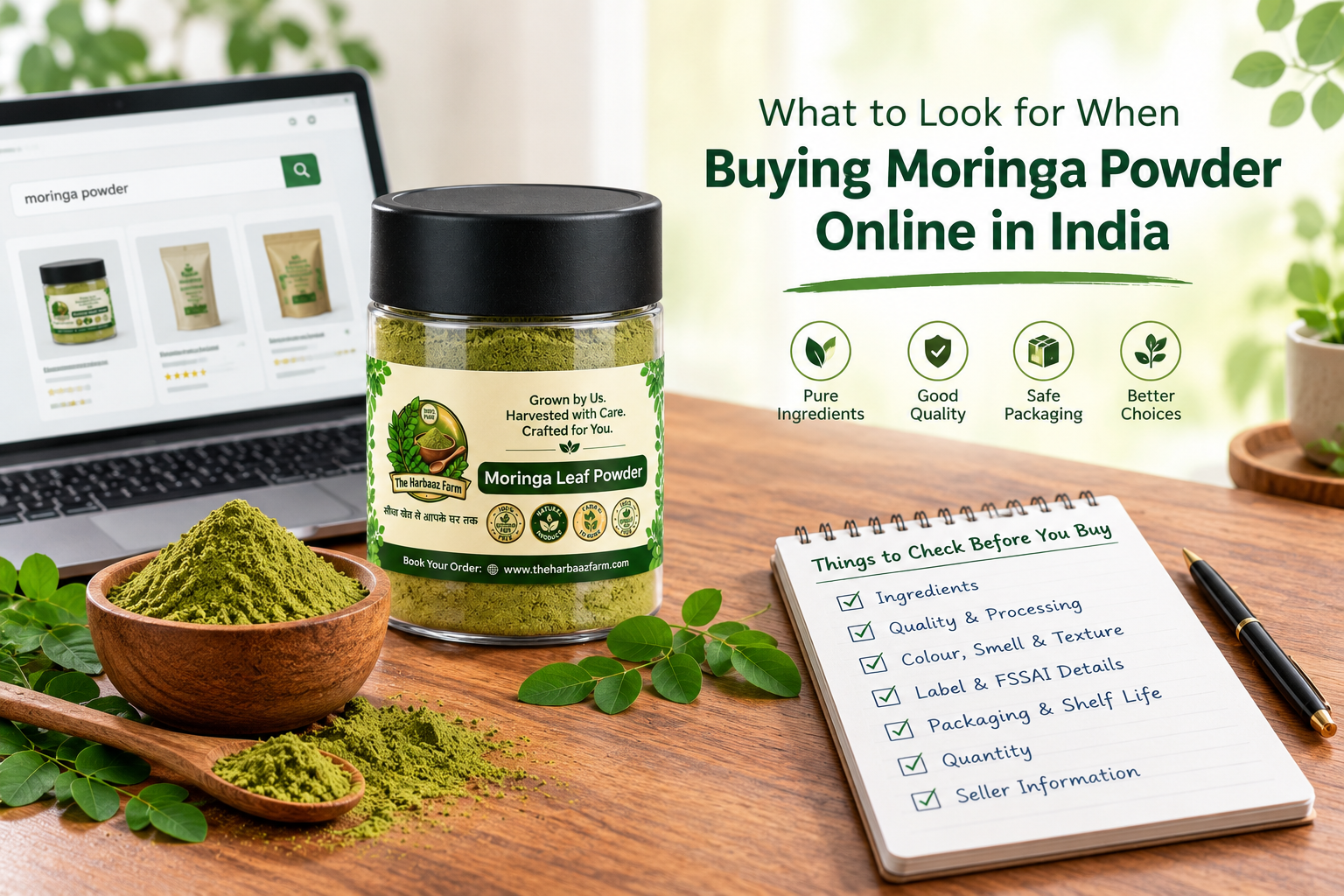
How to Choose Farm Grown Moringa Powder Online in India
Buying food products online is convenient, but it is important to review the available information before placing an order.
Use this checklist when comparing options:
| What to check | Why it matters |
|---|---|
| Product name and ingredients | Helps you understand what is included in the pack |
| Source and business details | Provides information about who is offering the product |
| Processing information | Explains how the leaves are handled and converted into powder |
| Net quantity | Helps you compare pack sizes |
| Packaging and dates | Helps you assess the condition and suitability of the product |
| Storage instructions | Helps you maintain product quality after delivery |
| Applicable food-labelling details | Supports informed purchasing and food-safety checks |
| Ordering and contact information | Makes it easier to ask questions before buying |
Do not rely on colour, price or promotional wording alone when deciding which product to purchase.
If you have questions about sourcing, ingredients or packaging, contact the seller and request clear information before ordering.
Explore Moringa Leaf Powder From The Harbaaz Farm
The Harbaaz Farm offers Premium Moringa Leaf Powder through its farm-to-home approach. Its product information describes a process involving harvesting, cleaning, drying, grinding and packaging.
If you are exploring farm-based food products for your household, you can review the product details directly on the official website before making a purchase.
Visit The Harbaaz Farm’s Moringa Leaf Powder product page to learn more and find the available ordering option.
How to Store Moringa Powder at Home
Once your pack arrives, suitable storage helps maintain its quality.
Follow these practical steps:
Keep it dry: Moisture can cause clumping and increase the risk of spoilage.
Close the pack properly: Seal it after every use to limit exposure to air and humidity.
Choose a cool, dry place: Avoid storing it near a stove, sink or other sources of heat and moisture.
Use a dry spoon: Prevent water from entering the pack during serving.
Follow the label: Respect the manufacturer’s storage directions and use-by or best-before information, as applicable.
Check before use: Discard the powder if you notice mould, unexpected moisture, an unusual smell or other signs of spoilage.
Refrigeration is not automatically necessary for every pack. Follow the specific product instructions and avoid introducing condensation or moisture.
Is Moringa Powder Suitable for Everyone?
Moringa leaf powder is a food product, but that does not mean every person should use it in the same way.
People with known allergies or those following medically prescribed diets should review the ingredients and seek appropriate professional guidance when needed.
If you take regular medication, have a medical condition, are pregnant or breastfeeding, or are considering giving moringa powder to a child, consult a qualified healthcare professional before using it regularly. This is especially important when there may be individual dietary or medication-related considerations.
Moringa powder should not replace prescribed treatment, professional medical advice or a balanced diet. Claims that it can prevent or cure diseases should be approached cautiously unless supported by appropriate scientific evidence.
For everyday use, follow the product directions, begin with a small amount if suitable for you, and pay attention to how your body responds.
Frequently Asked Questions
Farm grown moringa powder is a powder made from moringa leaves that are sourced through agricultural cultivation, then cleaned, dried and ground. The term describes the farm connection but does not automatically establish organic certification or a particular quality standard.
The usual process involves selecting and harvesting leaves, cleaning them, drying them under suitable conditions, grinding them into a fine powder and packaging the finished product.
Depending on your preferences and the product directions, you can add a small amount to smoothies, water, dal, soups, yoghurt or oats. Start with a small quantity and adjust according to taste and suitability.
Yes, moringa leaf powder can be mixed into a banana shake or smoothie. Blend a small amount with the other ingredients and adjust the quantity to suit your taste.
Keep it in a cool, dry place, close the pack securely after use and always use a dry spoon. Follow the storage instructions on the packaging and check for signs of spoilage before consumption.
Conclusion
Choosing moringa powder involves more than looking at a green-coloured product or reading promotional claims. Understanding the journey from harvesting and cleaning to drying, grinding and packaging gives you a better picture of how this everyday food ingredient is prepared.
When choosing farm grown moringa powder, pay attention to ingredient transparency, product information, packaging, storage guidance and the credibility of the seller. Use it in practical ways that suit your food preferences, whether in a banana smoothie, a glass of water or selected homemade dishes.
The Harbaaz Farm brings its Moringa Leaf Powder to consumers through a farm-to-home approach focused on careful processing and quality. If you would like to explore the product, visit the official website to review the available details.
Discover Moringa Leaf Powder from The Harbaaz Farm: Explore the product and ordering options.