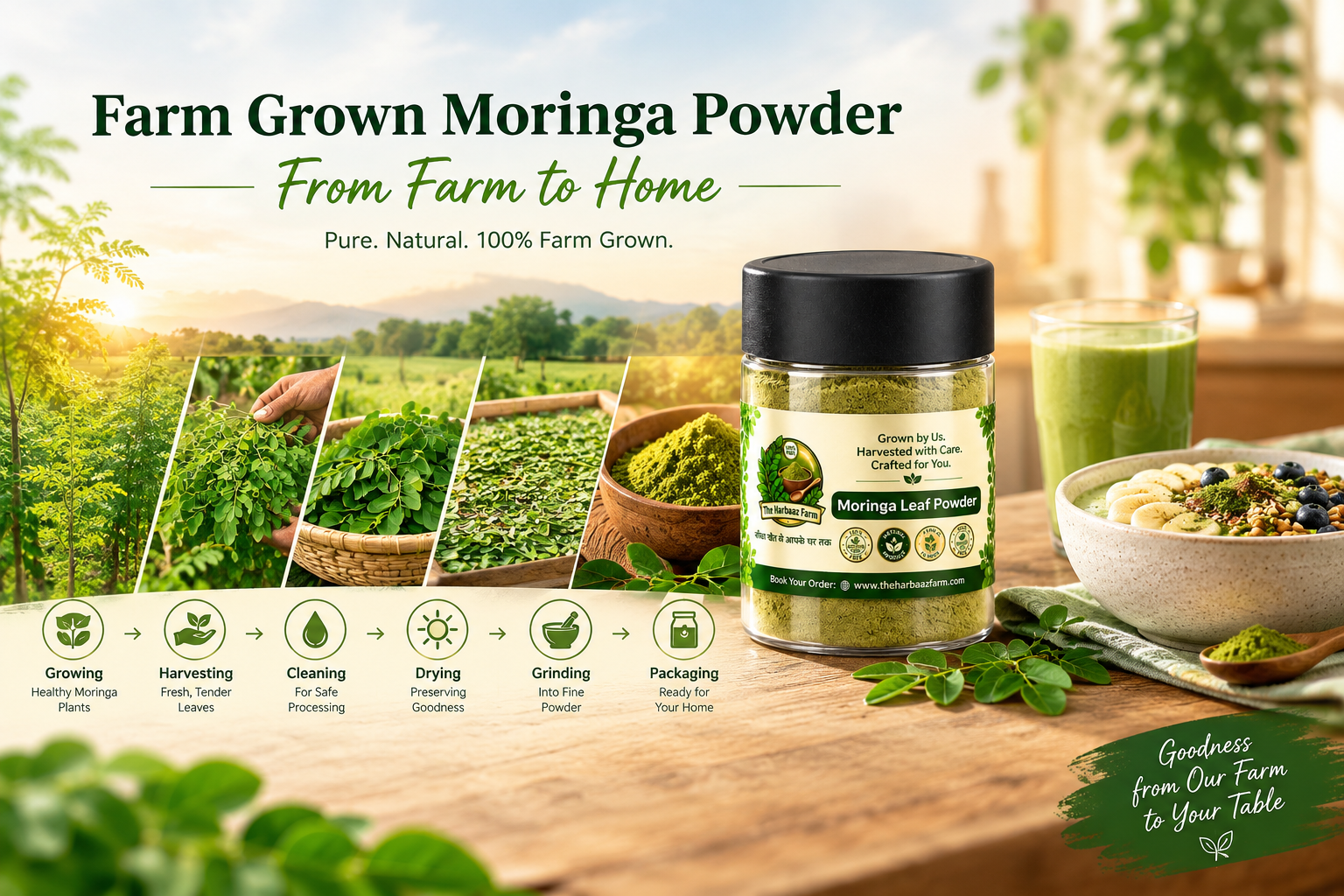
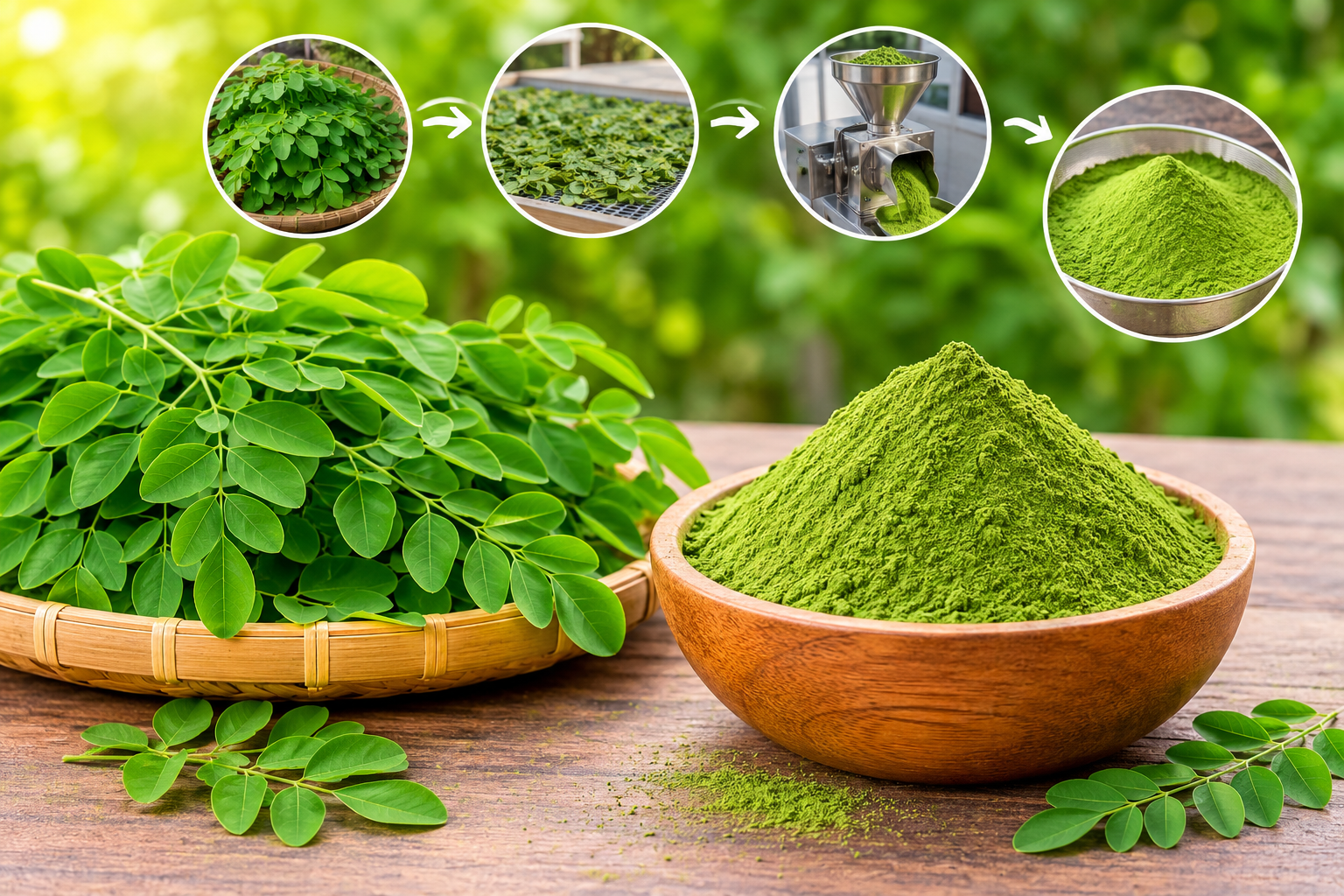
Moringa powder processing is the method of transforming fresh moringa leaves into a fine, dry powder that is convenient to store and use in everyday cooking. The process generally involves harvesting, sorting, washing, drying, grinding, sieving and hygienic packaging. Each step plays an important role in the final product’s colour, texture, aroma, moisture level and overall quality.
Moringa (Moringa oleifera), commonly associated with the drumstick tree in India, has long been used in Indian kitchens. While its pods are familiar ingredients in dishes such as sambar, its leaves can also be dried and converted into powder for convenient use throughout the year.
However, producing good-quality powder involves more than simply drying leaves and grinding them. Proper handling, controlled drying, clean processing equipment and suitable packaging all matter.
For consumers choosing natural food products, understanding moringa powder processing makes it easier to evaluate quality and make informed purchasing decisions. In this guide, we explain how the process works, what influences the finished powder and what Indian consumers should consider before buying it.
What Is Moringa Powder Processing?
Moringa powder processing is the sequence of food-handling and preparation steps used to convert fresh moringa leaves into a stable, powdered ingredient.
Fresh leaves contain considerable moisture. If they are stored or packed without appropriate drying, they can deteriorate quickly. Removing moisture under controlled conditions helps make the leaves suitable for milling and storage.
The main objectives of the process are to:
Select healthy, suitable moringa leaves.
Remove visible dirt, damaged leaves and unwanted plant material.
Reduce moisture through appropriate drying.
Produce a reasonably uniform powder.
Maintain cleanliness throughout processing.
Protect the finished powder from moisture and contamination.
The exact method can vary depending on the scale of production, available equipment, local weather and intended use. Small farm-based producers and larger food-processing units may use different machinery, but the basic principles remain similar.
Step-by-Step Guide to Moringa Powder Processing
Understanding each stage helps explain why careful production practices are essential for a consistent finished product.
1. Harvesting Fresh Moringa Leaves
The process begins with harvesting suitable leaves from healthy moringa plants. Freshness and careful handling at this stage can influence the quality of the final powder.
Leaves should be checked for visible damage, discolouration, insect infestation and signs of deterioration. Material that is unsuitable for food processing should be removed.
Harvested leaves should be transported to the processing area promptly rather than left in hot, humid or dirty conditions for extended periods.
Good harvesting practices include:
Selecting healthy, suitable leaves.
Avoiding visibly damaged or deteriorating material.
Using clean harvesting tools and containers.
Keeping harvested leaves away from soil and other contaminants.
Minimising delays before cleaning and processing.
The aim is to begin with sound raw material, because later processing cannot reliably correct poor-quality or contaminated leaves.
2. Sorting and Removing Stems
Once the leaves reach the processing area, they are inspected and sorted. Unwanted material, including damaged leaves, foreign matter and excessive stems, is removed.
Depending on the production method, leaflets may be separated from thicker stems before washing or during preparation.
This stage helps produce a more consistent raw material for drying. Thick stems and delicate leaflets can dry at different rates, so removing unsuitable plant material makes process control easier.
Sorting also helps reduce the likelihood of unwanted material entering the finished powder.
3. Washing the Leaves Properly
Washing is an important part of moringa powder processing because fresh leaves may carry dust, soil and other surface contaminants.
The leaves should be washed using clean, potable-quality water in a hygienic area. Water quality matters because contaminated water can introduce additional microorganisms rather than improve cleanliness.
After washing, the leaves should be drained properly. Excess water can increase the drying time and make it harder to achieve uniform moisture levels.
Good washing practices include:
Using clean water suitable for food preparation.
Keeping washing containers and surfaces hygienic.
Avoiding unnecessary handling with unclean hands.
Removing visible dirt without damaging the leaves.
Draining the leaves before drying.
Washing is not the same as sterilisation. It helps remove surface dirt, but it does not guarantee that all microorganisms, pesticide residues or chemical contaminants have been eliminated.
4. Drying the Moringa Leaves
Drying is one of the most important stages in moringa powder processing. It removes moisture from the cleaned leaves and prepares them for grinding.
Several methods are used, including shade drying, solar drying and mechanical hot-air drying. The appropriate choice depends on production capacity, climate, equipment and quality requirements.
Shade drying: Leaves are spread in a clean, protected area with good airflow. They must be shielded from dust, insects, animals and other sources of contamination. Drying conditions can be difficult to control when humidity is high.
Solar drying: A suitable solar dryer uses sunlight and airflow while providing more protection from the environment than open-air drying. Its performance still depends on weather and dryer design.
Mechanical drying: Tray dryers and other controlled drying systems allow producers to manage temperature and airflow more consistently. They can be particularly useful when processing larger quantities or maintaining repeatable production conditions.
The drying temperature and duration should be selected according to the equipment, leaf characteristics and desired final moisture level. There is no single temperature or drying time that is suitable for every production setup.
Overheating may negatively affect colour, aroma and certain heat-sensitive compounds. Inadequate drying, on the other hand, can leave too much moisture in the leaves.
The objective is to dry the leaves sufficiently and uniformly without unnecessarily compromising their quality.
5. Checking the Dried Leaves
Before grinding, the dried leaves should be checked to confirm that they are suitable for milling.
They should be sufficiently dry, free from visible foreign matter and handled in a clean environment. A commercial processor may use moisture testing and other quality checks instead of relying solely on appearance or touch.
This is an important control point in moringa powder processing because moisture that remains in the material can contribute to deterioration during storage.
Dried leaves should also be protected from humid air while waiting to be ground. Leaving them exposed can allow them to absorb moisture again.
6. Grinding the Dried Leaves Into Powder
Once the leaves are adequately dried, they are ground using suitable food-processing equipment.
Small-scale producers may use an appropriate grinder, while commercial units often use pulverisers or milling equipment designed for dried plant material.
Grinding reduces the dried leaves into smaller particles, producing the familiar green powder. The fineness depends on the equipment, milling settings and intended application.
A good grinding process aims to achieve:
A reasonably uniform particle size.
Minimal contamination from equipment.
Consistent colour and texture.
Controlled handling of the ground material.
Reduced exposure to heat, moisture and the surrounding environment.
Grinding equipment should be clean, maintained properly and suitable for food processing. Excessive heat generated during milling can affect product characteristics, so equipment selection and operating conditions deserve attention.
7. Sieving for a Consistent Texture
After grinding, the powder may be passed through a suitable food-grade sieve.
Sieving separates larger particles from finer material and helps create a more consistent texture. Oversized particles may be reground where appropriate.
The ideal fineness depends on how the powder will be used. A fine powder may blend more easily into drinks or certain recipes, while other applications may tolerate a coarser texture.
Sieving does not automatically make a product safer. Food safety still depends on the quality of the raw leaves, hygienic handling, effective process controls and appropriate testing.
8. Quality Checks Before Packaging
Before the finished powder is packed, it should undergo suitable quality checks.
These checks may include:
Appearance: Checking for unusual discolouration and visible foreign material.
Aroma: Looking for fresh, characteristic leaf notes rather than musty or rancid odours.
Texture: Assessing whether the powder is reasonably uniform.
Moisture: Verifying that the product meets the applicable specification.
Microbiological quality: Testing for relevant microorganisms where appropriate.
Contaminants: Assessing risks such as pesticide residues, heavy metals and other contaminants according to the applicable requirements.
Commercial testing should be based on the product specification, applicable Indian food regulations and a suitable sampling plan. Appearance and smell alone cannot establish that a food product is microbiologically safe or free from chemical contaminants.
In India, food businesses should follow the applicable Food Safety and Standards Authority of India (FSSAI) requirements for their activities and product category.
9. Hygienic Packaging and Sealing
Packaging is the final stage of moringa powder processing and plays a major role in maintaining quality after production.
The powder should be packed in suitable, food-grade packaging that protects it from moisture and contamination. A well-sealed moisture-barrier pouch or appropriate airtight container can help reduce exposure to humid air.
Packaging should be carried out in a clean area, with minimal unnecessary handling.
For consumers, useful label information includes:
Product name and ingredient information.
Net quantity.
Batch or lot identification.
Date marking and best-before information, as applicable.
Storage instructions.
Manufacturer or marketer details.
Relevant FSSAI licence or registration information, as applicable.
Check the actual product label rather than assuming that every brand uses the same process or has the same shelf life.
The Complete Moringa Powder Processing Flow
The production sequence can be summarised as follows:
| Processing stage | Main purpose |
|---|---|
| Harvesting | Obtain suitable fresh leaves |
| Sorting | Remove damaged leaves and unwanted material |
| Washing | Remove surface dirt using clean water |
| Draining | Remove excess surface water |
| Drying | Reduce moisture under suitable conditions |
| Inspection | Check the dried material before milling |
| Grinding | Convert dried leaves into powder |
| Sieving | Improve particle-size consistency |
| Quality checks | Assess product characteristics and safety |
| Packaging | Protect the finished powder during storage and distribution |
Each stage contributes to the finished product. Skipping important controls can affect consistency, shelf stability or food safety.
Factors That Influence the Quality of Moringa Powder
The quality of moringa leaf powder depends on several connected factors, not just the grinding process.
Raw Material Quality
Healthy, suitable leaves provide a better starting point than damaged or deteriorating material. Transparent sourcing and careful harvesting are therefore important considerations.
Drying Conditions
Drying influences colour, aroma, moisture and the retention of certain compounds. Excessive heat and uneven drying can affect the final product.
Hygiene and Equipment
Clean processing areas, appropriate equipment and careful handling help reduce contamination risks. Good manufacturing and hygiene practices should be followed throughout production.
Packaging and Storage
Even well-processed powder can deteriorate if it absorbs moisture or is exposed to unsuitable storage conditions. Packaging should be selected to protect the product throughout its intended shelf life.
Batch Consistency
Reliable processing aims to produce similar results from batch to batch. Documented procedures and appropriate checks help identify variations before the product reaches consumers.
These considerations explain why responsible moringa powder processing involves the entire journey from leaf selection to final packaging.
Why Moringa Powder Is Convenient for Indian Households
Fresh moringa leaves are used in many Indian food traditions, but handling fresh leaves every time is not always convenient. Powder offers an alternative that is easier to portion and incorporate into different recipes.
Moringa leaf powder can be used in small quantities in:
Dal, soups and vegetable preparations.
Curries and savoury sauces.
Chutneys and suitable homemade food mixes.
Smoothies and other beverages.
Yoghurt or breakfast bowls.
Its flavour is distinctly green and earthy, so it may work better in some dishes than others. Start with a small quantity and adjust according to taste and the product’s usage instructions.
Moringa powder can contribute plant-derived nutrients to the diet, but its nutritional composition varies with the leaves and processing conditions. It should be treated as a food ingredient, not as a substitute for a varied diet or prescribed medical treatment.
How to Choose Good-Quality Moringa Powder in India
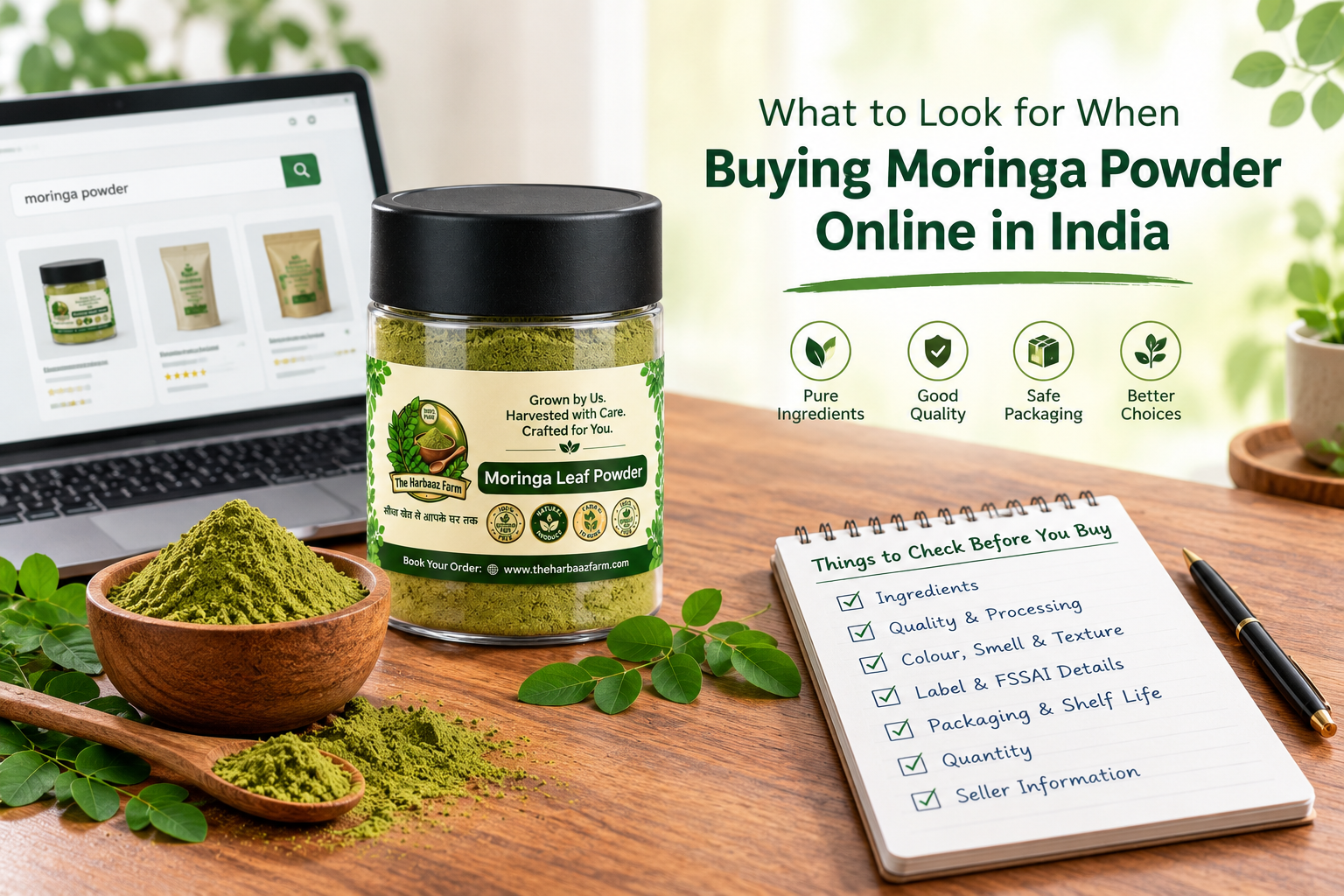
Understanding moringa powder processing can help you make a more informed purchase. When comparing products online or in stores, consider the following points.
1. Check the ingredient list. If you want plain leaf powder, look for a product whose declared ingredients match that preference.
2. Read the label carefully. Review the net quantity, batch information, date marking, storage instructions and manufacturer or marketer details.
3. Consider packaging quality. A properly sealed, food-grade pack helps protect the powder from moisture and external contamination.
4. Look for transparent product information. Clear sourcing and processing descriptions help consumers understand what they are purchasing.
5. Avoid exaggerated health claims. Be cautious of products claiming to cure diseases, guarantee weight loss or replace prescribed medicines.
6. Review the seller and product page. Check the available product details, contact information and purchasing terms before ordering.
7. Store it correctly after opening. Close the pack promptly after use and keep it in a cool, dry place, away from direct sunlight and moisture.
Green colour alone does not prove purity, nutritional quality or safety. Likewise, a fine texture does not guarantee that the powder has been produced under hygienic conditions.
How The Harbaaz Farm Approaches Moringa Leaf Powder
The Harbaaz Farm is a farm-based food brand focused on bringing natural farm products closer to Indian households. According to its website, the brand grows and processes moringa leaves, with attention to harvesting, cleaning, drying, grinding and packaging.
Its product range includes Premium Moringa Leaf Powder, intended as a convenient ingredient for everyday use.
For consumers interested in understanding the journey from farm to finished product, the brand’s website provides an opportunity to explore the product and its available information.
You can learn more about The Harbaaz Farm’s Premium Moringa Leaf Powder and review the product details before deciding whether it suits your household’s preferences.
As with any food purchase, check the current product label and available information for ingredient details, storage guidance and applicable food-safety information.
Common Mistakes to Avoid During Moringa Powder Processing
Even a straightforward process can produce inconsistent results if important controls are overlooked.
Using poor-quality leaves: Damaged or contaminated leaves may compromise the finished product.
Drying unevenly: Thick layers, inadequate airflow or changing humidity can result in uneven moisture removal.
Grinding insufficiently dried leaves: Excess moisture can contribute to clumping and deterioration.
Ignoring equipment hygiene: Dirty machinery and handling surfaces can introduce contaminants.
Leaving powder exposed: Ground powder can absorb moisture from humid air.
Using unsuitable packaging: Poorly sealed packs may allow moisture and contamination to enter.
Relying only on appearance: Visual inspection cannot replace appropriate testing and process controls.
A well-managed process focuses on prevention, monitoring and consistency at every stage.
Frequently Asked Questions
Moringa powder processing is the method of converting fresh moringa leaves into fine powder through harvesting, sorting, washing, drying, grinding, sieving, quality checks and packaging.
First, suitable leaves are harvested and cleaned. They are then dried under appropriate conditions, checked for suitability, ground into a fine powder and packed in suitable food-grade packaging.
Common methods include shade drying, solar drying and mechanical drying. The choice depends on production scale, weather, equipment and quality requirements. Controlled conditions help achieve more consistent drying.
Drying reduces the moisture content of fresh leaves, making them suitable for grinding and helping limit moisture-related deterioration during storage. The final moisture level should meet the applicable product specification.
Check the ingredient list, packaging seal, date marking, storage instructions and available product information. A fresh, characteristic aroma and reasonably uniform texture are useful observations, but they cannot independently confirm food safety.
Conclusion
Moringa powder processing involves much more than drying and grinding leaves. Selecting suitable raw material, washing it properly, controlling moisture during drying, maintaining equipment hygiene, grinding consistently and using protective packaging all contribute to the quality of the finished product.
For Indian consumers, understanding these steps provides a practical starting point when comparing moringa leaf powder products. Look beyond colour and marketing claims, and pay attention to ingredient information, packaging, traceability where available and responsible food-handling practices.
The Harbaaz Farm offers Premium Moringa Leaf Powder for consumers interested in a convenient way to incorporate this traditional plant ingredient into everyday meals.
Explore The Harbaaz Farm’s Premium Moringa Leaf Powder to learn more about the product and decide whether it is right for your kitchen.