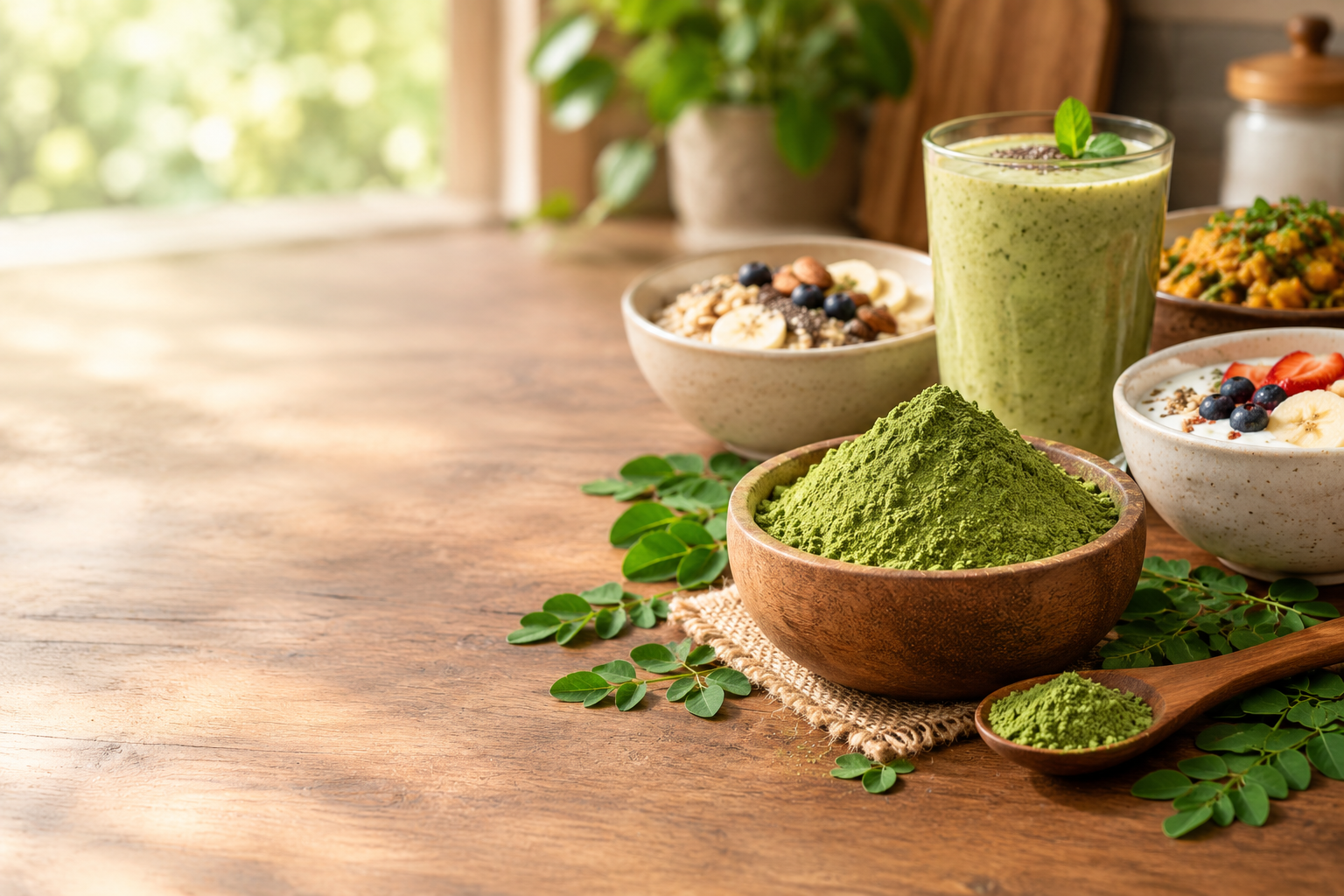
How to Use Moringa Powder in Your Daily Food Routine If you have recently bought moringa leaf powder, one of the first questions you may have is how to use moringa powder in your everyday diet. Should you mix it with water, add it to a smoothie, or use it in normal Indian meals? The good news is that there is no complicated routine to follow. Moringa powder can be added to a variety of familiar foods and drinks, including smoothies, yoghurt, oats, soups, curries and other recipes. The best approach is to start with small quantities and find a method that suits your taste and daily habits. Moringa, scientifically known as Moringa oleifera, is commonly associated with the drumstick tree and is widely used as a food ingredient in India. Moringa leaves contain naturally occurring nutrients and plant compounds, although their exact nutritional composition can vary depending on growing conditions, processing and storage. If you are searching for how to use moringa powder in a practical way, this guide covers simple everyday options, storage advice, buying considerations and common questions. What Is Moringa Powder? Moringa powder is made by drying moringa leaves and grinding them into a fine powder. Because the leaves are processed into a powder, they can be conveniently incorporated into foods and drinks. The flavour is usually earthy and distinctly green. This is important when learning how to use moringa powder, because the taste can be noticeable if you consume it on its own. The Harbaaz Farm describes its moringa powder as 100% pure moringa leaf powder and says its process includes cultivation, harvesting, processing and packaging. Its website also presents several everyday uses, including drinks, meals, breakfast foods and smoothies. theharbaazfarm.com Rather than thinking of moringa powder as something that requires a completely new diet, it is easier to treat it as an ingredient that can be added to foods you already enjoy. How to Use Moringa Powder: 7 Easy Everyday Ideas If you are wondering how to use moringa powder without making major changes to your routine, start with familiar foods. Here are seven practical options. 1. Mix Moringa Powder With Water The simplest way to use moringa powder is to mix it with water. Add a small amount to a glass of water and stir thoroughly. You can also add lemon if you prefer a more refreshing flavour. This method requires almost no preparation, making it convenient for people with busy mornings. However, the earthy flavour can be stronger when moringa is consumed with plain water. If you are trying how to use moringa powder for the first time, start with a small quantity so you can become familiar with the taste. 2. Add It to a Morning Smoothie A smoothie is one of the easiest ways to incorporate moringa into your breakfast. Blend moringa powder with ingredients such as: Banana Mango Apple Curd or yoghurt Milk or a suitable plant-based alternative Other fruits you normally enjoy Fruit can help balance the earthy flavour of moringa. The Harbaaz Farm itself lists smoothies among its suggested ways to enjoy its moringa powder. theharbaazfarm.com For people searching how to use moringa powder in a convenient breakfast, a smoothie can be particularly practical because everything can be blended together in minutes. 3. Stir It Into Curd or Yoghurt Curd is a familiar food in many Indian households and can be another easy option. Mix a small amount of moringa powder into plain curd or yoghurt. You can combine it with fruit, oats or other ingredients for a simple breakfast or snack. The creamy texture helps distribute the powder throughout the serving. This is also a useful choice if you do not enjoy drinking moringa mixed with water. When deciding how to use moringa powder, choosing foods you already enjoy can make the routine much easier to maintain. 4. Add It to Oats or a Breakfast Bowl If you regularly eat oats, yoghurt bowls or similar breakfasts, moringa powder can be incorporated into them. Stir a small quantity into cooked oats or sprinkle it into a yoghurt-and-fruit bowl. The key is flavour balance. Moringa has a distinctive taste, so adding a large quantity is not necessary simply because you want to include it in your breakfast. Once you understand how to use moringa powder in your preferred breakfast, you can experiment with different combinations according to your taste. 5. Add It to Soups Moringa powder can also be incorporated into suitable soups. Try adding a small quantity to vegetable soup, lentil-based soup or another savoury preparation. The earthy flavour can work well with vegetables, herbs and spices. If you are preparing soup for your family, it can be useful to test the powder in a single portion first. This helps you determine whether everyone enjoys the flavour before adding it to the entire recipe. For anyone learning how to use moringa powder in savoury food, soups are a straightforward starting point. 6. Mix It Into Curries and Other Meals Indian cooking offers plenty of opportunities to experiment with powdered leafy ingredients. You can try adding a small amount of moringa powder to suitable curries, gravies or vegetable preparations. It can work particularly well in dishes that already contain herbs, spices and other strong flavours. However, moringa powder should complement the dish rather than overpower it. The Harbaaz Farm specifically suggests using its moringa powder in soups, curries, sauces and other dishes. theharbaazfarm.com This makes everyday meals another practical answer to how to use moringa powder without creating a separate recipe every day. 7. Add It to Chutneys, Sauces or Dips Chutneys, sauces and dips can provide another creative option. You can experiment by adding a small quantity of moringa powder to homemade preparations containing ingredients such as coriander, mint, lemon or selected spices. Because these foods already have strong flavours, they can help balance moringa’s earthy taste. When exploring how to use moringa powder, there is no need to limit yourself to drinks. Experimenting with familiar
Moringa Leaf Powder: What Is It and How Is It Made?
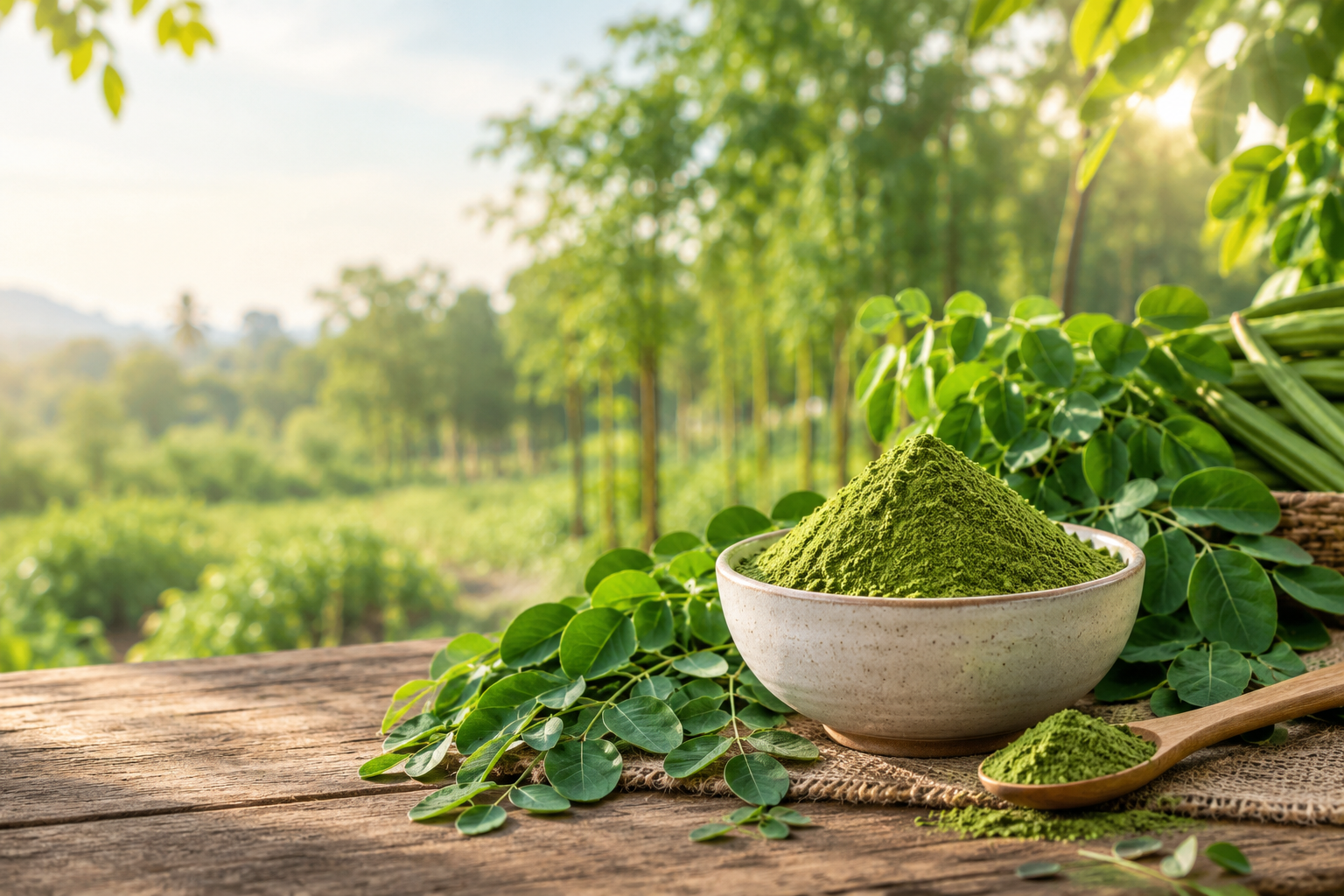
Moringa Leaf Powder: What Is It and How Is It Made? Moringa has become increasingly familiar in Indian kitchens, especially among people interested in natural, plant-based foods. But while fresh moringa leaves are traditionally used in many parts of India, moringa leaf powder offers a convenient way to store and use the leaves for longer. So, what exactly is moringa leaf powder? How are fresh moringa leaves turned into a fine green powder? And what should you look for when buying it? Moringa leaf powder is made by cleaning and drying the leaves of Moringa oleifera, followed by grinding the dried leaves into a powder. The quality of the final product depends on factors such as the condition of the leaves, cleanliness, drying method, moisture control, grinding and storage. In this guide, we explore how moringa leaf powder is made, what makes a good-quality product, how it can be used in everyday food and what Indian consumers should consider before buying it. What Is Moringa Leaf Powder? Moringa leaf powder is a dried and finely ground form of moringa leaves from the Moringa oleifera plant. The plant is commonly known in India as the drumstick tree or moringa tree. Fresh moringa leaves contain a considerable amount of moisture, which makes them perishable. Drying removes much of this moisture, making the leaves easier to store and process. The dried leaves can then be milled into a green powder. Unlike moringa seed powder or drumstick pod powder, moringa leaf powder is specifically made from the leaves. This distinction matters because different parts of the moringa plant have different characteristics and culinary uses. Moringa leaves have also been studied as a food ingredient because they contain various nutrients and naturally occurring plant compounds. However, their composition can vary depending on factors such as growing conditions, maturity and processing methods. How Is Moringa Leaf Powder Made? Turning fresh moringa leaves into a stable powder may sound simple, but each stage can influence the quality of the finished ingredient. A typical process involves several steps. 1. Selecting Fresh Moringa Leaves The process begins with suitable moringa leaves. Fresh, healthy-looking leaves are generally preferred because damaged, decayed or heavily contaminated plant material is not appropriate for food processing. At this stage, unwanted materials such as stems, damaged leaves, soil particles and other foreign matter can be removed. The objective is simple: start with clean and suitable raw material. 2. Cleaning and Sorting After harvesting, the leaves need to be sorted and cleaned. Sorting helps remove: Damaged or discoloured leaves Excess stems Foreign particles Soil and other visible contaminants Unwanted plant material Good hygiene is particularly important because a dried food product is not automatically free from microorganisms. Research examining moringa leaf powder has identified food-safety considerations associated with microbial contamination and emphasised hygienic processing and appropriate moisture control. 3. Drying the Leaves Drying is one of the most important stages in making moringa leaf powder. Fresh leaves contain substantial moisture. Removing that moisture helps make the leaves suitable for longer storage and grinding. There are several possible approaches to drying, including controlled air drying, tray drying, sun drying and other food-processing methods. However, drying is not simply about making the leaves “dry”. Temperature, time, airflow and environmental conditions can all influence the characteristics of the final product. Research has found that different drying methods can affect compounds present in moringa leaves, including phenolics, flavonoids and vitamin C. This is one reason processing conditions matter when evaluating the quality of a finished product. 4. Removing Excess Moisture Once the leaves have been dried, they need to be sufficiently dry before grinding and packing. Residual moisture can affect powder quality and storage stability. If moisture enters or remains in a dried food product, it can contribute to undesirable changes and may increase food-safety concerns. For consumers, this is one reason proper packaging and storage instructions are important when purchasing moringa leaf powder. 5. Grinding the Dried Leaves The dried leaves are then ground into a fine powder. Commercial food processing may use suitable milling equipment to achieve a consistent particle size. Research on moringa leaf flour, for example, has used grinding followed by sieving to obtain a relatively fine powder. The fineness of the powder can influence how easily it mixes into foods and drinks. A good powder should generally have a reasonably consistent texture rather than containing large pieces of dried leaves or excessive foreign material. 6. Sieving and Quality Checking After grinding, the powder can be sieved to achieve a more uniform texture. Depending on the production setup, quality checks may also consider: Colour and appearance Aroma Texture Moisture Foreign matter Packaging condition Microbiological quality The exact checks used depend on the food-processing operation and applicable food-safety requirements. 7. Packing and Storage The final step is packaging the powder in a way that protects it from moisture, contamination, light and unnecessary exposure to air. Once opened, consumers should keep the pack properly sealed and follow the manufacturer’s storage instructions. A cool, dry place away from direct sunlight is generally appropriate for dry food powders unless the product label specifies different storage conditions. Why Does the Drying Method Matter? One of the most interesting parts of producing moringa leaf powder is that drying can affect the properties of the leaves. Different research studies have compared drying techniques and found differences in the retention of naturally occurring compounds. For example, one study comparing freeze-drying, air drying, sun drying and oven drying found differences in several measured phytochemicals and antioxidant-related properties. This does not mean that consumers need to assume one particular drying method is always suitable for every commercial product. Processing equipment, scale, hygiene, energy use, environmental conditions and the desired product characteristics all matter. The important takeaway is that how moringa leaves are processed matters just as much as the raw ingredient itself. What Does Good-Quality Moringa Leaf Powder Look Like? When shopping for moringa leaf powder in India, appearance alone should not be your only