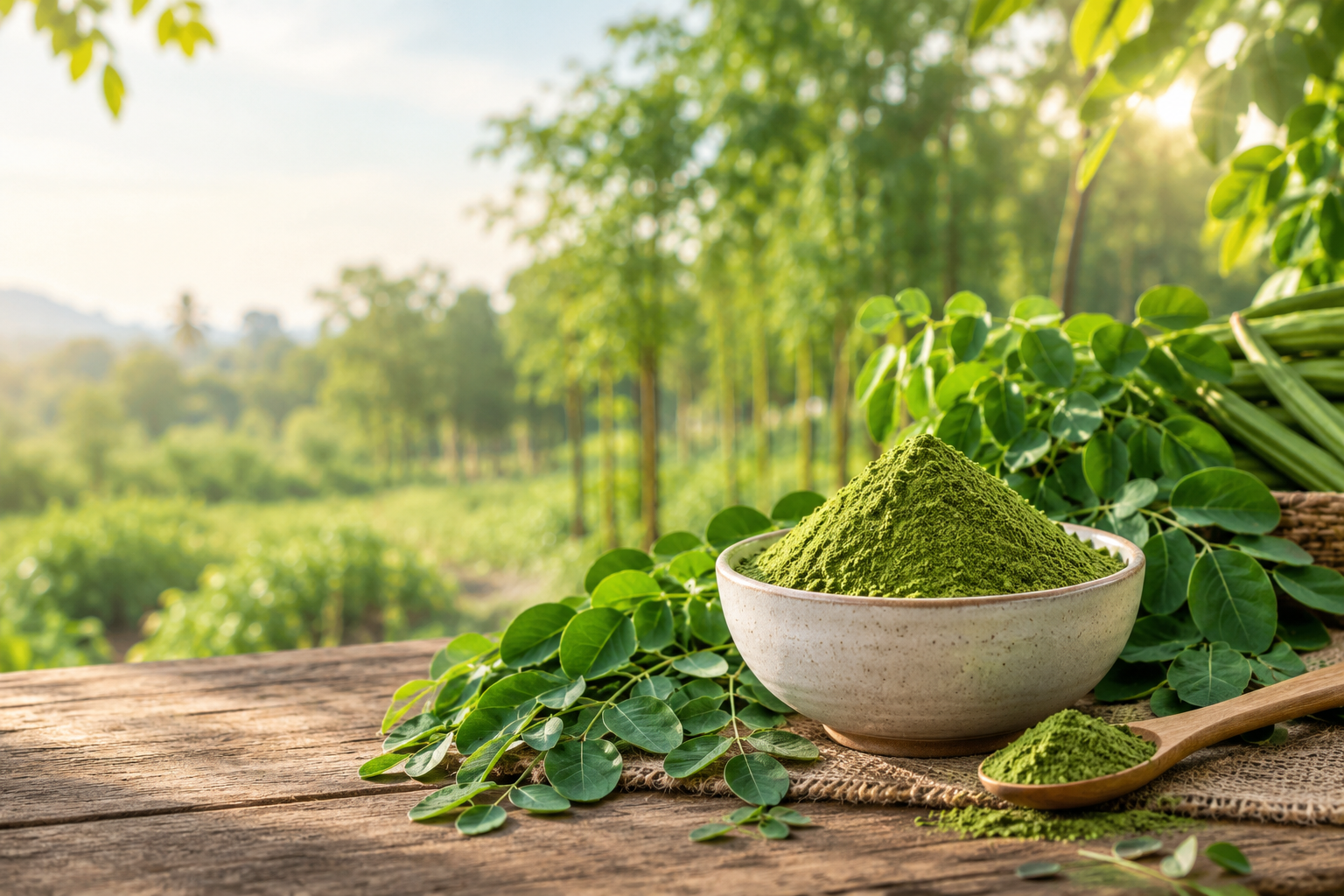
Moringa Leaf Powder: What Is It and How Is It Made?
Moringa has become increasingly familiar in Indian kitchens, especially among people interested in natural, plant-based foods. But while fresh moringa leaves are traditionally used in many parts of India, moringa leaf powder offers a convenient way to store and use the leaves for longer.
So, what exactly is moringa leaf powder? How are fresh moringa leaves turned into a fine green powder? And what should you look for when buying it?
Moringa leaf powder is made by cleaning and drying the leaves of Moringa oleifera, followed by grinding the dried leaves into a powder. The quality of the final product depends on factors such as the condition of the leaves, cleanliness, drying method, moisture control, grinding and storage.
In this guide, we explore how moringa leaf powder is made, what makes a good-quality product, how it can be used in everyday food and what Indian consumers should consider before buying it.
What Is Moringa Leaf Powder?
Moringa leaf powder is a dried and finely ground form of moringa leaves from the Moringa oleifera plant. The plant is commonly known in India as the drumstick tree or moringa tree.
Fresh moringa leaves contain a considerable amount of moisture, which makes them perishable. Drying removes much of this moisture, making the leaves easier to store and process. The dried leaves can then be milled into a green powder.
Unlike moringa seed powder or drumstick pod powder, moringa leaf powder is specifically made from the leaves. This distinction matters because different parts of the moringa plant have different characteristics and culinary uses.
Moringa leaves have also been studied as a food ingredient because they contain various nutrients and naturally occurring plant compounds. However, their composition can vary depending on factors such as growing conditions, maturity and processing methods.
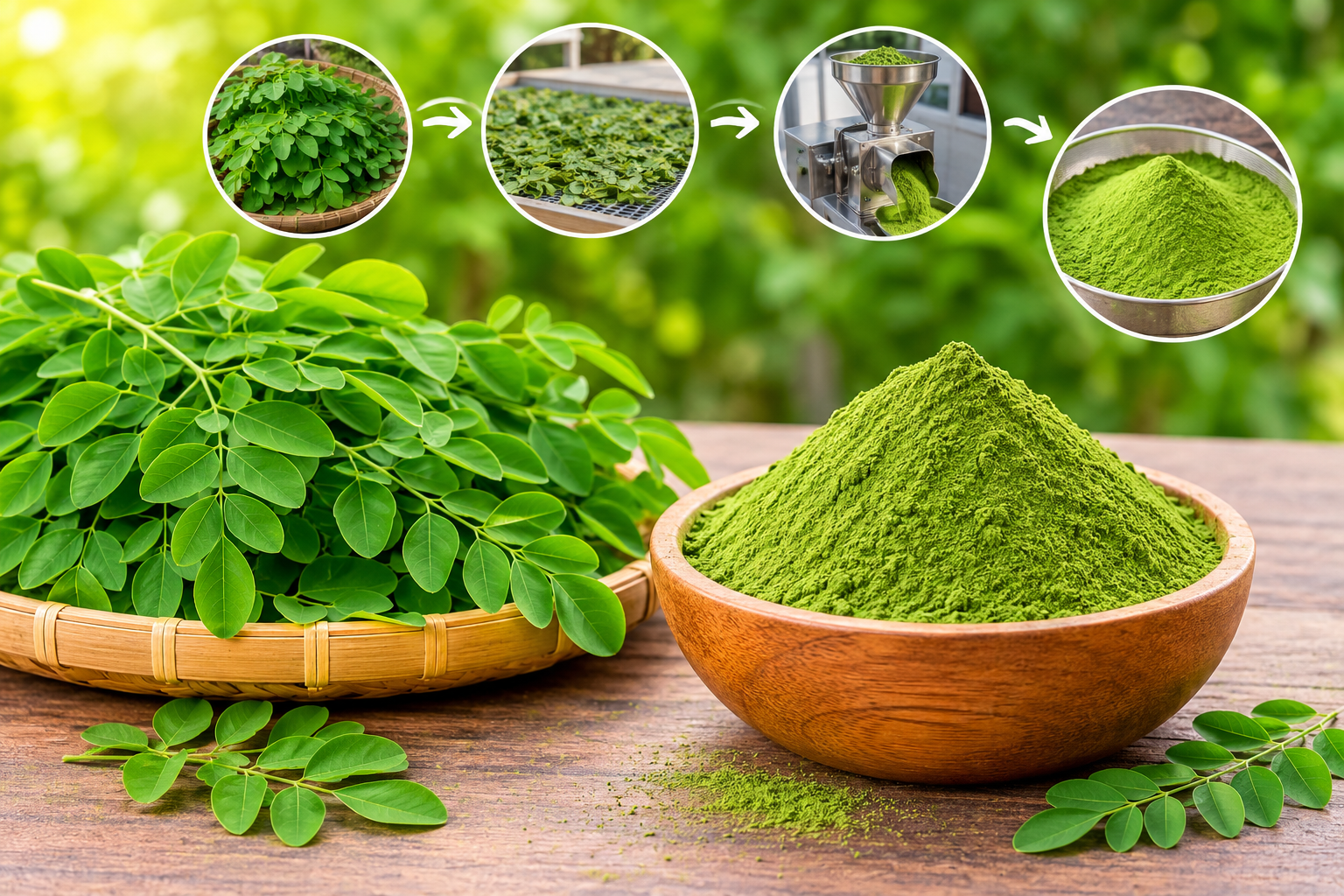
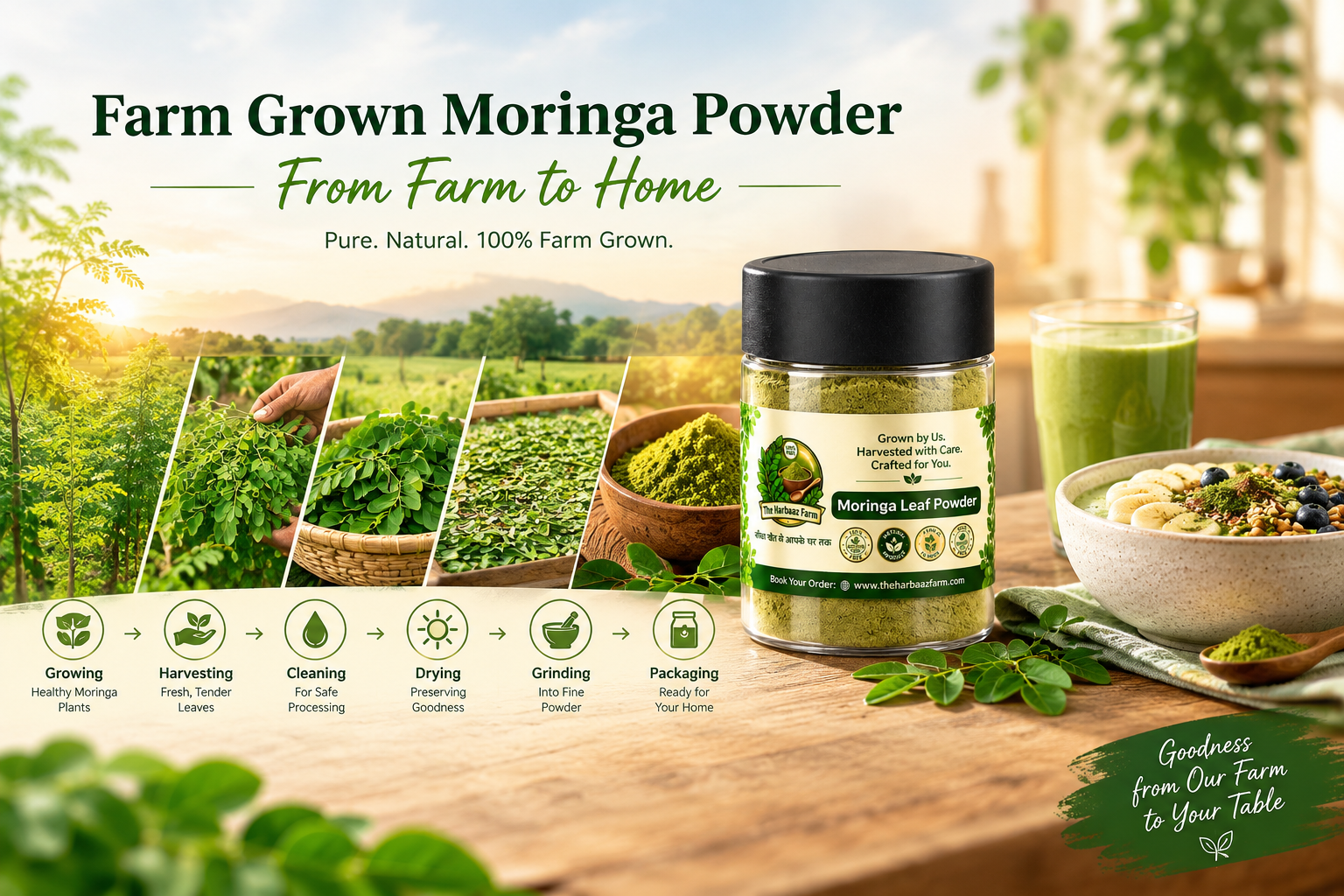
How Is Moringa Leaf Powder Made?
Turning fresh moringa leaves into a stable powder may sound simple, but each stage can influence the quality of the finished ingredient.
A typical process involves several steps.
1. Selecting Fresh Moringa Leaves
The process begins with suitable moringa leaves.
Fresh, healthy-looking leaves are generally preferred because damaged, decayed or heavily contaminated plant material is not appropriate for food processing.
At this stage, unwanted materials such as stems, damaged leaves, soil particles and other foreign matter can be removed.
The objective is simple: start with clean and suitable raw material.
2. Cleaning and Sorting
After harvesting, the leaves need to be sorted and cleaned.
Sorting helps remove:
Damaged or discoloured leaves
Excess stems
Foreign particles
Soil and other visible contaminants
Unwanted plant material
Good hygiene is particularly important because a dried food product is not automatically free from microorganisms. Research examining moringa leaf powder has identified food-safety considerations associated with microbial contamination and emphasised hygienic processing and appropriate moisture control.
3. Drying the Leaves
Drying is one of the most important stages in making moringa leaf powder.
Fresh leaves contain substantial moisture. Removing that moisture helps make the leaves suitable for longer storage and grinding.
There are several possible approaches to drying, including controlled air drying, tray drying, sun drying and other food-processing methods.
However, drying is not simply about making the leaves “dry”. Temperature, time, airflow and environmental conditions can all influence the characteristics of the final product.
Research has found that different drying methods can affect compounds present in moringa leaves, including phenolics, flavonoids and vitamin C.
This is one reason processing conditions matter when evaluating the quality of a finished product.
4. Removing Excess Moisture
Once the leaves have been dried, they need to be sufficiently dry before grinding and packing.
Residual moisture can affect powder quality and storage stability. If moisture enters or remains in a dried food product, it can contribute to undesirable changes and may increase food-safety concerns.
For consumers, this is one reason proper packaging and storage instructions are important when purchasing moringa leaf powder.
5. Grinding the Dried Leaves
The dried leaves are then ground into a fine powder.
Commercial food processing may use suitable milling equipment to achieve a consistent particle size. Research on moringa leaf flour, for example, has used grinding followed by sieving to obtain a relatively fine powder.
The fineness of the powder can influence how easily it mixes into foods and drinks.
A good powder should generally have a reasonably consistent texture rather than containing large pieces of dried leaves or excessive foreign material.
6. Sieving and Quality Checking
After grinding, the powder can be sieved to achieve a more uniform texture.
Depending on the production setup, quality checks may also consider:
Colour and appearance
Aroma
Texture
Moisture
Foreign matter
Packaging condition
Microbiological quality
The exact checks used depend on the food-processing operation and applicable food-safety requirements.
7. Packing and Storage
The final step is packaging the powder in a way that protects it from moisture, contamination, light and unnecessary exposure to air.
Once opened, consumers should keep the pack properly sealed and follow the manufacturer’s storage instructions.
A cool, dry place away from direct sunlight is generally appropriate for dry food powders unless the product label specifies different storage conditions.
Why Does the Drying Method Matter?
One of the most interesting parts of producing moringa leaf powder is that drying can affect the properties of the leaves.
Different research studies have compared drying techniques and found differences in the retention of naturally occurring compounds.
For example, one study comparing freeze-drying, air drying, sun drying and oven drying found differences in several measured phytochemicals and antioxidant-related properties.
This does not mean that consumers need to assume one particular drying method is always suitable for every commercial product. Processing equipment, scale, hygiene, energy use, environmental conditions and the desired product characteristics all matter.
The important takeaway is that how moringa leaves are processed matters just as much as the raw ingredient itself.
What Does Good-Quality Moringa Leaf Powder Look Like?
When shopping for moringa leaf powder in India, appearance alone should not be your only consideration.
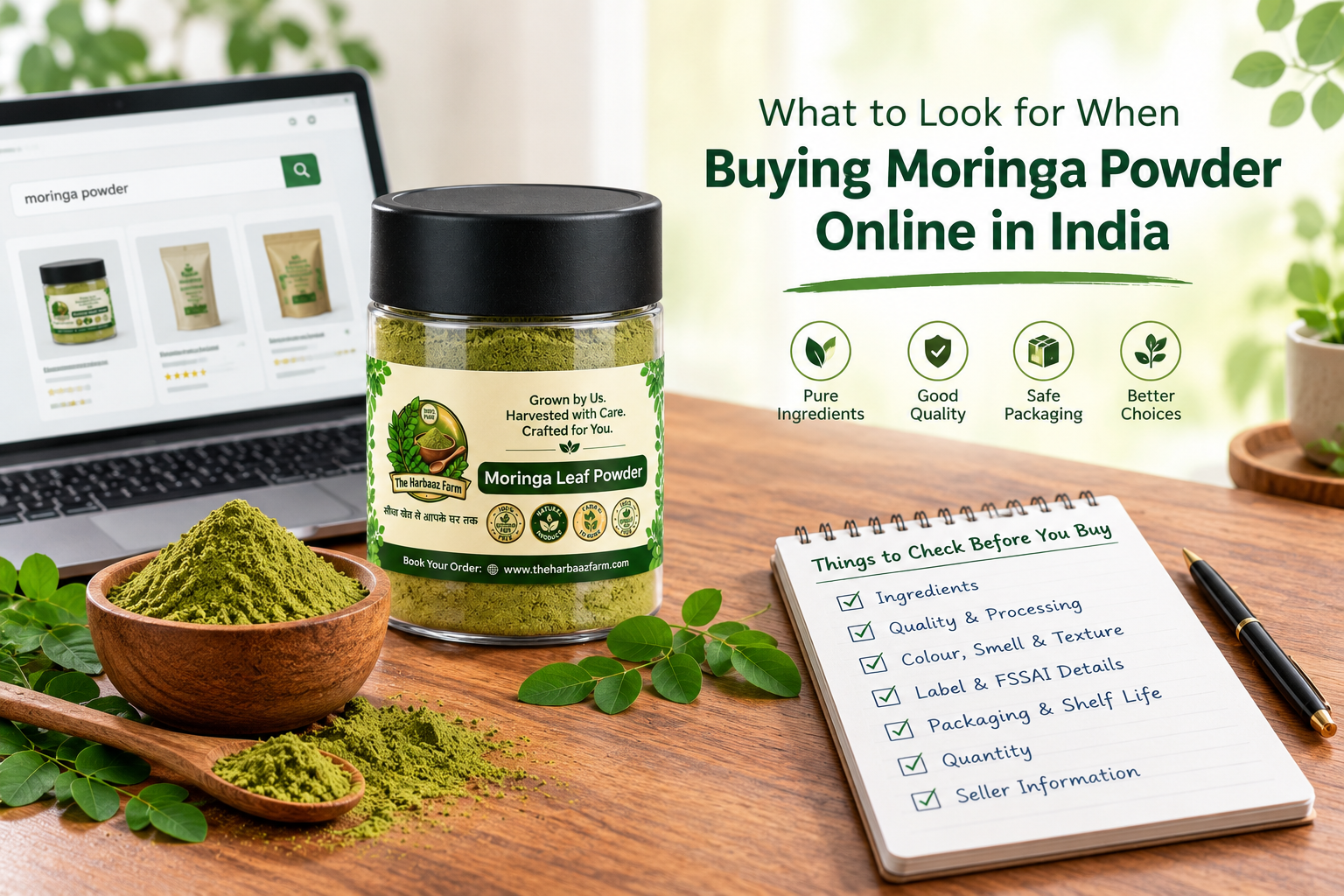
A useful checklist includes:
| What to check | Why it matters |
|---|---|
| Ingredient information | Helps you understand what the product actually contains |
| Packaging | Should protect the powder from moisture and contamination |
| Manufacturing details | Provides useful information about the product’s origin and handling |
| Storage instructions | Helps maintain quality after purchase |
| Batch information | Useful for product traceability |
| Best-before date | Helps you assess freshness |
| Texture | A reasonably uniform powder is generally easier to use |
| Aroma and appearance | Can help identify obvious quality changes |
A vibrant green colour may look appealing, but colour alone cannot prove freshness, nutritional quality or processing quality.
Similarly, “natural” on a label should not be treated as a substitute for checking the actual ingredient list and product information.
Is Moringa Leaf Powder the Same as Fresh Moringa Leaves?
No.
Both come from the same plant, but they are different food forms.
Fresh leaves contain a large amount of water, while drying removes much of that moisture. As a result, dried leaves and fresh leaves differ in weight, texture, concentration and some nutritional characteristics.
Processing can also alter certain naturally occurring compounds. Reviews of moringa processing have highlighted the effects that drying, blanching, boiling and other techniques can have on nutritional quality.
Therefore, it is better to think of moringa powder as a convenient processed form of the leaf rather than assuming it is nutritionally identical to fresh leaves.
How Can You Use Moringa Leaf Powder?
One reason this powder is popular is its versatility.
It can be incorporated into foods and beverages in small quantities, depending on personal preference and the product’s instructions.
Common ways people use it include:
Add It to Smoothies
A small amount can be mixed into a fruit or vegetable smoothie.
Because moringa has a distinctive green, leafy taste, pairing it with naturally sweet ingredients can make the flavour more approachable.
Mix It Into Curd or Yoghurt
Moringa powder can be stirred into plain curd or yoghurt.
This is a simple option for people who prefer not to prepare a separate drink.
Add It to Soups
It can be incorporated into soups or savoury preparations where its green, earthy flavour fits naturally.
Use It in Everyday Recipes
Depending on the recipe, a small amount can be added to dishes such as:
Dal
Chutneys
Soups
Vegetable preparations
Homemade savoury mixes
Smoothies and other beverages
When adding a powdered ingredient to food, start with a small quantity and adjust according to taste and the product’s recommended serving instructions.
Does Moringa Leaf Powder Have Nutritional Value?
Moringa leaves have attracted scientific interest because they contain protein, fibre, minerals, vitamins and various naturally occurring plant compounds.
However, the exact nutritional composition of a powder can vary considerably depending on the leaves, growing conditions, processing method and other factors. Research reviews also show that drying and other processing techniques can change the nutritional profile of moringa leaves.
For this reason, it is better to rely on the nutrition information provided on a specific product’s packaging rather than assuming that every moringa powder has exactly the same nutritional composition.
A Note About Health Claims
Moringa is sometimes promoted online with broad claims about immunity, diabetes, weight loss, blood pressure and other health conditions.
Consumers should be cautious with such claims.
The fact that moringa leaves contain nutrients or plant compounds does not mean that a moringa product can prevent, treat or cure a disease. Food products should not be presented as substitutes for medical treatment.
If you have a medical condition, take regular medicines or have specific dietary restrictions, speak with a qualified healthcare professional before making significant dietary changes.
How to Store Moringa Leaf Powder at Home
Correct storage can make a significant difference to the quality of a dry powder.
After opening:
Keep the package tightly sealed.
Store it in a cool, dry place.
Keep it away from direct sunlight and heat.
Avoid introducing moisture into the pack.
Always use a clean, dry spoon.
Follow the storage instructions printed on the product label.
Do not use the product if its appearance, smell or texture has changed noticeably.
Moisture is particularly important because dried powders can absorb moisture from their surroundings.
Research into the food-safety aspects of moringa leaf powder has also highlighted the importance of preventing moisture ingress and maintaining hygienic handling and storage.
What Should Indian Consumers Consider Before Buying?
Whether you are buying moringa powder online or from a local food retailer, look beyond attractive packaging and marketing claims.
Consider the following:
1. Check the Ingredient List
If you are specifically looking for pure leaf powder, check what the label says about the ingredients.
2. Look at the Product Information
Check the manufacturer or seller information, net quantity, batch details, date information and storage instructions.
3. Consider Packaging Quality
The package should be properly sealed and suitable for protecting a dry food powder from moisture and contamination.
4. Avoid Unusually Strong Health Claims
Claims such as “cures diabetes” or “guarantees weight loss” should be treated cautiously. Food products should be evaluated on their actual ingredients and documented information.
5. Buy From a Transparent Food Brand
A food business that clearly communicates its product information gives consumers more useful information for making their own purchasing decisions.
If you are exploring farm-based food products online, you can also browse the available offerings from The Harbaaz Farm and check the individual product pages for the latest product information, ingredients and usage details.
Moringa Leaf Powder: From Leaf to Everyday Ingredient
The journey from a fresh moringa leaf to a packaged powder involves more than simply grinding leaves.
It generally involves:
Fresh leaves → Sorting → Cleaning → Drying → Moisture control → Grinding → Sieving → Quality checks → Packaging → Storage
Each stage can influence the final product.
Good raw material provides the starting point, while appropriate drying, hygienic handling, suitable grinding and protective packaging help create a practical shelf-stable food ingredient.
For Indian consumers familiar with moringa as a traditional leafy food, the powder format offers another convenient way to incorporate the ingredient into everyday recipes.
Frequently Asked Questions
Moringa powder is generally made by drying moringa leaves and grinding them into a fine powder. The leaves come from the Moringa oleifera tree.
A typical process involves selecting and sorting fresh leaves, cleaning them, drying them under suitable conditions, grinding the dried leaves and packaging the resulting powder in moisture-protective packaging.
Not necessarily. “Drumstick powder” can sometimes refer to powder made from different parts of the moringa plant, depending on the product. If you specifically want leaf powder, check the ingredient label to confirm that it is made from moringa leaves.
Yes. Moringa leaf powder can be incorporated into various foods and beverages, such as smoothies, curd, soups, chutneys and other recipes. Start with a small amount and follow the product's serving guidance.
Check the ingredient list, packaging, batch and date information, storage instructions and seller or manufacturer details. Avoid relying solely on colour or broad health claims.
Conclusion
Moringa leaf powder is essentially a convenient, dried form of Moringa oleifera leaves. Producing it involves several important stages, from selecting and cleaning the leaves to drying, grinding, quality checking and packaging.
The drying stage is particularly important because processing conditions can influence the characteristics of the finished powder. Proper moisture control, hygienic handling and suitable packaging are also important considerations for a dry food product.
For consumers in India, choosing a moringa product should therefore be about more than simply looking for a bright green powder. Check the ingredient list, product information, packaging, storage guidance and the claims made by the seller.
If you are interested in natural and farm-based food products, visit The Harbaaz Farm to explore the products currently available and make your choice based on clear product information.