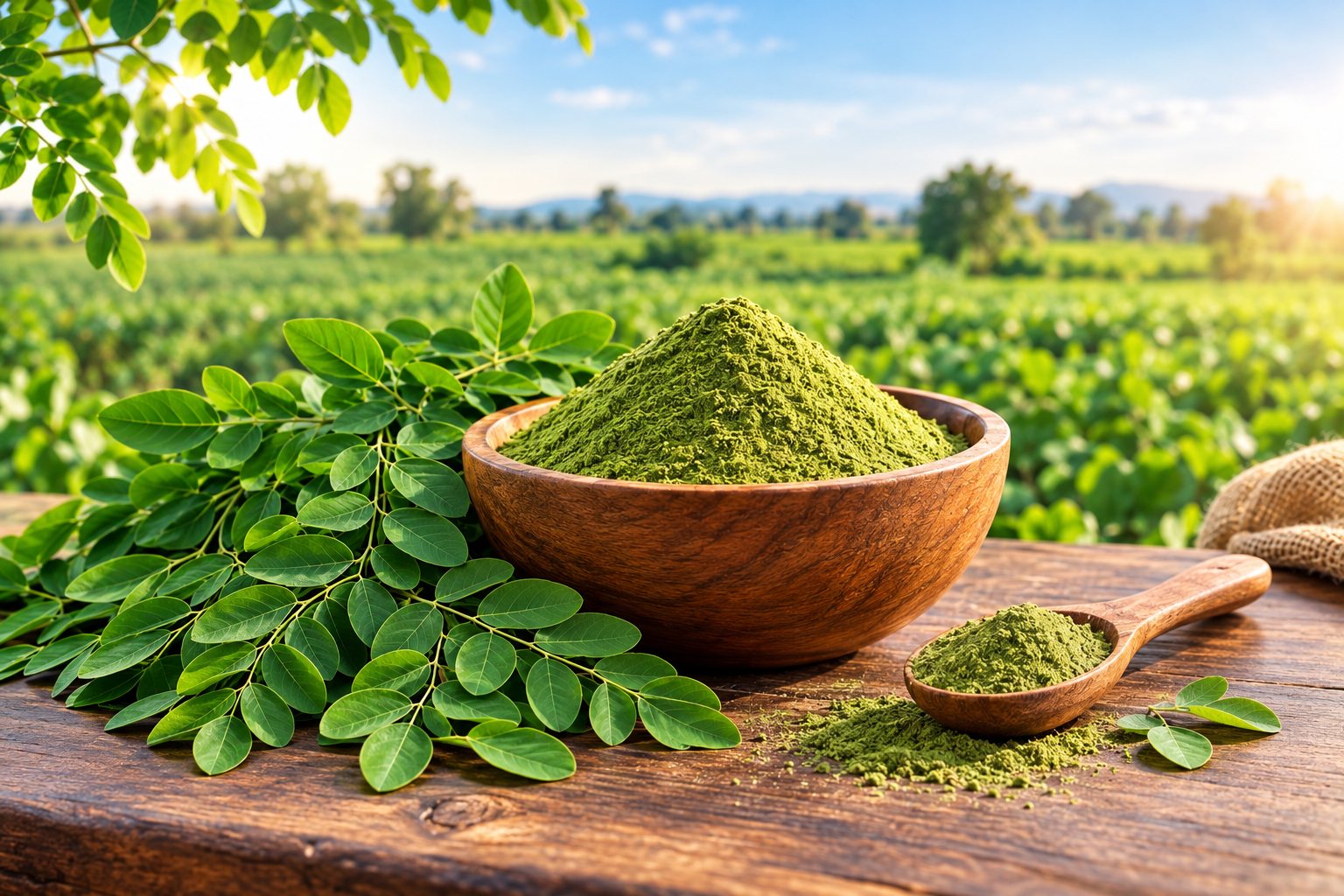
If you are looking for a simple way to add plant-based nutrients to your everyday diet, you may have come across moringa powder. Made from the leaves of the Moringa oleifera tree, it has become increasingly popular among people interested in natural foods and traditional plant-based ingredients.
But what is moringa powder, how is it made, what does it contain, and how can you use it in your daily routine?
Moringa powder is generally prepared by carefully drying moringa leaves and grinding them into a fine powder. Moringa oleifera is a plant native to South Asia and is widely cultivated in India. Its leaves contain a range of nutrients and naturally occurring plant compounds, including vitamins, minerals, protein, fibre and various phytochemicals.
For people in Haryana and Punjab, where agriculture and farm-based foods are an important part of everyday life, moringa is an interesting natural ingredient that can be incorporated into a variety of foods.
In this guide, we will explain everything you need to know about moringa powder, including its nutritional profile, potential benefits, everyday uses, how it is made and what to consider when choosing a quality product.
What Is Moringa Powder?
Moringa powder is a powdered form of dried moringa leaves. The leaves come from the Moringa oleifera tree, which is commonly known as the drumstick tree.
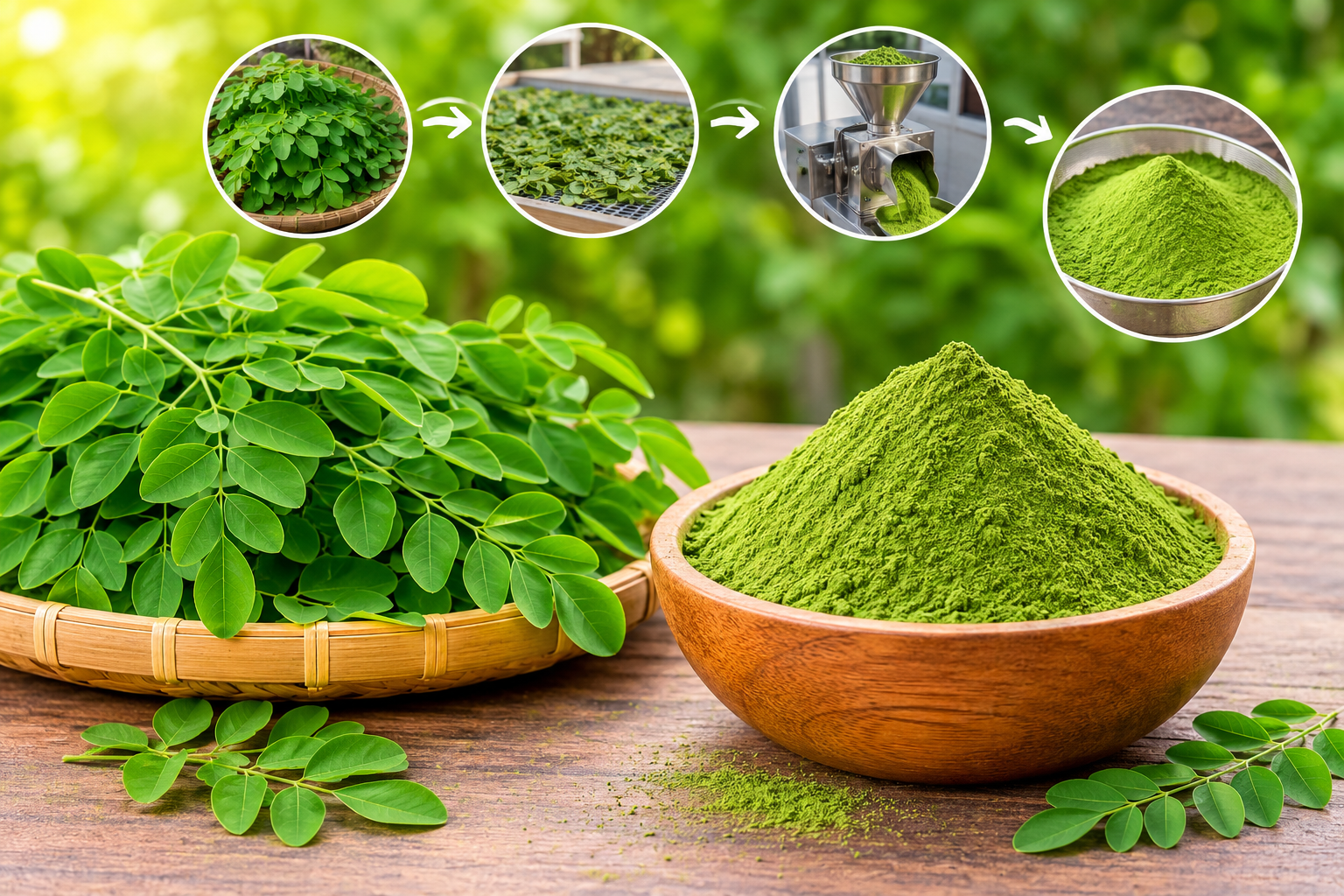
Fresh moringa leaves are harvested, cleaned and carefully dried before being ground into a fine powder. The resulting green powder can be added to foods and beverages in relatively small quantities.
Unlike moringa seed powder, moringa powder made from leaves is specifically a leafy plant ingredient. This distinction is important because the nutritional composition and traditional uses of different parts of the moringa plant can vary.
Moringa leaves have attracted scientific interest because they contain several types of nutrients and phytochemicals. Research reviews describe moringa leaves as sources of protein, fibre, vitamins, minerals and antioxidant-related plant compounds.
So, when someone asks, “what is moringa powder?”, the simple answer is:
Moringa powder is a finely ground powder made from dried moringa leaves and commonly used as a plant-based food ingredient.
Where Does Moringa Come From?
Moringa oleifera has a long history of use across South Asia and is now cultivated in many parts of the world.
The plant is particularly associated with India and other warm regions because it can grow well in suitable tropical and subtropical conditions. Moringa is also commonly known as the drumstick tree because of its long seed pods.
In India, interest in moringa has grown beyond traditional household use. Today, moringa leaves are used in different food products, powders and other plant-based preparations.
For consumers in Haryana and Punjab, locally grown or farm-sourced moringa can be an appealing option because it connects the product with India’s agricultural traditions and farm-to-home food culture.
At The Harbaaz Farm, our focus is on bringing natural farm products closer to consumers while maintaining a quality-focused approach.
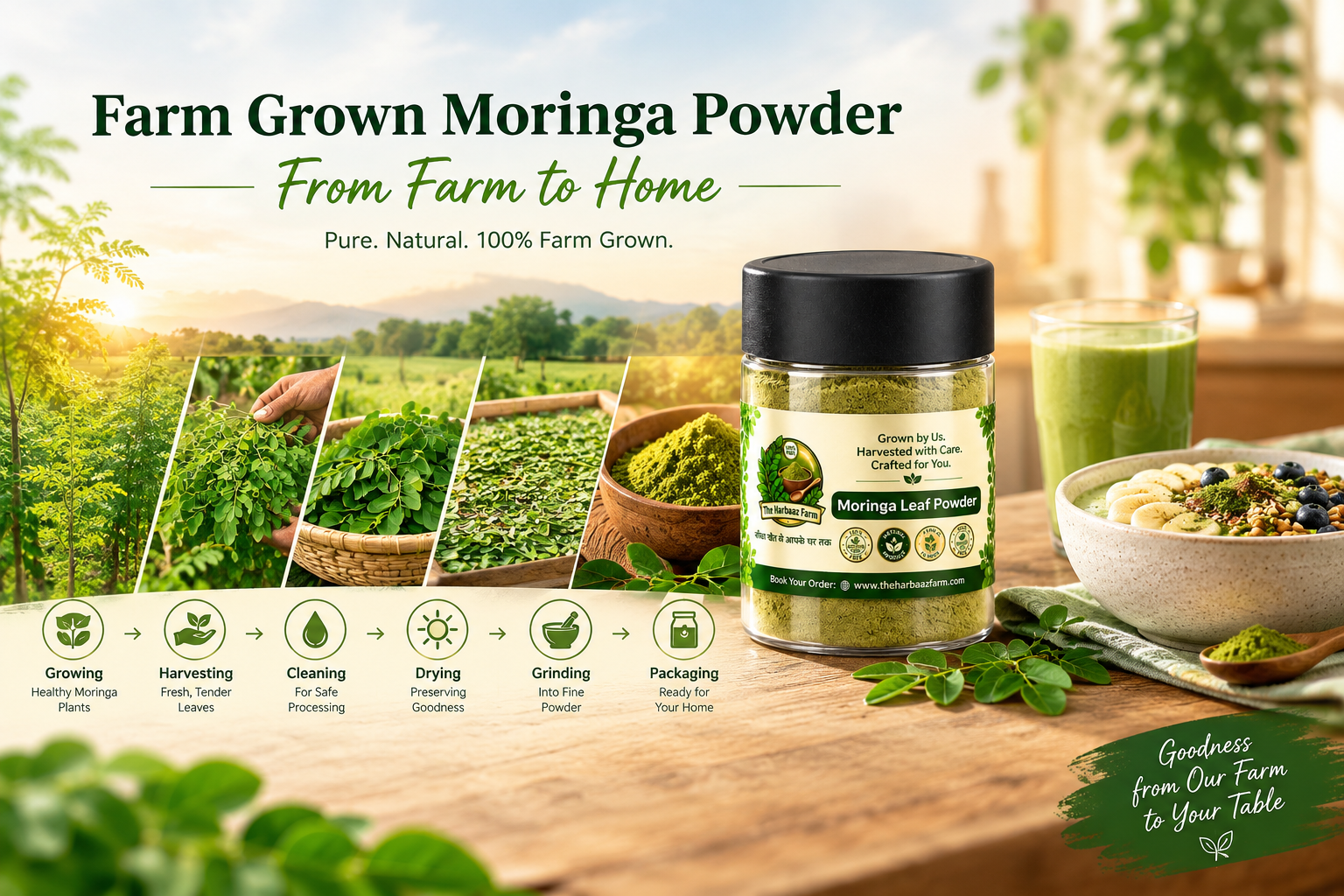
How Is Moringa Powder Made?
The quality of moringa powder depends greatly on how the leaves are handled from harvesting to packaging.
A typical process includes several important stages.
1. Harvesting
Fresh moringa leaves are harvested when they are suitable for processing.
Careful harvesting helps protect the leaves from unnecessary damage and contamination.
2. Cleaning
After harvesting, the leaves are carefully cleaned to remove unwanted dirt and foreign material.
Proper handling at this stage is important for producing a clean food ingredient.
3. Drying
The leaves need to be dried properly before grinding.
Controlled drying helps reduce moisture while preserving the characteristics of the dried leaves. The exact processing method can influence the colour, flavour and nutritional composition of the final product.
4. Grinding
Once sufficiently dried, the leaves are ground into a fine powder.
This is the stage at which dried moringa leaves become the familiar green moringa powder that can be added to food and drinks.
5. Packaging
Finally, the finished powder should be packed appropriately to help protect it from moisture, contamination and unnecessary exposure to air.
At The Harbaaz Farm, our product philosophy follows a simple farm-to-home approach: Grown by Us. Harvested with Care. Crafted for You.
What Nutrients Are Found in Moringa Powder?
One reason moringa powder has attracted attention is its nutritional profile.
Moringa leaves contain protein, fibre and various vitamins and minerals, along with naturally occurring phytochemicals. The exact nutritional content can vary depending on factors such as cultivation conditions, maturity, processing and storage.
Moringa leaves also contain compounds such as flavonoids, phenolic compounds and other phytochemicals that have been studied for their antioxidant and other biological activities.
However, it is important to understand that eating moringa powder does not automatically provide a cure or treatment for a health condition.
It is better to think of moringa powder as a nutrient-containing plant food that can complement a varied and balanced diet.
Potential Benefits of Moringa Powder
Moringa has been studied extensively for its nutritional and biological properties. However, research quality and outcomes vary, and more human studies are needed before making strong medical claims.
Here are some of the commonly discussed nutritional aspects of moringa powder.
1. Provides Plant-Based Nutrients
Moringa leaves contain a variety of nutrients, including protein, fibre, vitamins and minerals.
Adding a small amount of moringa powder to meals can therefore be one way to include another plant-based ingredient in your diet.
2. Contains Antioxidant-Related Plant Compounds
Moringa leaves contain several phytochemicals, including flavonoids and phenolic compounds.
These compounds have antioxidant properties that have been investigated in laboratory and human research.
This is one reason moringa has become popular among people looking to include more naturally occurring plant compounds in their diet.
3. Adds Fibre to the Diet
Moringa leaves contain dietary fibre.
Fibre is an important part of a balanced diet and is naturally present in many vegetables, fruits, legumes and whole grains.
Using moringa powder alongside a varied diet can add another plant-based source of fibre.
4. Supports a Nutrient-Focused Lifestyle
Rather than viewing moringa as a medicine, many people use moringa powder as part of a broader nutrient-focused lifestyle.
It can be combined with vegetables, fruits, whole grains, pulses, nuts and other nutritious foods.
A balanced diet remains more important than relying on any single food or powder.
How to Use Moringa Powder
One of the advantages of moringa powder is that it can be incorporated into different everyday foods.
Here are some simple ideas.
Add It to Smoothies
You can add a small amount of moringa powder to a fruit or vegetable smoothie.
Banana, apple, mango, spinach or other ingredients can help balance the naturally earthy and slightly bitter flavour of moringa.
Mix It Into Water
Some people mix moringa powder into water as a simple way to consume it.
Because moringa has a distinct earthy taste, you may prefer starting with a small quantity and adjusting it according to your preference.
Add It to Curd or Yogurt
Another easy option is mixing moringa powder into plain curd or yoghurt.
You can combine it with fruits, seeds or other ingredients for a simple snack.
Add It to Food
Moringa powder can also be added to foods such as soups, dals, chutneys or vegetable dishes.
Adding it toward the end of cooking may help maintain its flavour and characteristics.
Use It in Homemade Recipes
If you enjoy experimenting in the kitchen, moringa powder can be included in homemade recipes such as energy bites, savoury snacks or simple healthy drinks.
The goal is not to use large quantities. A small amount can be incorporated into everyday meals according to personal preference.
How Much Moringa Powder Should You Take?
There is no single universally established serving size that applies to everyone.
The appropriate amount can depend on the specific product, concentration, diet and individual circumstances. It is therefore sensible to follow the serving instructions provided with the product.
If you are new to moringa powder, starting with a small amount can help you become familiar with its taste and how your body responds.
People who are pregnant, breastfeeding, taking medicines or managing a medical condition should speak with a qualified healthcare professional before using concentrated herbal or dietary products regularly.
Although research has reported potentially beneficial properties of moringa, evidence is not sufficient to treat it as a replacement for medical care. Some reviews also highlight the need for additional clinical research and caution against assuming that higher intake is necessarily better.
Who Can Include Moringa Powder in Their Diet?
For many healthy adults, moringa powder can be considered as one of many plant-based food ingredients.
It may appeal to people who:
Prefer natural plant-based foods
Want to add more leafy plant ingredients to their diet
Enjoy smoothies and homemade health-focused recipes
Are interested in traditional Indian food ingredients
Prefer farm-to-home food products
Want to explore different ways of adding nutrient-containing plants to meals
However, moringa should not be presented as a substitute for a balanced diet, prescribed medication or professional medical advice.
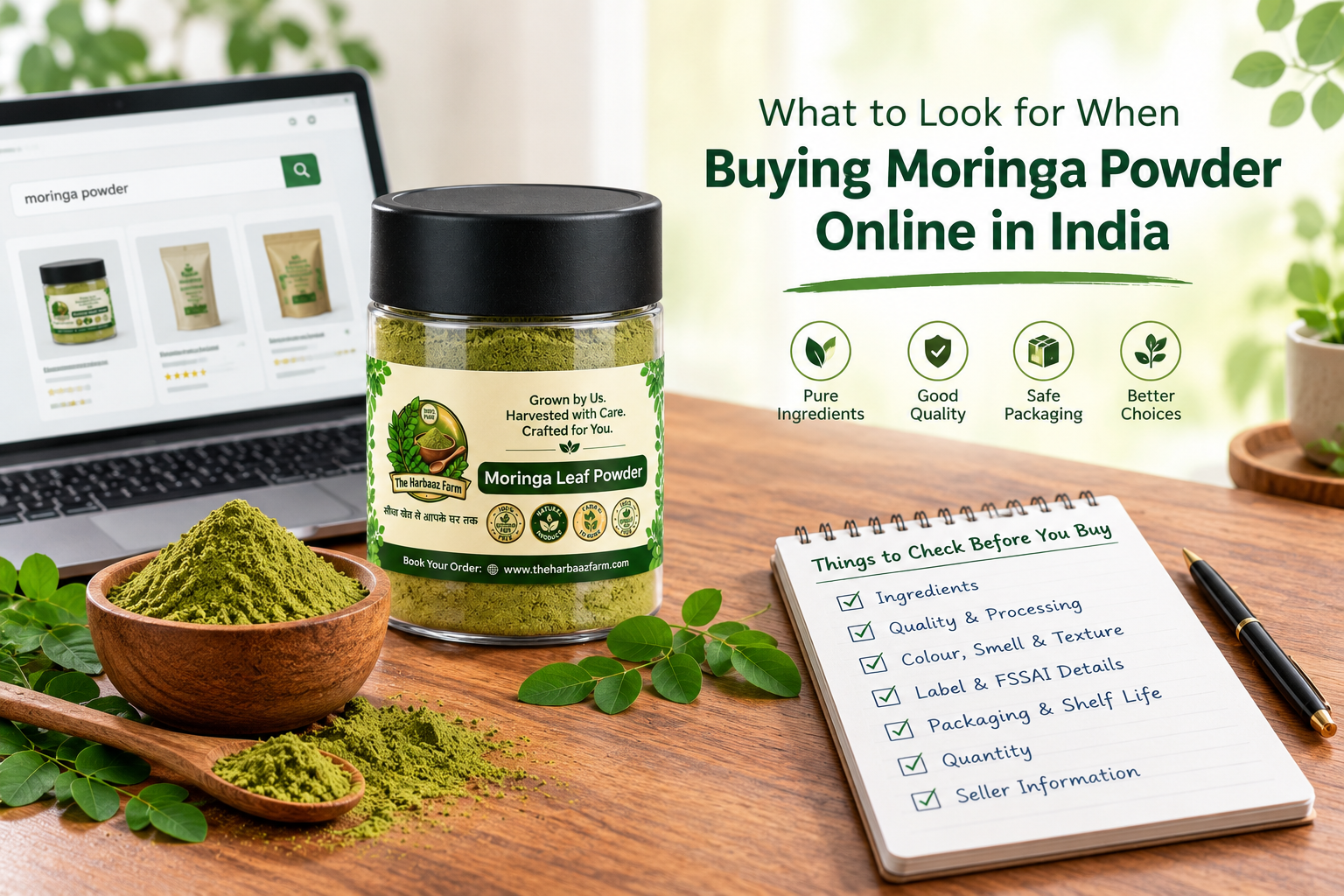
What Should You Look for When Buying Moringa Powder?
Not every moringa powder product will necessarily have the same quality.
Before purchasing, consider the following factors.
100% Moringa Leaves
Check the product label to understand what ingredients are included.
If you specifically want leaf powder, look for a product that clearly states that it is made from moringa leaves.
Clean Processing
Good handling, cleaning, drying and packaging practices are important when producing any food product.
Freshness and Packaging
Choose properly packaged products and store them according to the manufacturer’s instructions.
Moisture, heat and prolonged exposure to air can affect food quality.
Farm-to-Home Approach
Knowing where your food comes from can give you greater confidence in the product.
At The Harbaaz Farm, our approach is based around growing and processing natural farm products with a focus on quality and careful handling.
Moringa Powder in Haryana and Punjab
The agricultural identity of Haryana and Punjab makes natural farm products particularly relevant to consumers in these regions.
People across cities and towns such as Sirsa, Hisar, Fatehabad, Bathinda, Patiala, Ludhiana and nearby areas are increasingly interested in understanding where their food comes from and how natural products are processed.
Moringa fits naturally into this farm-to-home conversation.
For consumers searching online for moringa powder in Haryana or moringa powder in Punjab, it is useful to look beyond the product name and consider factors such as source, ingredients, processing, packaging and overall product transparency.
The Harbaaz Farm is based in Sirsa, Haryana, with a focus on natural farm products. Our goal is to connect farm-grown products with households looking for simple, quality-focused choices.
Moringa Powder vs Fresh Moringa Leaves
Fresh moringa leaves and moringa powder come from the same plant, but they are used differently.
Fresh leaves can be cooked like other leafy vegetables, while the powder is more convenient for storage and can be added to drinks and recipes in small quantities.
Powdered moringa is particularly convenient for people who do not have regular access to fresh moringa leaves.
However, drying and processing can change the nutritional composition of plant foods, so fresh leaves and powder should not automatically be considered nutritionally identical.
Both can have a place in a varied diet.
Is Moringa Powder a Superfood?
The word “superfood” is commonly used in marketing, but it does not have a precise scientific definition.
Moringa does have an interesting nutritional profile and contains several plant compounds that researchers have studied.
However, calling any single food a complete solution for health can create unrealistic expectations.
A better approach is to use moringa powder as one nutritious plant-based ingredient alongside a diverse diet.
Frequently Asked Questions
Moringa powder is generally made by drying moringa leaves and grinding them into a fine powder. The leaves come from the Moringa oleifera tree.
Yes, moringa powder can be incorporated into foods and drinks such as smoothies, curd, soups, dals and other homemade recipes. Follow the product's recommended serving instructions.
Yes. Moringa leaves contain nutrients such as protein, fibre, vitamins and minerals, along with various naturally occurring phytochemicals. The exact composition varies according to cultivation and processing conditions.
No. Moringa powder made from leaves is different from powder made from moringa seeds. Different parts of the Moringa oleifera plant have different compositions and uses.
When looking for moringa powder in Haryana, consider the source, ingredients, processing and packaging. The Harbaaz Farm is a farm-based brand from Sirsa, Haryana focused on natural products.
Final Thoughts
It is a finely ground powder made from dried leaves of the Moringa oleifera tree. It contains a range of nutrients and naturally occurring plant compounds and can be used in smoothies, curd, soups, dals and other everyday recipes.
Research has identified nutritional and phytochemical properties of moringa, but more research is still needed to establish many of the health claims sometimes associated with it.
The best way to approach moringa powder is as a nutrient-containing plant food that can complement a varied and balanced diet—not as a replacement for medical treatment or a healthy lifestyle.
For consumers in Haryana and Punjab, choosing a product with a transparent farm-to-home story, clear ingredients and careful processing can make the experience even more meaningful.
At The Harbaaz Farm, we are working to bring natural farm products from our fields to everyday households.
Explore The Harbaaz Farm and discover our Moringa Leaf Powder—grown by us, harvested with care and crafted for you.