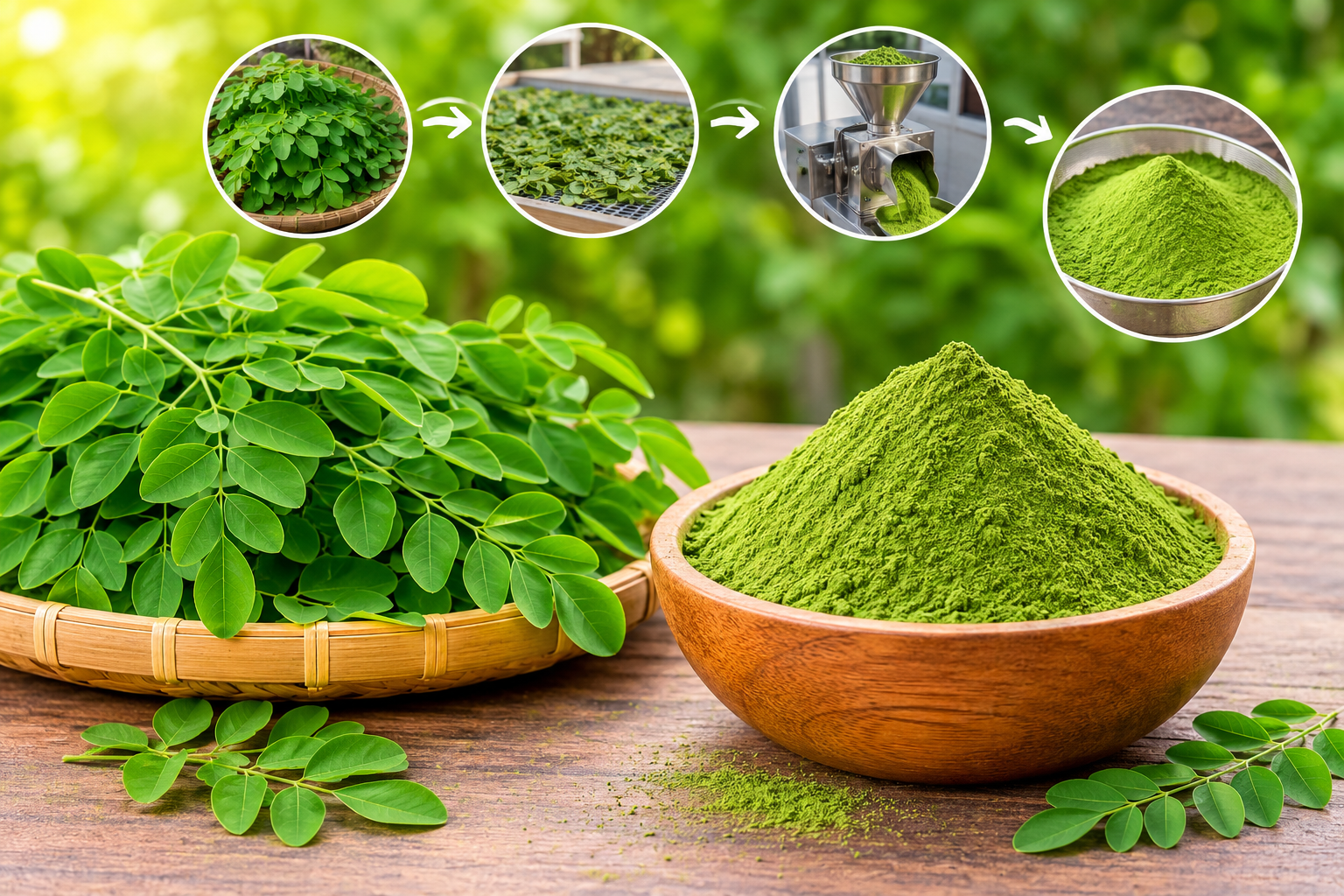
Moringa powder processing is the method of transforming fresh moringa leaves into a fine, dry powder that is convenient to store and use in everyday cooking. The process generally involves harvesting, sorting, washing, drying, grinding, sieving and hygienic packaging. Each step plays an important role in the final product’s colour, texture, aroma, moisture level and overall quality. Moringa (Moringa oleifera), commonly associated with the drumstick tree in India, has long been used in Indian kitchens. While its pods are familiar ingredients in dishes such as sambar, its leaves can also be dried and converted into powder for convenient use throughout the year. However, producing good-quality powder involves more than simply drying leaves and grinding them. Proper handling, controlled drying, clean processing equipment and suitable packaging all matter. For consumers choosing natural food products, understanding moringa powder processing makes it easier to evaluate quality and make informed purchasing decisions. In this guide, we explain how the process works, what influences the finished powder and what Indian consumers should consider before buying it. What Is Moringa Powder Processing? Moringa powder processing is the sequence of food-handling and preparation steps used to convert fresh moringa leaves into a stable, powdered ingredient. Fresh leaves contain considerable moisture. If they are stored or packed without appropriate drying, they can deteriorate quickly. Removing moisture under controlled conditions helps make the leaves suitable for milling and storage. The main objectives of the process are to: Select healthy, suitable moringa leaves. Remove visible dirt, damaged leaves and unwanted plant material. Reduce moisture through appropriate drying. Produce a reasonably uniform powder. Maintain cleanliness throughout processing. Protect the finished powder from moisture and contamination. The exact method can vary depending on the scale of production, available equipment, local weather and intended use. Small farm-based producers and larger food-processing units may use different machinery, but the basic principles remain similar. Step-by-Step Guide to Moringa Powder Processing Understanding each stage helps explain why careful production practices are essential for a consistent finished product. 1. Harvesting Fresh Moringa Leaves The process begins with harvesting suitable leaves from healthy moringa plants. Freshness and careful handling at this stage can influence the quality of the final powder. Leaves should be checked for visible damage, discolouration, insect infestation and signs of deterioration. Material that is unsuitable for food processing should be removed. Harvested leaves should be transported to the processing area promptly rather than left in hot, humid or dirty conditions for extended periods. Good harvesting practices include: Selecting healthy, suitable leaves. Avoiding visibly damaged or deteriorating material. Using clean harvesting tools and containers. Keeping harvested leaves away from soil and other contaminants. Minimising delays before cleaning and processing. The aim is to begin with sound raw material, because later processing cannot reliably correct poor-quality or contaminated leaves. 2. Sorting and Removing Stems Once the leaves reach the processing area, they are inspected and sorted. Unwanted material, including damaged leaves, foreign matter and excessive stems, is removed. Depending on the production method, leaflets may be separated from thicker stems before washing or during preparation. This stage helps produce a more consistent raw material for drying. Thick stems and delicate leaflets can dry at different rates, so removing unsuitable plant material makes process control easier. Sorting also helps reduce the likelihood of unwanted material entering the finished powder. 3. Washing the Leaves Properly Washing is an important part of moringa powder processing because fresh leaves may carry dust, soil and other surface contaminants. The leaves should be washed using clean, potable-quality water in a hygienic area. Water quality matters because contaminated water can introduce additional microorganisms rather than improve cleanliness. After washing, the leaves should be drained properly. Excess water can increase the drying time and make it harder to achieve uniform moisture levels. Good washing practices include: Using clean water suitable for food preparation. Keeping washing containers and surfaces hygienic. Avoiding unnecessary handling with unclean hands. Removing visible dirt without damaging the leaves. Draining the leaves before drying. Washing is not the same as sterilisation. It helps remove surface dirt, but it does not guarantee that all microorganisms, pesticide residues or chemical contaminants have been eliminated. 4. Drying the Moringa Leaves Drying is one of the most important stages in moringa powder processing. It removes moisture from the cleaned leaves and prepares them for grinding. Several methods are used, including shade drying, solar drying and mechanical hot-air drying. The appropriate choice depends on production capacity, climate, equipment and quality requirements. Shade drying: Leaves are spread in a clean, protected area with good airflow. They must be shielded from dust, insects, animals and other sources of contamination. Drying conditions can be difficult to control when humidity is high. Solar drying: A suitable solar dryer uses sunlight and airflow while providing more protection from the environment than open-air drying. Its performance still depends on weather and dryer design. Mechanical drying: Tray dryers and other controlled drying systems allow producers to manage temperature and airflow more consistently. They can be particularly useful when processing larger quantities or maintaining repeatable production conditions. The drying temperature and duration should be selected according to the equipment, leaf characteristics and desired final moisture level. There is no single temperature or drying time that is suitable for every production setup. Overheating may negatively affect colour, aroma and certain heat-sensitive compounds. Inadequate drying, on the other hand, can leave too much moisture in the leaves. The objective is to dry the leaves sufficiently and uniformly without unnecessarily compromising their quality. 5. Checking the Dried Leaves Before grinding, the dried leaves should be checked to confirm that they are suitable for milling. They should be sufficiently dry, free from visible foreign matter and handled in a clean environment. A commercial processor may use moisture testing and other quality checks instead of relying solely on appearance or touch. This is an important control point in moringa powder processing because moisture that remains in the material can contribute to deterioration
Farm Grown Moringa Powder: From Farm to Home
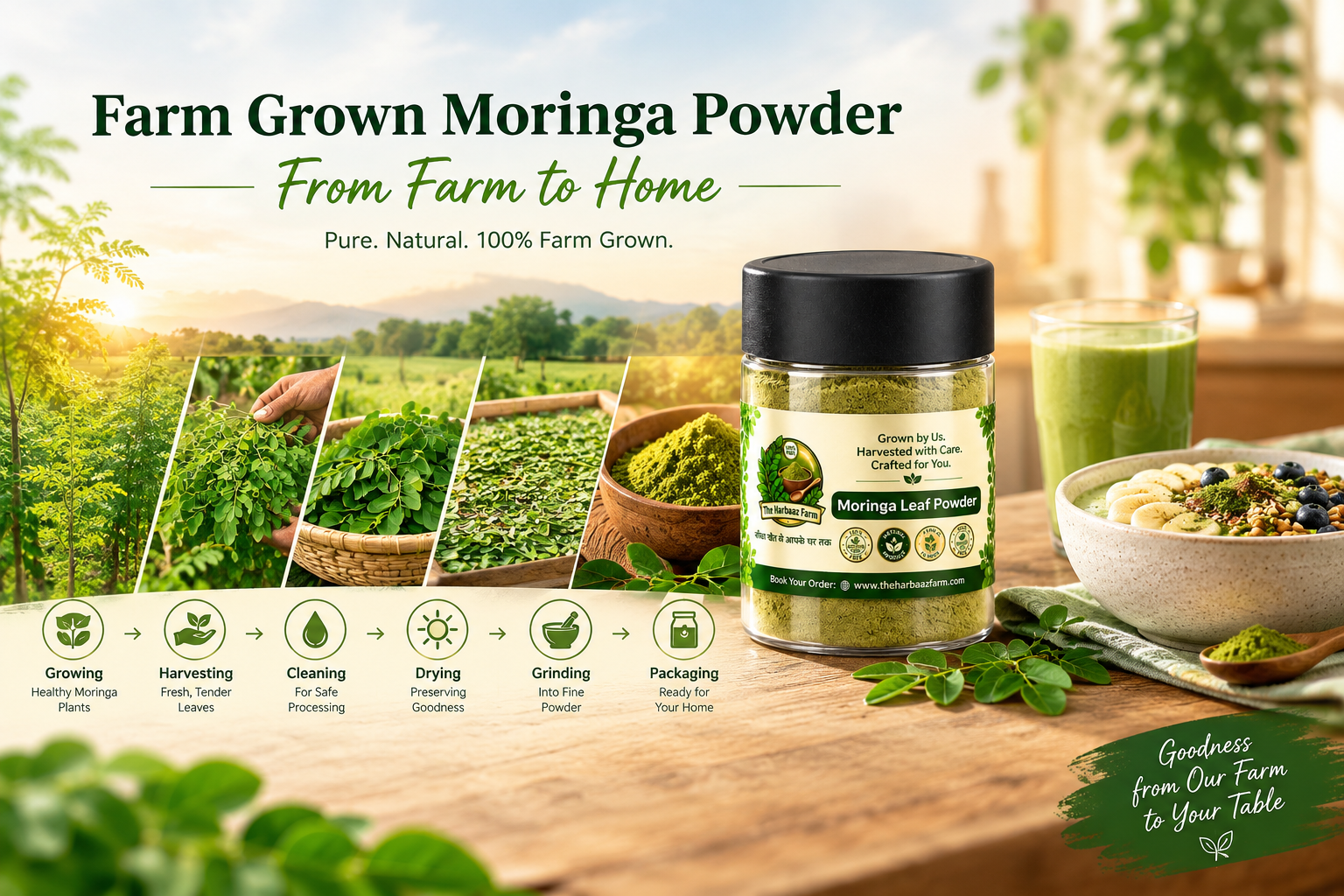
Have you ever wondered how fresh moringa leaves from a farm become the fine green powder that you can add to your morning smoothie, glass of water or everyday meals? Understanding this journey can help you make more informed decisions when choosing natural, farm-based food products. Farm grown moringa powder is made from the leaves of the moringa tree, also known as Moringa oleifera. The leaves are harvested, cleaned, dried, ground into powder and packed for convenient use. However, the quality of the final product depends on how carefully each stage is managed. For Indian households looking for convenient ways to include plant-based ingredients in their daily diet, moringa leaf powder offers a versatile option. It can be added to selected drinks and dishes without requiring extensive preparation. At The Harbaaz Farm, the focus is on bringing Moringa Leaf Powder closer to consumers through a farm-to-home approach centred on careful handling and quality. In this guide, we explore how moringa powder reaches your home, what to consider when buying it, and how to use it in everyday life. What Is Farm Grown Moringa Powder? Moringa powder is produced by drying moringa leaves and grinding them into a fine powder. The moringa tree grows in tropical and subtropical regions, including India, where it is commonly known as the drumstick tree. While the tree is also valued for its edible pods, moringa leaf powder is made specifically from its leaves. Farm grown moringa powder refers to a product sourced through agricultural cultivation rather than being treated as an unidentified, generic ingredient. The term highlights the connection between the farm, the harvested leaves and the finished product. However, the phrase alone does not guarantee a particular farming method, organic certification or quality standard. When selecting moringa powder, consumers should consider the source, processing, packaging, ingredient information and available product details. How Moringa Leaves Are Turned Into Powder Fresh moringa leaves are perishable and require appropriate handling. Processing them into powder creates a convenient format that is easier to measure, store and incorporate into different recipes. Moringa leaves naturally contain various plant nutrients, including vitamins, minerals and other compounds. The nutritional composition of the final powder depends on factors such as the leaves, growing conditions, drying method and processing. It is important to remember that moringa powder is a food ingredient, not a substitute for a varied, balanced diet. From Farm to Home: How Moringa Powder Is Made The journey from fresh leaves to a finished pack involves several stages. Understanding these steps helps consumers appreciate why careful handling matters. 1. Growing and Selecting Moringa Leaves The process begins with moringa cultivation. Healthy plant growth depends on suitable growing conditions, appropriate agricultural care and the management of pests and other crop-related challenges. Leaves intended for food processing should be selected carefully. Their condition matters because damaged, contaminated or poorly handled leaves can affect the quality of the finished product. For consumers, knowing who produces a product and whether the business provides clear information about its sourcing is a useful starting point. 2. Harvesting the Leaves Once suitable leaves are ready, they are harvested with care. Harvesting practices should help minimise unnecessary damage and contamination. The time between harvesting and further processing can also matter. Fresh leaves need appropriate handling to maintain their condition before they are cleaned and dried. This is one reason a clearly explained farm-to-home process can help consumers understand how a product moves from its agricultural source towards the kitchen. 3. Cleaning Before Processing Cleaning is an important food-handling step. Leaves must be handled appropriately to remove visible dirt and reduce contamination risks. The process should use suitable water and hygienic handling practices. Clean working surfaces, equipment and utensils are also important throughout food production. Consumers should remember that a product’s appearance alone cannot confirm whether it has been handled safely. Clear product information and appropriate food-safety practices are more meaningful indicators. 4. Drying the Leaves After cleaning, the leaves are dried under suitable conditions before grinding. Drying helps reduce moisture, making the leaves easier to process into powder. However, the method and conditions matter. Excessive heat, moisture exposure or unsuitable storage can affect colour, aroma and product quality. The finished powder should be protected from moisture and contamination. Consumers should not assume that every green powder has been dried using the same method. 5. Grinding Into Fine Powder Once adequately dried, the leaves are ground into a fine powder. Grinding makes moringa easier to mix into drinks, breakfast dishes and selected cooked recipes. The texture may vary according to the processing method. A fine powder can be convenient for smoothies and water, although it may still settle at the bottom of a glass. A natural, leafy aroma is common, and moringa generally has an earthy, green taste. Colour and aroma can offer useful observations, but neither can independently establish purity or safety. 6. Packaging for Everyday Use The final stage is packaging. Proper packaging helps protect the powder during storage, transport and handling. A well-presented food pack should provide useful information such as the product name, ingredients, net quantity, manufacturer or marketer details, batch information, applicable dates, storage instructions and relevant regulatory declarations. Before buying, check that the seal is intact and the package is suitable for food storage. At The Harbaaz Farm, the product journey is presented around harvesting, cleaning, drying, grinding and packaging. This farm-to-home approach helps explain the main stages involved in preparing its Moringa Leaf Powder. What Makes Quality Moringa Powder Worth Considering? Not all moringa powders necessarily have the same characteristics. Before purchasing, look beyond marketing descriptions and consider the following factors. Clear Ingredient Information Check whether the ingredient list identifies moringa leaf powder clearly. If you want a single-ingredient product, look for a declaration that matches that expectation. Avoid assuming that a product is free from additives, fillers or other ingredients unless its packaging or reliable product information confirms this. Suitable Colour and Aroma Moringa leaf powder often has
What to Look for When You Buy Moringa Powder Online in India
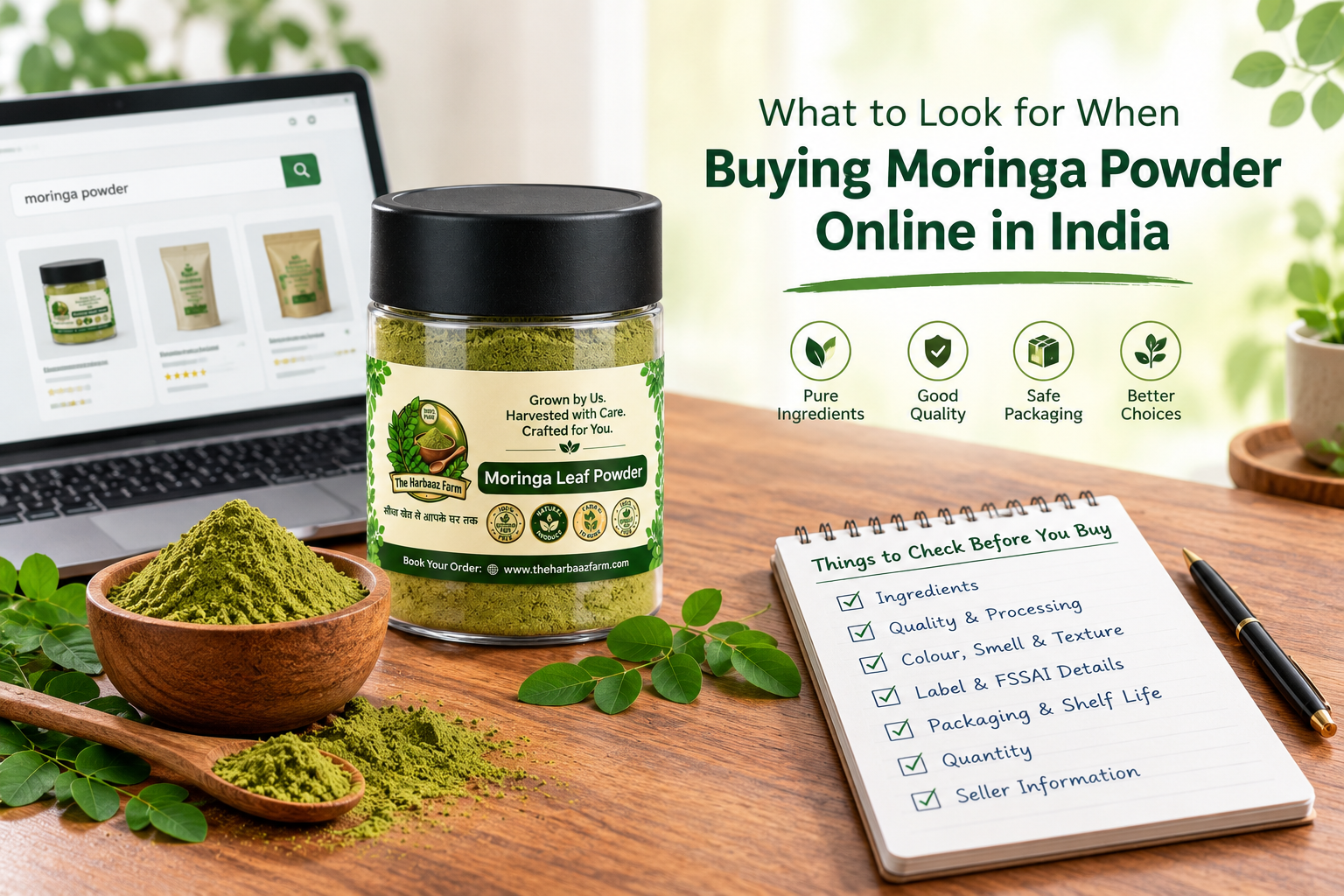
Buying natural food products online has become a convenient option for Indian households. From everyday kitchen ingredients to plant-based powders, consumers can explore different products without visiting multiple shops. However, choosing the right product requires more than looking at attractive packaging or reading a few positive reviews. If you plan to buy moringa powder online, it is important to check the ingredients, freshness, packaging, labelling, storage instructions and information provided by the seller. These details can help you make an informed decision and select a product that suits your preferences. Moringa leaf powder is made from the leaves of the moringa tree, also known in India as sahjan or the drumstick tree. It can be incorporated into everyday drinks and recipes, depending on your taste and dietary preferences. In this guide, we will explain what to look for before placing an order, how to assess product information and what Indian consumers should know about choosing moringa powder for household use. 1. Check the Ingredients List Carefully The first step is to understand exactly what you are buying. Moringa products can differ in their ingredients, processing methods and intended uses. If you want a straightforward product for everyday food use, look for moringa leaf powder with clearly declared ingredients. Choose a product with transparent ingredients Before purchasing, check the product label or online description for: The name of the product and the plant part used. The complete ingredients list. Any added colours, flavours, sweeteners or other ingredients. Instructions for use, where applicable. Allergen information, if relevant. If a product is marketed as pure moringa leaf powder, its ingredient declaration should support that description. Do not assume that every green powder sold online contains only moringa leaves. Moringa leaf powder and moringa seed powder are also different products. If you specifically want leaf powder, verify that the description identifies the leaves rather than seeds, roots or a mixture of plant parts. When you buy moringa powder online, clear ingredient information is more useful than vague descriptions such as “superfood blend” or “natural wellness formula”. 2. Understand the Quality and Processing Information The quality of a powdered food product depends on several factors, including the raw material, handling, processing, packaging and storage. Moringa leaves need to be handled carefully before they are converted into a fine powder. Cleaning, drying and grinding are important stages, and poor handling at any stage may affect the finished product. What should you look for? Consider the following details: Leaf selection: Does the seller explain how the raw leaves are selected? Cleaning: Is there information about handling and cleaning before processing? Drying: Does the seller provide details about the drying process? Grinding: Is the product described as finely ground leaf powder? Packaging: Is the finished product packed appropriately to protect it during storage and delivery? Not every seller will publish every processing detail. However, transparent information makes it easier to assess whether a business takes product handling seriously. The Harbaaz Farm shares information about its moringa leaf powder production journey, including harvesting, cleaning, drying, grinding and packaging. You can explore the available product information on The Harbaaz Farm website. Remember that a detailed process description is useful, but it is not a substitute for independent laboratory testing or documented quality checks when those are important to your purchasing decision. 3. Understand Colour, Smell and Texture Colour, aroma and texture can provide useful clues when examining moringa powder after delivery. However, these characteristics should not be treated as definitive proof of purity or safety. What should moringa powder look like? Moringa leaf powder commonly has a green appearance and an earthy, leafy aroma. Its exact colour and smell can vary depending on the leaves, drying conditions, processing and storage. Consider these observations: Quality indicator What to look for Colour A reasonably consistent colour typical of the product, without unexplained discolouration Aroma A natural, leafy or earthy smell rather than a strong musty or unpleasant odour Texture A reasonably fine powder consistent with the product description Condition No visible moisture, unusual contamination or signs of damaged packaging Do not reject a product simply because its green shade differs from another brand. Natural ingredients can vary from batch to batch. Similarly, a bright green colour does not automatically mean the powder is fresher or more nutritious. Appearance alone cannot establish whether a product contains unwanted substances or meets applicable safety requirements. If a newly delivered pack smells musty, appears damp, shows unusual discolouration or has damaged packaging, avoid consuming it and contact the seller. 4. Read the Food Label and Seller Information When purchasing packaged food in India, the label is one of the most useful sources of information. It helps you understand the product’s identity, the business responsible for selling it and the instructions for safe use. Before you buy moringa powder online, examine the product label and the information available on the website. Important details to check FSSAI licence number: Check the applicable food business licence details on the label and verify them through official resources if needed. Manufacturing or packing date: This helps you understand when the product was prepared or packed, as applicable. Best-before or expiry date: Check the relevant date and follow the instructions on the pack. Net quantity: Confirm how much product you will receive. Manufacturer, packer or marketer details: Look for identifiable business information, as applicable. Batch or lot number: This can help the seller trace the product if a quality concern arises. Storage instructions: Check how the product should be stored after delivery. Usage instructions: Follow the directions provided for the specific product. The Food Safety and Standards Authority of India (FSSAI) provides information about food safety and labelling requirements. Consumers should review the applicable label details and verify licence information through official resources when necessary. A licence number or logo should not be treated as proof that every individual pack has been independently tested. Be careful with organic claims Words such as
How to Choose Pure Moringa Leaf Powder: A Complete Buying Guide
Moringa leaf powder has become a popular choice among Indian consumers looking to include more plant-based foods in their everyday diets. Made from dried moringa leaves, this green powder can be added to drinks, smoothies, curries and other recipes. However, with different products available online and in stores, knowing how to identify pure moringa leaf powder is important before making a purchase. The quality of moringa powder depends on several factors, including the ingredients, sourcing, processing methods, packaging and storage conditions. A product’s colour or price alone cannot confirm its purity, so it is worth looking beyond the label and promotional claims. Whether you are buying moringa powder for your family or exploring natural farm-based food products, this guide will help you understand what to check before ordering. What Is Pure Moringa Leaf Powder? Moringa leaf powder is made by drying the leaves of the moringa tree (Moringa oleifera) and grinding them into a fine powder. The tree is commonly known as the drumstick tree in India, where its leaves are also used in traditional cooking. A pure product should contain moringa leaf powder as its only ingredient, without unnecessary fillers, added colours, flavours or other plant powders. However, the word “pure” on a package is not sufficient proof by itself. Buyers should review the ingredient list, manufacturer information, food-safety details and product packaging before deciding. It is also important to distinguish between moringa leaf powder and drumstick pod powder. Both come from the same plant, but they are made from different parts and should not be treated as interchangeable products. 8 Things to Check When Choosing Pure Moringa Leaf Powder 1. Read the Ingredient List Carefully The ingredient list is one of the first things to check when buying moringa powder online or from a local shop. If your preference is a single-ingredient product, look for a label that lists only moringa leaves or moringa leaf powder. Check whether the product contains: Added colours or artificial colouring agents. Added flavours or sweeteners. Other vegetable or leaf powders. Fillers that change the composition of the product. Ingredients that are not clearly explained on the packaging. Not every additional ingredient is automatically unsafe, but it may mean that the product is not the single-ingredient powder you are looking for. Buying tip: Choose a product with a clear ingredient declaration rather than relying only on phrases such as “natural,” “premium” or “herbal.” 2. Look at the Colour, but Do Not Judge by Colour Alone Moringa leaf powder commonly has a green appearance, but its exact shade can vary. Factors such as leaf maturity, drying conditions, processing and storage can affect its colour. Therefore, two genuine products may not look exactly alike. When examining a product, look for any available photographs that show the actual powder in natural lighting. Once you receive the pack, check whether its appearance seems consistent with the product description. Be cautious if the powder has an unusual appearance accompanied by other warning signs, such as damaged packaging, moisture or an unexpected odour. Remember that a bright green colour does not prove purity. Artificial colouring or image enhancement can make a product appear more attractive, so colour should never be your only quality test. 3. Check the Aroma and Freshness Moringa powder generally has a leafy, earthy, plant-like aroma. The intensity can vary depending on the leaves and processing conditions. When you open a new pack, notice whether the smell is consistent with dried leaves. An unusual chemical-like, musty or rancid smell should prompt caution, especially if the powder has also been exposed to moisture or stored in damaged packaging. Do not taste a product to determine its safety if it shows signs of spoilage or contamination. Freshness is influenced by processing, packaging and storage. A powder that was carefully prepared can still deteriorate if it is exposed to humidity, heat or air for long periods. 4. Understand How the Leaves Are Processed The journey from fresh leaves to finished powder can influence product quality. A typical production process involves harvesting, cleaning, drying, grinding and packaging. Each stage needs appropriate handling to minimise contamination and protect the product from moisture. Here are some useful questions to consider: Are the leaves cleaned before processing? Is the drying process explained clearly? Is the powder handled hygienically? Is the packaging suitable for protecting a dry food product? Does the seller provide transparent information about its production process? Drying deserves particular attention because moisture can encourage spoilage during storage. However, a product description that mentions a specific drying method should be supported by reliable information rather than assumptions. A transparent supplier should be able to explain its general process and answer reasonable questions about product handling. 5. Check the Source and Manufacturer Details Knowing who makes or sells a food product helps you make a more informed decision. When choosing pure moringa leaf powder, look for clear information about the business responsible for the product. Depending on the packaging and applicable requirements, this may include the manufacturer’s or packer’s name, address, customer contact details and relevant food-business registration information. Also consider whether the seller explains where the leaves come from and how the product moves from sourcing to packaging. A farm-based brand may offer more information about its production journey than a listing that provides only a product photograph and a few promotional claims. The Harbaaz Farm is a farm-based brand that presents its moringa leaf powder through a farm-to-home approach, with an emphasis on harvesting, cleaning, drying, grinding and careful packaging. You can explore the product and its available information on The Harbaaz Farm’s Moringa Leaf Powder page. 6. Verify Food-Safety and Label Information In India, packaged food products should be assessed against the food-labelling and safety requirements applicable to their category. Before purchasing, check the package for relevant details, such as: Ingredient declaration. Net quantity. Batch or lot identification. Date marking, including the applicable best-before or expiry information. Manufacturer, packer or marketer
Moringa Leaf Powder Benefits: A Practical Guide
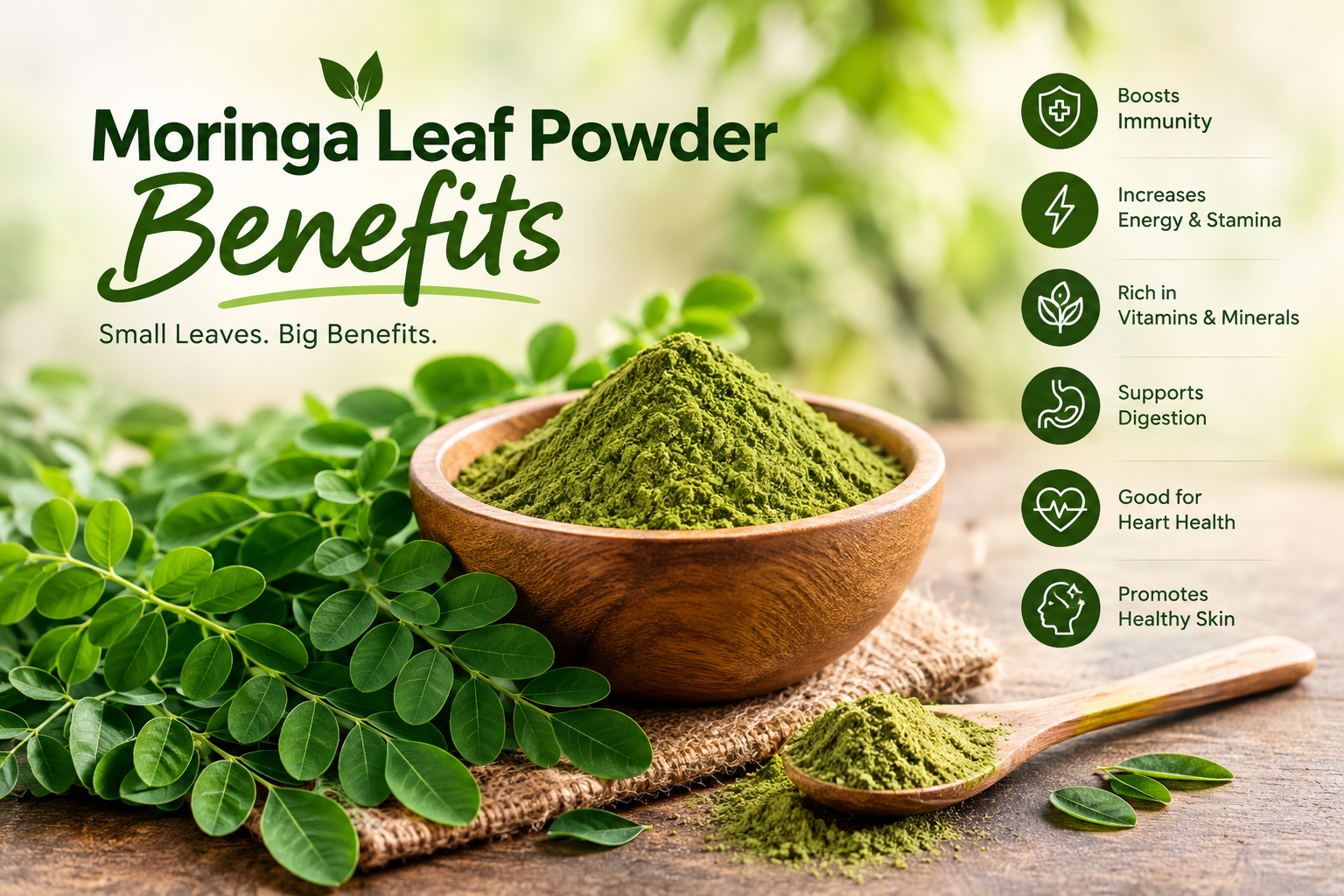
Moringa leaf powder is becoming a popular choice among Indian consumers looking to add more plant-based foods to their everyday diet. Made from the leaves of the moringa tree, it offers a convenient way to incorporate a traditional Indian plant into smoothies, curries, soups and other familiar recipes. The main moringa leaf powder benefits come from its naturally occurring nutrients and plant compounds, including antioxidants. However, its nutritional value depends on factors such as the quality of the leaves, processing methods, storage conditions and the amount consumed. Whether you are exploring natural food products for your family or looking for a simple ingredient to complement your meals, understanding moringa powder can help you make an informed choice. In this guide, we explain the potential benefits, practical ways to use it, what to look for when buying it and how to store it properly. What Is Moringa Leaf Powder? Moringa leaf powder is made by drying the leaves of Moringa oleifera and grinding them into a fine powder. The moringa tree grows in India and other tropical and subtropical regions and is also known by names such as drumstick tree and sahjan. While drumstick pods are commonly used in Indian cooking, the leaves are also valued as a food ingredient. Once dried and ground, they become easier to store and incorporate into different recipes. Moringa leaves naturally contain nutrients such as: Plant-based protein. Dietary fibre, depending on the product and serving. Vitamins and minerals, including certain B vitamins, vitamin C, calcium and iron. Plant compounds such as polyphenols and flavonoids, some of which have antioxidant activity. The actual nutrient content varies with growing conditions, leaf maturity, drying techniques and storage. The nutrient profile of a specific product should not be assumed without suitable nutritional information or laboratory testing. 7 Potential Moringa Leaf Powder Benefits Moringa can be a useful addition to a varied diet. However, it is important to distinguish its nutritional qualities from medical claims that have not been firmly established through human research. 1. Helps Add Plant-Based Nutrients to Your Diet One of the most practical moringa leaf powder benefits is that it provides a concentrated form of dried leafy greens in a convenient format. Many people find it difficult to include a variety of green vegetables in every meal. Moringa powder can offer another option for adding a plant-derived ingredient to everyday food. You can mix a small amount into a smoothie, stir it into a curry or combine it with other ingredients in a savoury dish. Practical tip: Use moringa alongside fresh vegetables, pulses, whole grains, fruits, nuts and seeds rather than relying on it as your main source of nutrition. 2. Contains Naturally Occurring Antioxidants Moringa leaves contain plant compounds, including polyphenols and flavonoids, that have antioxidant activity. Antioxidants help protect cells from oxidative damage caused by unstable molecules known as free radicals. However, the effects observed in laboratory studies do not automatically translate into specific health outcomes in people. The quantity and activity of these compounds can also vary according to how the leaves are processed and stored. Including moringa as part of a varied, plant-rich diet is a reasonable way to enjoy these naturally occurring compounds, but it should not be treated as a treatment for any illness. 3. Offers a Convenient Way to Enjoy Leafy Greens Fresh leafy vegetables are an important part of a balanced diet, but they may not always be available in the form you need or convenient to prepare. Moringa powder is lightweight, easy to measure and simple to mix into many dishes. This makes it a practical pantry ingredient for people who want more variety in their meals. It does not replace fresh spinach, methi, coriander or other vegetables. Each food has its own nutritional profile, and eating a range of vegetables remains important. 4. Can Complement a Balanced, Plant-Focused Diet Another potential advantage is its versatility in meals that already contain plant-based foods. For example, adding moringa powder to a lentil soup or vegetable curry can help diversify the ingredients in the dish. You can also combine it with oats, yoghurt or a fruit smoothie, depending on your dietary preferences. Moringa leaves contain protein and minerals, but the amount supplied by a typical serving of powder may be modest. It should not be considered a complete source of protein or a substitute for foods such as dal, beans, dairy, eggs, nuts or other suitable protein sources. The aim is to improve dietary variety, not to depend on one ingredient for all nutritional needs. 5. Makes Everyday Meals More Versatile Many health-conscious consumers prefer ingredients that fit easily into existing routines. Moringa powder can be used in both traditional Indian dishes and modern recipes. Its earthy, slightly bitter flavour works particularly well in savoury foods when used in modest quantities. Try adding it to: Dal and vegetable soups. Homemade chutneys and savoury dips. Vegetable curries and sauces. Smoothies and breakfast bowls. Dosa or cheela batter. Start with a small quantity and adjust according to taste and the product’s directions. 6. Provides an Alternative to Preparing Fresh Moringa Leaves Fresh moringa leaves require washing, preparation and cooking. Powder offers a different format for people who prefer a ready-to-use pantry ingredient. The convenience of dried powder can make it easier to add moringa to different recipes throughout the week. However, drying and processing can change the levels of certain nutrients. Powder should not automatically be assumed to have the same nutrient composition as fresh leaves. Choose a product with clear ingredient information, appropriate packaging and suitable food-safety controls. 7. Encourages More Variety in Daily Eating Habits Healthy eating is built through consistent habits rather than a single superfood. Using moringa powder in a few familiar recipes may encourage you to experiment with more plant-based ingredients. It can be one small part of a routine that includes regular meals, vegetables, fruits, adequate protein, whole grains and sufficient water. Research into moringa’s potential health effects is ongoing. Although
Moringa Powder Benefits: What Should You Know Before Using It?
Moringa powder has become increasingly popular among Indian consumers looking for simple, plant-based additions to their everyday diet. Made from the leaves of Moringa oleifera, commonly known as the drumstick tree or sahjan, the powder is valued for its nutritional profile and versatility. But what are the actual moringa powder benefits, and how much should you believe when you see health claims online? Moringa leaves contain a range of nutrients and naturally occurring plant compounds, including vitamins, minerals, polyphenols and other phytochemicals. Research has investigated moringa for several potential health effects, but evidence varies depending on the preparation used and the outcome being studied. Many studies have been laboratory or animal studies, so they should not automatically be interpreted as proof of a medical benefit in humans. For Indian households, the more practical question is often simpler: How can moringa powder be used as part of a balanced diet, and what should you look for when buying it? Let’s take a closer look. What Is Moringa Powder? Moringa powder is generally made by drying moringa leaves and grinding them into a fine powder. Moringa oleifera is native to the Indian subcontinent and is now cultivated in tropical and subtropical regions around the world. In India, the plant is familiar through its leaves and drumstick pods, which are already used in many regional cuisines. Unlike moringa seed powder or products made from other parts of the plant, moringa leaf powder specifically comes from the leaves. This distinction matters because different parts of the moringa plant can have different compositions and uses. A good-quality leaf powder should have a clean, characteristic green appearance and a fresh, plant-like aroma. More importantly, consumers should look beyond appearance and check the ingredient list, packaging, storage instructions and information provided by the seller. What Makes Moringa Leaves Nutritionally Interesting? One reason moringa has attracted attention is its combination of nutrients and naturally occurring bioactive compounds. Reviews of scientific literature report that moringa leaves contain various vitamins, minerals, amino acids and phytochemicals, including polyphenols and flavonoids. However, the nutritional value of a serving depends on factors such as: The part of the plant used Growing conditions Harvesting Drying and processing Storage Serving size The overall diet of the individual Therefore, moringa powder should be viewed as one food ingredient, rather than a replacement for a varied diet. 7 Moringa Powder Benefits Worth Knowing When discussing moringa powder benefits, it is important to separate nutritional facts from stronger health claims that may not yet have sufficient human evidence. Here are some of the practical and research-related points worth understanding. 1. It Can Add Plant-Based Nutrients to Your Diet Moringa leaves are naturally nutrient-dense and contain a mixture of vitamins, minerals and plant compounds. This is one of the main reasons moringa leaf products are used as food ingredients. Adding a small amount of moringa powder to an existing meal can therefore be a convenient way to introduce another plant-based ingredient into your diet. That said, it should complement other nutritious foods rather than replace vegetables, fruits, pulses, grains, nuts or other important food groups. 2. Moringa Contains Naturally Occurring Antioxidant Compounds Moringa leaves contain various polyphenols, flavonoids and other compounds that have demonstrated antioxidant activity in laboratory and research settings. Antioxidants are compounds that can help counter oxidative processes in biological systems. However, this does not mean that eating moringa powder will prevent or cure a particular disease. Research into antioxidant activity is promising, but laboratory findings should not be presented as guaranteed clinical outcomes. 3. It Is Easy to Include in Everyday Meals One of the most practical moringa powder benefits is convenience. You do not need to completely change your diet to use it. A small quantity can be incorporated into foods and drinks that you already enjoy. For example, you can add moringa powder to: Smoothies Water or other everyday drinks Yoghurt Oats Breakfast bowls Soups Curries Sauces Other suitable homemade recipes The Harbaaz Farm also suggests using its moringa leaf powder in drinks, smoothies, everyday meals, yoghurt, oats and breakfast bowls. 4. It Can Be a Convenient Pantry Ingredient Fresh moringa leaves are useful, but they are not always available or convenient to prepare. Powdered moringa provides a shelf-stable form that can be kept in the kitchen and used when needed. For busy Indian households, this can make it easier to incorporate a small amount of a leafy plant ingredient into meals without washing and preparing fresh leaves each time. 5. Moringa Has a Long Food and Traditional History Moringa is not a newly discovered plant. Its leaves, pods and other parts have been used in food and traditional practices for generations, particularly across South Asia and other tropical regions. Scientific reviews also recognise its long history of nutritional and traditional use. This traditional familiarity is one reason moringa remains an interesting food ingredient in India. At the same time, traditional use and modern clinical evidence are not the same thing. A traditional food can be valuable without every health claim associated with it being scientifically established. 6. It Contains a Variety of Plant Compounds Research has identified numerous naturally occurring compounds in moringa leaves, including phenolic compounds, flavonoids, glucosinolates and other phytochemicals. This broad phytochemical profile is one reason scientists continue to study moringa. Research has explored possible effects involving areas such as glucose metabolism, lipid metabolism and oxidative stress. However, reviews also highlight the need for larger and better-designed human studies before firm conclusions can be made about many specific health outcomes. 7. It Fits Different Eating Habits Moringa leaf powder is relatively versatile. Whether you prefer a morning smoothie, a bowl of oats, homemade soup or a traditional meal, the powder can be incorporated in different ways. This flexibility may be particularly useful for people who want to add more plant-based ingredients to their regular meals without following a complicated routine. How to Use Moringa Powder in Your Daily Diet There is no need to make