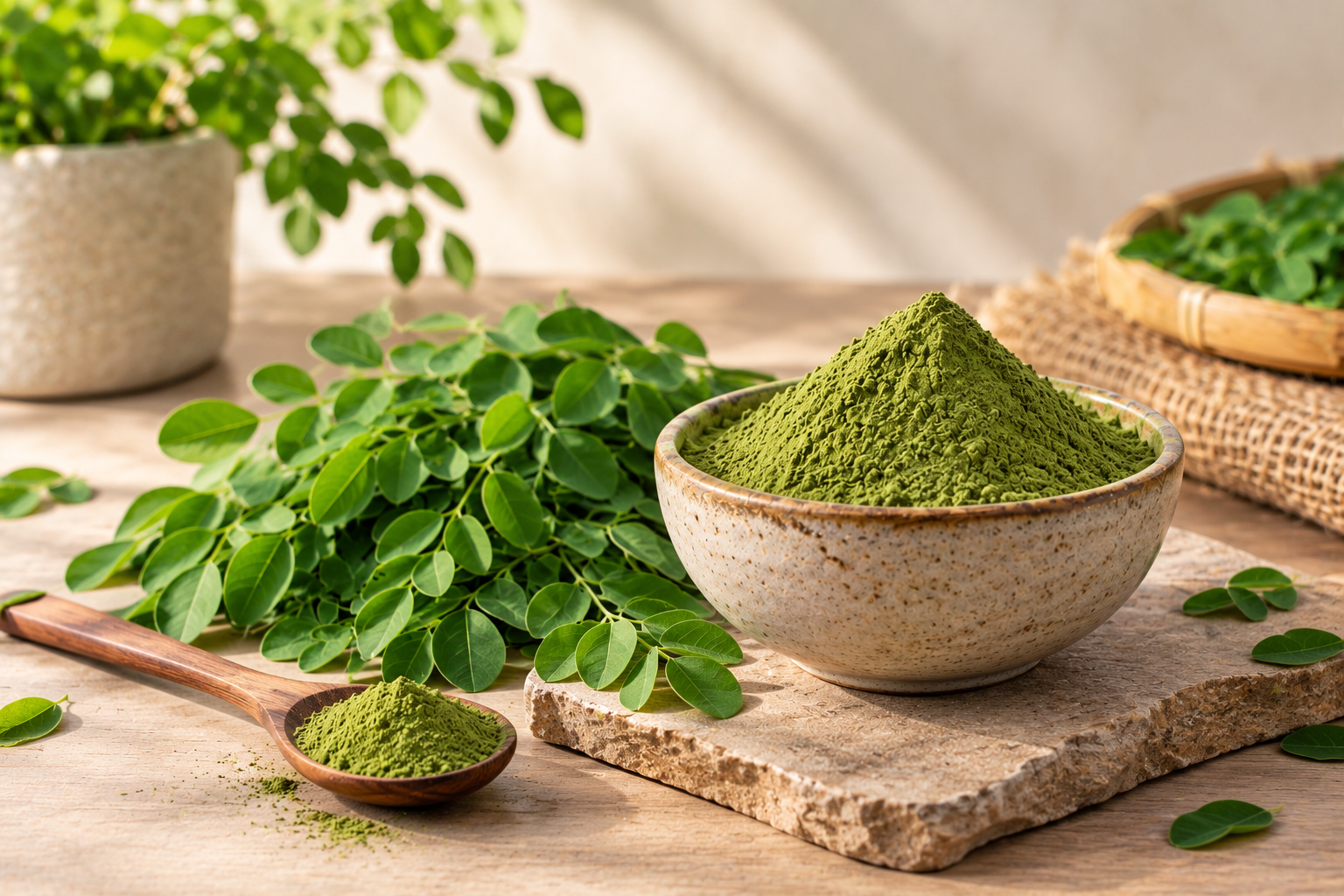
Moringa leaf powder has become a popular choice among Indian consumers looking to include more plant-based foods in their everyday diets. Made from dried moringa leaves, this green powder can be added to drinks, smoothies, curries and other recipes. However, with different products available online and in stores, knowing how to identify pure moringa leaf powder is important before making a purchase.
The quality of moringa powder depends on several factors, including the ingredients, sourcing, processing methods, packaging and storage conditions. A product’s colour or price alone cannot confirm its purity, so it is worth looking beyond the label and promotional claims.
Whether you are buying moringa powder for your family or exploring natural farm-based food products, this guide will help you understand what to check before ordering.
What Is Pure Moringa Leaf Powder?
Moringa leaf powder is made by drying the leaves of the moringa tree (Moringa oleifera) and grinding them into a fine powder. The tree is commonly known as the drumstick tree in India, where its leaves are also used in traditional cooking.
A pure product should contain moringa leaf powder as its only ingredient, without unnecessary fillers, added colours, flavours or other plant powders.
However, the word “pure” on a package is not sufficient proof by itself. Buyers should review the ingredient list, manufacturer information, food-safety details and product packaging before deciding.
It is also important to distinguish between moringa leaf powder and drumstick pod powder. Both come from the same plant, but they are made from different parts and should not be treated as interchangeable products.
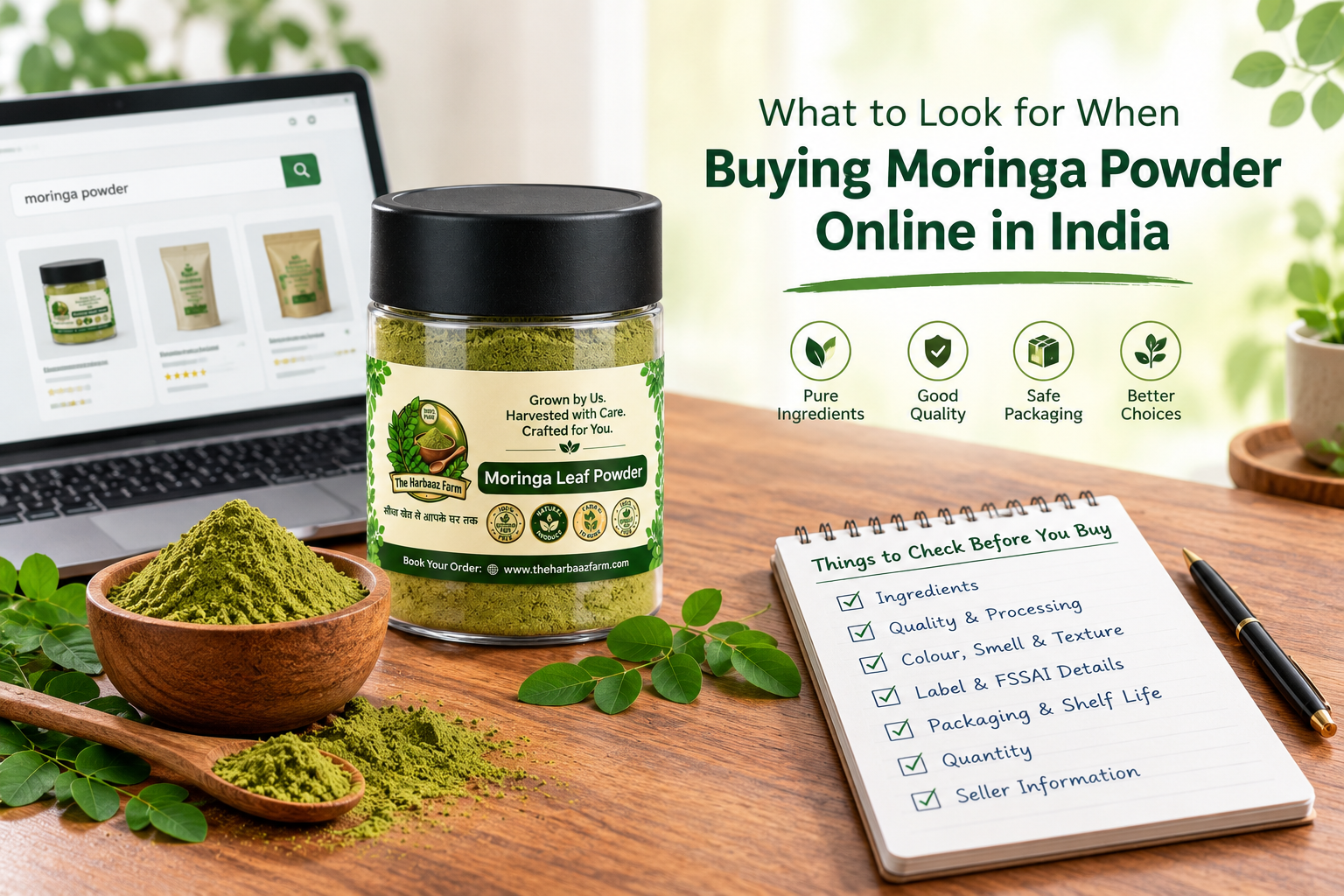
8 Things to Check When Choosing Pure Moringa Leaf Powder
1. Read the Ingredient List Carefully
The ingredient list is one of the first things to check when buying moringa powder online or from a local shop.
If your preference is a single-ingredient product, look for a label that lists only moringa leaves or moringa leaf powder.
Check whether the product contains:
Added colours or artificial colouring agents.
Added flavours or sweeteners.
Other vegetable or leaf powders.
Fillers that change the composition of the product.
Ingredients that are not clearly explained on the packaging.
Not every additional ingredient is automatically unsafe, but it may mean that the product is not the single-ingredient powder you are looking for.
Buying tip: Choose a product with a clear ingredient declaration rather than relying only on phrases such as “natural,” “premium” or “herbal.”
2. Look at the Colour, but Do Not Judge by Colour Alone
Moringa leaf powder commonly has a green appearance, but its exact shade can vary.
Factors such as leaf maturity, drying conditions, processing and storage can affect its colour. Therefore, two genuine products may not look exactly alike.
When examining a product, look for any available photographs that show the actual powder in natural lighting. Once you receive the pack, check whether its appearance seems consistent with the product description.
Be cautious if the powder has an unusual appearance accompanied by other warning signs, such as damaged packaging, moisture or an unexpected odour.
Remember that a bright green colour does not prove purity. Artificial colouring or image enhancement can make a product appear more attractive, so colour should never be your only quality test.
3. Check the Aroma and Freshness
Moringa powder generally has a leafy, earthy, plant-like aroma. The intensity can vary depending on the leaves and processing conditions.
When you open a new pack, notice whether the smell is consistent with dried leaves. An unusual chemical-like, musty or rancid smell should prompt caution, especially if the powder has also been exposed to moisture or stored in damaged packaging.
Do not taste a product to determine its safety if it shows signs of spoilage or contamination.
Freshness is influenced by processing, packaging and storage. A powder that was carefully prepared can still deteriorate if it is exposed to humidity, heat or air for long periods.
4. Understand How the Leaves Are Processed
The journey from fresh leaves to finished powder can influence product quality.
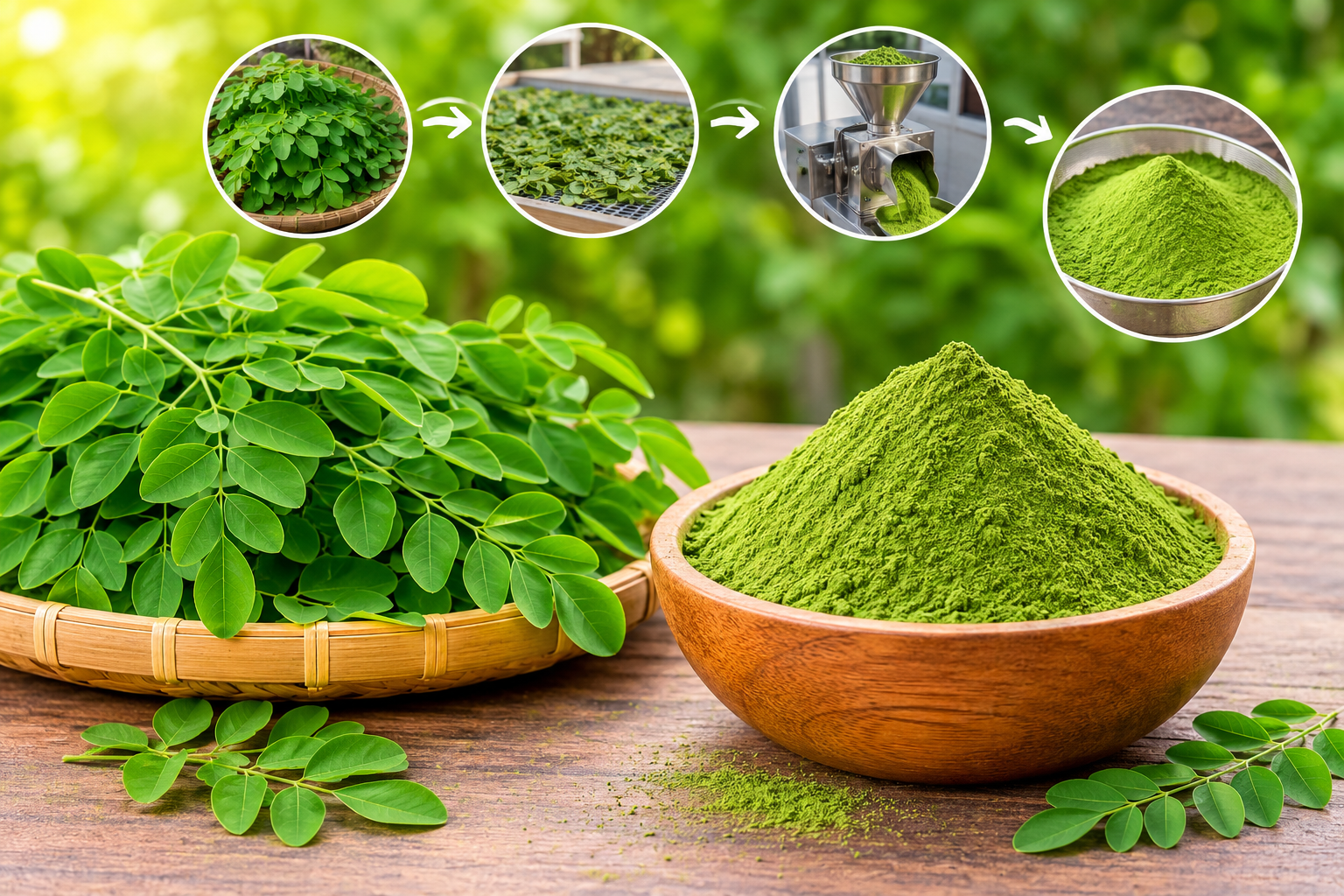
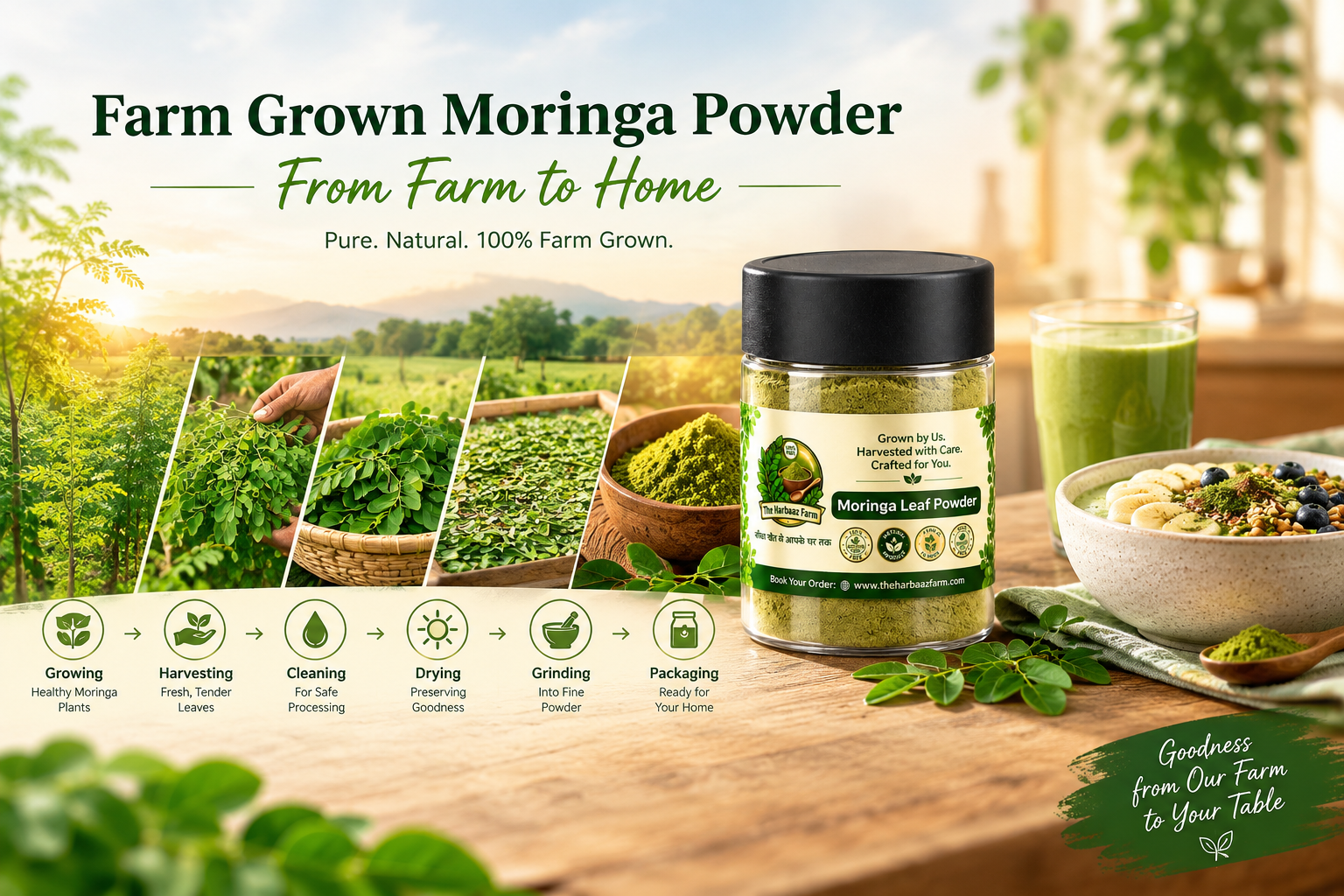
A typical production process involves harvesting, cleaning, drying, grinding and packaging. Each stage needs appropriate handling to minimise contamination and protect the product from moisture.
Here are some useful questions to consider:
Are the leaves cleaned before processing?
Is the drying process explained clearly?
Is the powder handled hygienically?
Is the packaging suitable for protecting a dry food product?
Does the seller provide transparent information about its production process?
Drying deserves particular attention because moisture can encourage spoilage during storage. However, a product description that mentions a specific drying method should be supported by reliable information rather than assumptions.
A transparent supplier should be able to explain its general process and answer reasonable questions about product handling.
5. Check the Source and Manufacturer Details
Knowing who makes or sells a food product helps you make a more informed decision.
When choosing pure moringa leaf powder, look for clear information about the business responsible for the product. Depending on the packaging and applicable requirements, this may include the manufacturer’s or packer’s name, address, customer contact details and relevant food-business registration information.
Also consider whether the seller explains where the leaves come from and how the product moves from sourcing to packaging.
A farm-based brand may offer more information about its production journey than a listing that provides only a product photograph and a few promotional claims.
The Harbaaz Farm is a farm-based brand that presents its moringa leaf powder through a farm-to-home approach, with an emphasis on harvesting, cleaning, drying, grinding and careful packaging.
You can explore the product and its available information on The Harbaaz Farm’s Moringa Leaf Powder page.
6. Verify Food-Safety and Label Information
In India, packaged food products should be assessed against the food-labelling and safety requirements applicable to their category.
Before purchasing, check the package for relevant details, such as:
Ingredient declaration.
Net quantity.
Batch or lot identification.
Date marking, including the applicable best-before or expiry information.
Manufacturer, packer or marketer details, as applicable.
Storage instructions.
MRP and consumer-care details, where required.
Applicable FSSAI licence or registration information.
The precise labelling requirements depend on the product and how it is marketed. Do not assume that a package is compliant merely because it displays a registration number or logo.
Where necessary, verify the relevant details through official channels. A food-business licence or registration is also not, by itself, proof that every batch has been independently tested for purity.
If a seller makes specific claims about laboratory testing, pesticide residues, heavy metals or microbiological quality, ask whether appropriate documentation is available.
7. Examine the Packaging Before Buying
Packaging helps protect dried leaf powder during transport and storage.
Prefer an intact, properly sealed pack that protects the contents from moisture, dust and unnecessary exposure to air. The material and closure should be suitable for the food product.
Avoid purchasing packs that appear torn, punctured, damp, unsealed or tampered with.
For online purchases, review the seller’s product photographs and packaging information before placing an order. After delivery, inspect the seal and product details before opening the pack.
Also consider the quantity you can reasonably use within the stated storage period. Buying a very large pack may not be economical if the powder remains open for months in a humid kitchen.
8. Compare Value, Not Just Price
A low price does not necessarily mean a good purchase, and a high price does not automatically indicate superior quality.
When comparing moringa powders, consider the following factors:
| Factor | What to check |
|---|---|
| Ingredients | Is it a single-ingredient product? |
| Quantity | How much powder is included in the pack? |
| Sourcing | Is the source or supplier clearly identified? |
| Processing | Is the handling process explained? |
| Packaging | Is the pack sealed and suitable for dry food? |
| Labelling | Are the required product details available? |
| Seller support | Can you contact the seller with questions? |
| Price per gram | How does the price compare for a similar quantity? |
For a fair comparison, divide the price by the net weight to calculate the cost per gram. Then compare products with similar ingredients, packaging and quality information.
This approach helps you assess value without treating price as a guarantee of purity.
Why Does Processing Matter for Moringa Powder?
Moringa leaves contain naturally occurring plant compounds and nutrients. Their composition in the finished powder can be influenced by factors such as growing conditions, leaf maturity, processing, storage and exposure to heat, air and moisture.
The objective of careful processing is to produce a clean, stable, usable powder while maintaining appropriate food hygiene.
A simple production journey generally looks like this:
Harvesting: Suitable moringa leaves are collected.
Cleaning: The leaves are cleaned to remove dirt and unwanted material.
Drying: Moisture is reduced under appropriate conditions.
Grinding: The dried leaves are ground into a powder.
Packaging: The powder is packed to help protect it during storage and distribution.
This sequence is useful to understand when assessing a supplier. However, a description of the process alone does not establish a product’s nutrient levels, pesticide status or microbiological safety. Such claims require appropriate evidence.
How to Use Pure Moringa Leaf Powder in Everyday Indian Meals
Once you have selected a suitable product, it can be incorporated into a variety of foods according to your taste and dietary preferences.
Here are some practical ideas:
Mix It Into a Drink
Stir a small amount into water or another preferred drink. Moringa has a distinctive leafy flavour, so you may want to begin with a small quantity.
Add It to Smoothies
Blend the powder with fruit and other smoothie ingredients. Banana, for example, can help balance the earthy flavour.
Include It in Soups and Curries
You can experiment with adding a little powder to suitable soups, gravies or vegetable dishes. Follow the product instructions and consider when it should be added during cooking.
Sprinkle It Over Breakfast Foods
Some people prefer mixing moringa powder into yoghurt, oats or a breakfast bowl.
How much should you use? Follow the directions on the product label rather than assuming that a larger serving provides greater benefits. If you have a medical condition, take regular medicines, are pregnant or breastfeeding, or are considering giving it to a child, seek advice from a qualified healthcare professional before making concentrated moringa powder a regular part of the diet.
Moringa powder is a food ingredient, not a substitute for prescribed treatment, a balanced diet or professional medical advice.
How to Store Moringa Leaf Powder After Opening
Even a well-made product needs proper storage after purchase.
Use these simple precautions:
Keep the powder in its original pack if it can be resealed securely.
Close the pack immediately after use.
Store it in a cool, dry place away from direct sunlight.
Use a clean, completely dry spoon.
Keep the powder away from steam, water and damp kitchen surfaces.
Follow the manufacturer’s storage instructions and use it within the stated period.
Avoid storing an open pack next to a cooking hob or in a location where condensation may form.
If the powder develops an unusual smell, visible mould, unexpected moisture or other signs of spoilage, stop using it. Do not try to make a questionable product safe by heating it or mixing it with other foods.
Common Mistakes to Avoid When Buying Moringa Powder
Even careful shoppers can overlook important details. Avoid these common mistakes:
Trusting the word “pure” without checking ingredients: Read the complete label.
Choosing only by colour: Appearance cannot establish purity.
Assuming “natural” means certified organic: Organic status requires appropriate certification or other valid substantiation under the applicable rules.
Ignoring the source: Check who is responsible for making or selling the product.
Overlooking the batch and date information: These details help you identify and assess the pack.
Believing every health claim: Be cautious about promises to cure disease, rapidly improve energy or deliver guaranteed results.
Buying more than you can store properly: Choose a pack size that suits your usage and storage conditions.
A few minutes spent checking these details can help you make a more informed purchasing decision.
Why Consider The Harbaaz Farm?
For consumers looking for farm-based food products, The Harbaaz Farm offers Moringa Leaf Powder through its farm-to-home approach.
The brand describes a process that includes harvesting, cleaning, drying, grinding and packaging, with an emphasis on careful handling and product quality. Its website also provides information about the product and ways to contact the business directly.
When evaluating any supplier, including The Harbaaz Farm, review the current product description, ingredient details, package information and applicable food-safety information before ordering.
You can visit The Harbaaz Farm’s product page to explore its Moringa Leaf Powder. If you have questions about pack size, ordering or delivery, contact the business through its website or available customer-contact channels.
The aim is not simply to find a product with attractive packaging, but to choose one whose ingredients, handling and labelling meet your expectations.
Frequently Asked Questions
Start by checking the ingredient list, product label, seller details and packaging. A single-ingredient product should list moringa leaf powder without unnecessary additions. Colour and aroma may provide observations about the product, but neither can independently confirm purity.
Moringa powder is generally green, but the shade can vary with the leaves, processing and storage conditions. A bright green colour alone does not establish quality or authenticity.
Not necessarily. Moringa leaf powder is made from the leaves of the moringa tree, whereas drumstick pod powder is made from its pods. Check the ingredient declaration to confirm which part of the plant is used.
Organic certification relates to how a product is produced and handled under the applicable standards. It does not automatically establish every aspect of quality or safety. Consider certification, ingredients, traceability, processing and packaging together.
Yes, moringa leaf powder is available through online sellers and brand websites. Before ordering, check the ingredient list, net quantity, seller information, applicable food-safety details, packaging and delivery terms.
Conclusion
Choosing pure moringa leaf powder involves more than checking a product’s colour, price or marketing claims. Look for a clear ingredient list, transparent sourcing information, careful processing, intact packaging and complete product labelling. Consider the seller’s responsiveness and compare products on the basis of both quality information and value.
For Indian consumers, these practical checks provide a useful starting point when comparing moringa powders for everyday food use. Store the product correctly, follow the label instructions and treat exaggerated health promises with caution.
If you are exploring a farm-based option, visit The Harbaaz Farm to learn more about its Moringa Leaf Powder and review the available product details before ordering.