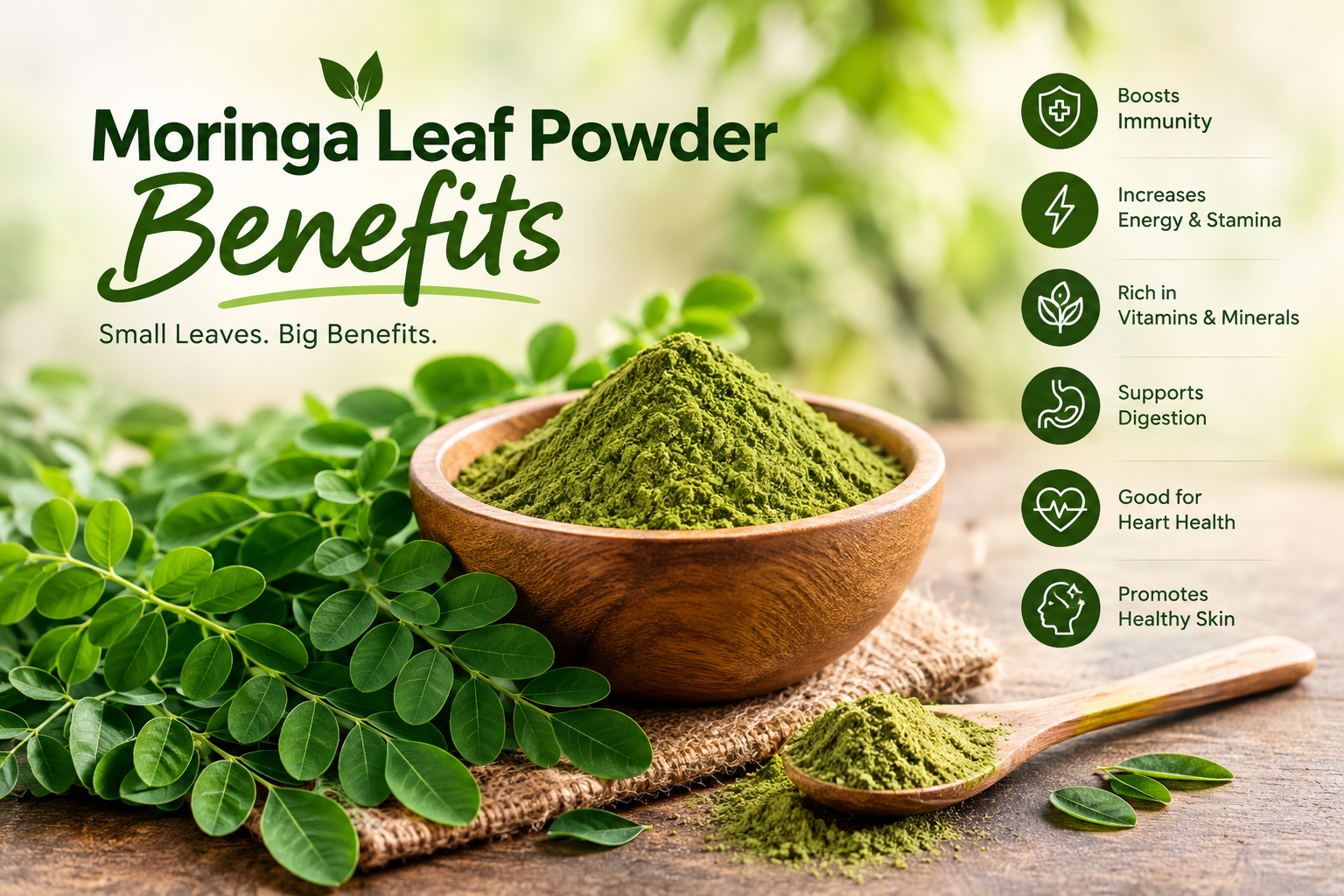
Moringa leaf powder is becoming a popular choice among Indian consumers looking to add more plant-based foods to their everyday diet. Made from the leaves of the moringa tree, it offers a convenient way to incorporate a traditional Indian plant into smoothies, curries, soups and other familiar recipes.
The main moringa leaf powder benefits come from its naturally occurring nutrients and plant compounds, including antioxidants. However, its nutritional value depends on factors such as the quality of the leaves, processing methods, storage conditions and the amount consumed.
Whether you are exploring natural food products for your family or looking for a simple ingredient to complement your meals, understanding moringa powder can help you make an informed choice.
In this guide, we explain the potential benefits, practical ways to use it, what to look for when buying it and how to store it properly.
What Is Moringa Leaf Powder?
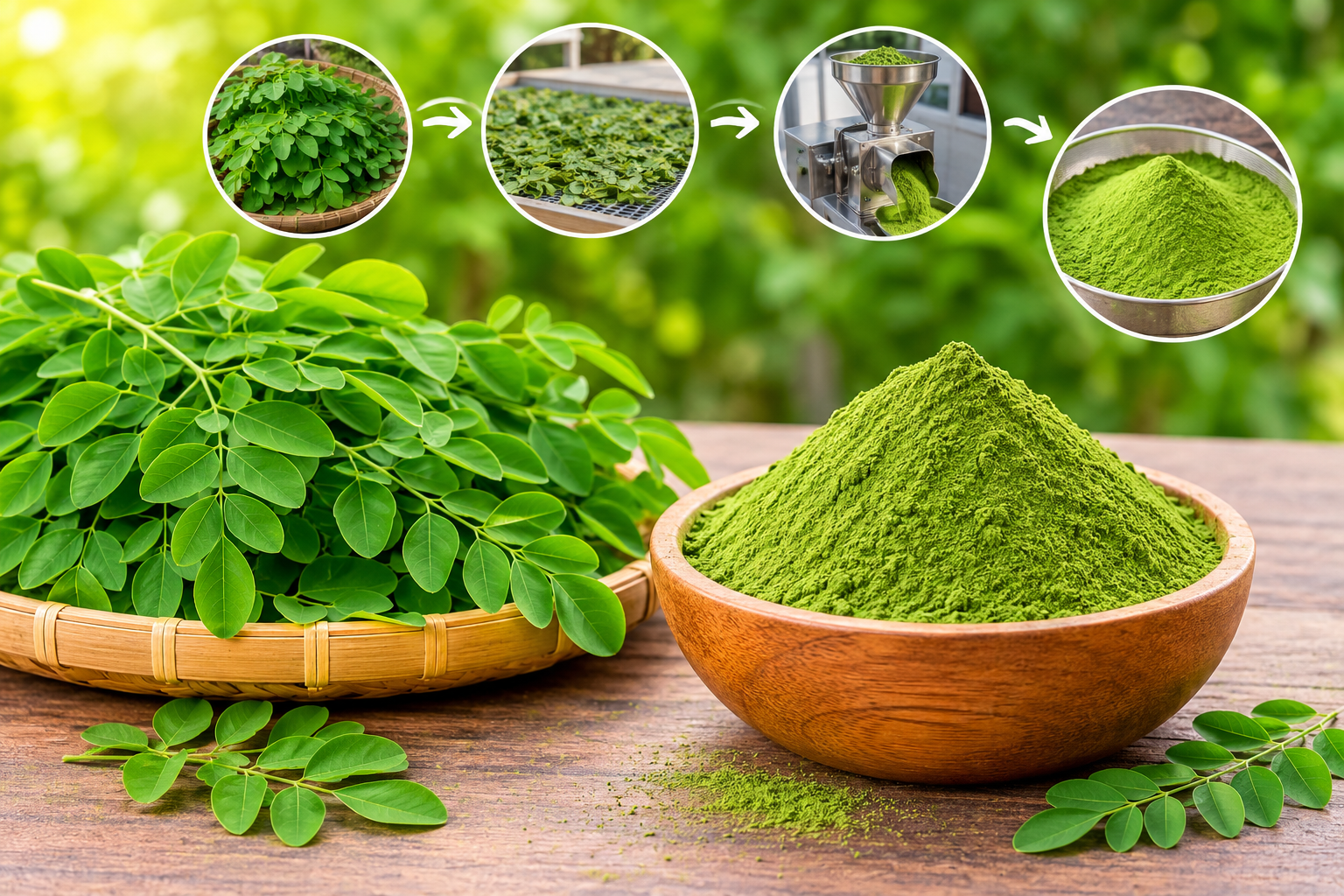
Moringa leaf powder is made by drying the leaves of Moringa oleifera and grinding them into a fine powder. The moringa tree grows in India and other tropical and subtropical regions and is also known by names such as drumstick tree and sahjan.
While drumstick pods are commonly used in Indian cooking, the leaves are also valued as a food ingredient. Once dried and ground, they become easier to store and incorporate into different recipes.
Moringa leaves naturally contain nutrients such as:
- Plant-based protein.
- Dietary fibre, depending on the product and serving.
- Vitamins and minerals, including certain B vitamins, vitamin C, calcium and iron.
- Plant compounds such as polyphenols and flavonoids, some of which have antioxidant activity.
The actual nutrient content varies with growing conditions, leaf maturity, drying techniques and storage. The nutrient profile of a specific product should not be assumed without suitable nutritional information or laboratory testing.
7 Potential Moringa Leaf Powder Benefits
Moringa can be a useful addition to a varied diet. However, it is important to distinguish its nutritional qualities from medical claims that have not been firmly established through human research.
1. Helps Add Plant-Based Nutrients to Your Diet
One of the most practical moringa leaf powder benefits is that it provides a concentrated form of dried leafy greens in a convenient format.
Many people find it difficult to include a variety of green vegetables in every meal. Moringa powder can offer another option for adding a plant-derived ingredient to everyday food.
You can mix a small amount into a smoothie, stir it into a curry or combine it with other ingredients in a savoury dish.
Practical tip: Use moringa alongside fresh vegetables, pulses, whole grains, fruits, nuts and seeds rather than relying on it as your main source of nutrition.
2. Contains Naturally Occurring Antioxidants
Moringa leaves contain plant compounds, including polyphenols and flavonoids, that have antioxidant activity.
Antioxidants help protect cells from oxidative damage caused by unstable molecules known as free radicals. However, the effects observed in laboratory studies do not automatically translate into specific health outcomes in people.
The quantity and activity of these compounds can also vary according to how the leaves are processed and stored.
Including moringa as part of a varied, plant-rich diet is a reasonable way to enjoy these naturally occurring compounds, but it should not be treated as a treatment for any illness.
3. Offers a Convenient Way to Enjoy Leafy Greens
Fresh leafy vegetables are an important part of a balanced diet, but they may not always be available in the form you need or convenient to prepare.
Moringa powder is lightweight, easy to measure and simple to mix into many dishes. This makes it a practical pantry ingredient for people who want more variety in their meals.
It does not replace fresh spinach, methi, coriander or other vegetables. Each food has its own nutritional profile, and eating a range of vegetables remains important.
4. Can Complement a Balanced, Plant-Focused Diet
Another potential advantage is its versatility in meals that already contain plant-based foods.
For example, adding moringa powder to a lentil soup or vegetable curry can help diversify the ingredients in the dish. You can also combine it with oats, yoghurt or a fruit smoothie, depending on your dietary preferences.
Moringa leaves contain protein and minerals, but the amount supplied by a typical serving of powder may be modest. It should not be considered a complete source of protein or a substitute for foods such as dal, beans, dairy, eggs, nuts or other suitable protein sources.
The aim is to improve dietary variety, not to depend on one ingredient for all nutritional needs.
5. Makes Everyday Meals More Versatile
Many health-conscious consumers prefer ingredients that fit easily into existing routines. Moringa powder can be used in both traditional Indian dishes and modern recipes.
Its earthy, slightly bitter flavour works particularly well in savoury foods when used in modest quantities.
Try adding it to:
- Dal and vegetable soups.
- Homemade chutneys and savoury dips.
- Vegetable curries and sauces.
- Smoothies and breakfast bowls.
- Dosa or cheela batter.
Start with a small quantity and adjust according to taste and the product’s directions.
6. Provides an Alternative to Preparing Fresh Moringa Leaves
Fresh moringa leaves require washing, preparation and cooking. Powder offers a different format for people who prefer a ready-to-use pantry ingredient.
The convenience of dried powder can make it easier to add moringa to different recipes throughout the week.
However, drying and processing can change the levels of certain nutrients. Powder should not automatically be assumed to have the same nutrient composition as fresh leaves.
Choose a product with clear ingredient information, appropriate packaging and suitable food-safety controls.
7. Encourages More Variety in Daily Eating Habits
Healthy eating is built through consistent habits rather than a single superfood.
Using moringa powder in a few familiar recipes may encourage you to experiment with more plant-based ingredients. It can be one small part of a routine that includes regular meals, vegetables, fruits, adequate protein, whole grains and sufficient water.
Research into moringa’s potential health effects is ongoing. Although some early studies are promising, the available human evidence remains limited, and more rigorous research is needed to establish specific health benefits.
Important: Moringa leaf powder is a food ingredient, not a proven cure or replacement for medical treatment.
Moringa Leaf Powder Nutrition: What Should You Know?
The nutritional profile of moringa powder depends on the source material, processing and serving size.
| Nutritional component | What it means |
|---|---|
| Plant protein | Contributes to overall protein intake, depending on the amount consumed |
| Dietary fibre | May contribute to fibre intake, depending on the product and serving |
| Vitamins | Moringa leaves contain various vitamins, but levels can change during processing |
| Minerals | Leaves may provide minerals such as calcium and iron |
| Plant antioxidants | Includes compounds such as polyphenols and flavonoids |
These are general characteristics of moringa leaves, not a guaranteed nutritional analysis of every product.
Before buying, check whether the packaging provides a nutrition panel, serving information, ingredient list, batch details and an appropriate best-before date.
If you are using moringa specifically to address a nutrient deficiency, consult a qualified healthcare professional rather than assuming the powder will meet your requirements.
How to Use Moringa Leaf Powder in Your Daily Diet
One of the most useful aspects of moringa powder is its flexibility. You do not need to change your entire eating routine to try it.
1. Mix It Into a Drink
Stir a small quantity into water or blend it with lemon water. You can also add it to a fruit smoothie to balance its earthy flavour.
2. Add It to Dal and Curries
Mix the powder into a suitable curry, soup or dal near the end of cooking. Stir thoroughly to distribute it evenly and follow the product’s food-preparation instructions.
3. Include It in Breakfast
Combine a small amount with oats, a breakfast bowl or a savoury cheela mixture. If using yoghurt, mix well to avoid clumps.
4. Experiment With Homemade Recipes
Moringa powder can be incorporated into chutneys, sauces and other homemade preparations. Start with a small amount because its flavour can become quite strong.
How Much Moringa Powder Should You Use?
There is no single universally established serving size for everyone. Product concentration, intended use, individual circumstances and the manufacturer’s directions all matter.
If you are trying it for the first time, follow the serving instructions on the product label and avoid assuming that larger quantities will provide greater benefits.
People taking medication or managing a medical condition should discuss regular use with a healthcare professional.
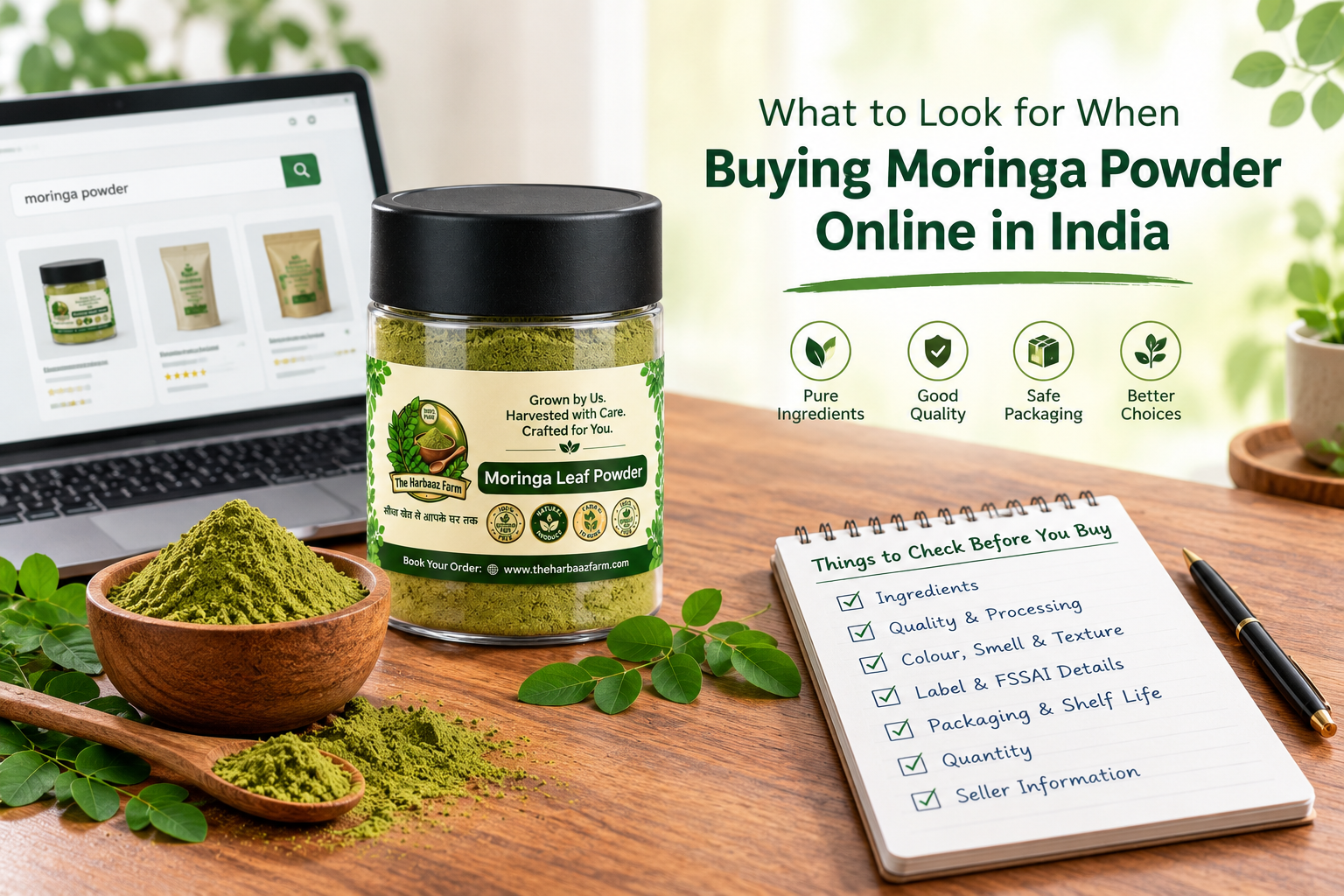
How to Choose Quality Moringa Leaf Powder in India
The quality of the product matters just as much as its intended use. A green appearance or a natural-sounding label alone cannot prove purity, freshness or food safety.
Keep these factors in mind when comparing products.
1. Check the Ingredients
Look for a clearly stated ingredient list. If you want plain moringa powder, confirm that the product contains only the ingredients you expect.
Do not assume that a product is certified organic simply because it is described as natural or plant-based.
2. Review Food-Safety and Traceability Information
Choose products from sellers that provide clear business details, appropriate food-business information, batch identification and accessible customer support.
Where applicable, check the FSSAI licence or registration details and verify them through official resources. A licence is not, by itself, proof that every batch has been independently tested.
Dried plant powders can be contaminated if harvesting, processing, handling or storage is inadequate. Hygienic processing and suitable moisture control are important.
3. Examine the Packaging
Prefer packaging that is properly sealed, intact and suitable for protecting a dry food product from moisture.
Check the manufacturing or packing details, best-before date and storage instructions before use.
4. Consider the Brand’s Transparency
A trustworthy seller should explain what the product contains and provide practical information about its use and storage.
Avoid relying on unsupported claims such as guaranteed weight loss, disease treatment or immediate improvements in energy.
5. Compare Value, Not Just Price
Compare the net quantity, ingredients, serving guidance, packaging and available product information.
The cheapest option is not necessarily the best choice, especially when product traceability and food safety are important considerations.
How The Harbaaz Farm Approaches Moringa Leaf Powder
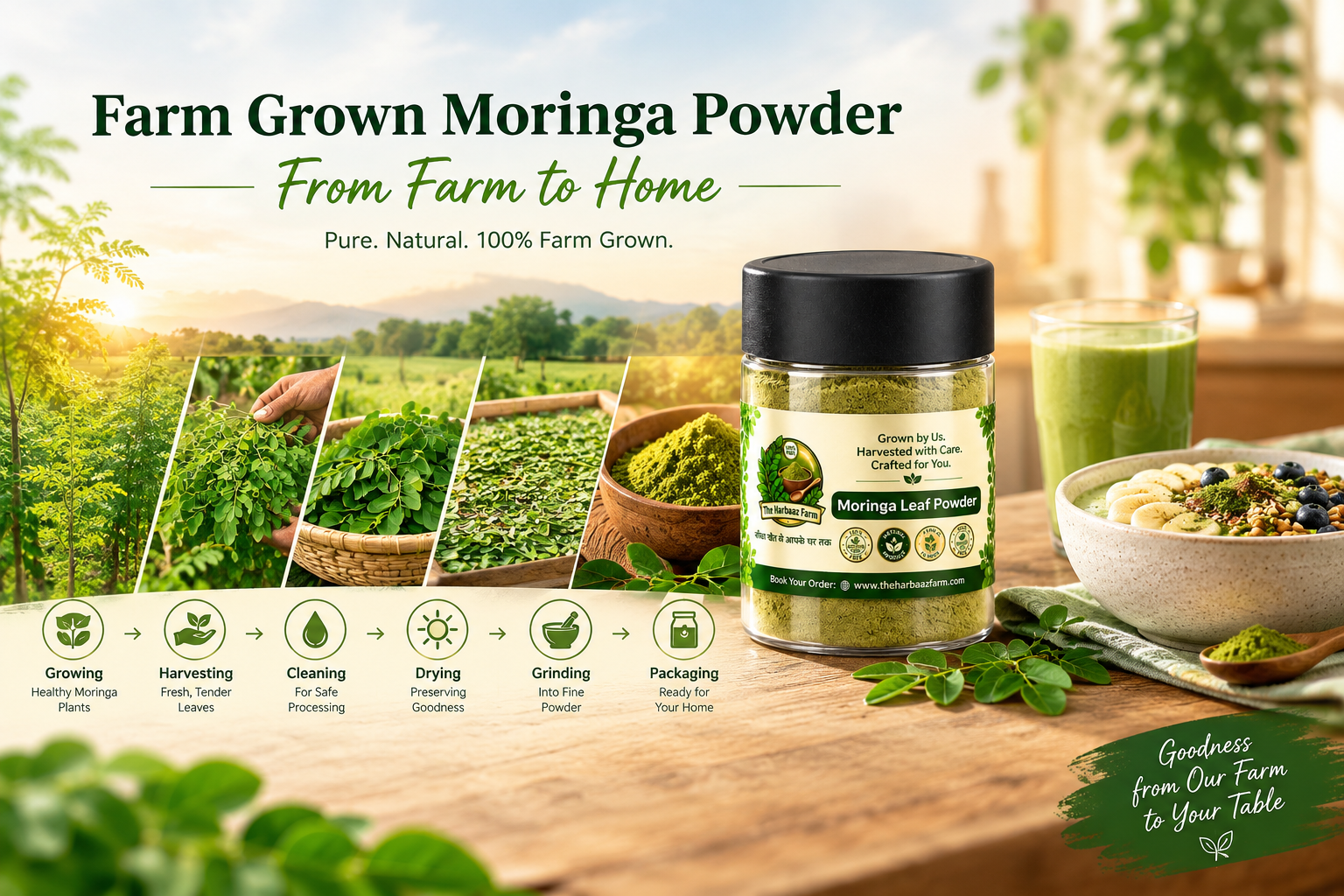
The Harbaaz Farm is a farm-based food brand focused on bringing natural, farm-based products closer to consumers.
According to its website, the business was started by two friends with a vision of offering pure, natural and farm-fresh products. Its current product offering includes Moringa Leaf Powder, with the brand describing its approach around cultivation, careful processing and packaging.
When choosing any moringa product, consumers should review the available product information and packaging details to understand its ingredients, quality considerations and intended use.
If you are exploring moringa powder for your kitchen, visit The Harbaaz Farm to learn more about its Moringa Leaf Powder and review the available product details before ordering.
Storage Tips for Moringa Leaf Powder
Proper storage helps protect the quality of dried plant powders.
Follow these simple steps:
- Keep it dry: Moisture can cause clumping and increase the risk of spoilage or contamination.
- Seal the package: Close the pouch or container securely after each use.
- Store it away from heat: Keep the product in a cool, dry place, away from direct sunlight and cooking steam.
- Use a clean, dry spoon: Avoid introducing water or food particles into the container.
- Check the product regularly: Follow the best-before date and discard the powder if its packaging is damaged or you notice signs of spoilage.
Do not rely on colour or smell alone to determine whether a product is microbiologically safe. Follow the label’s storage instructions and use products from sources that take food safety seriously.
Safety Considerations Before Using Moringa Powder
Although moringa leaves are used as food, concentrated or regular consumption may not be suitable for everyone.
Keep the following points in mind:
- Pregnancy and breastfeeding: Consult a qualified healthcare professional before using moringa powder regularly or in concentrated amounts.
- Medication use: If you take medicines, particularly for blood sugar or blood pressure, ask your healthcare professional whether moringa is appropriate for you.
- Existing health conditions: Seek professional advice before adding it regularly to your diet if you have a medical condition or specific dietary restrictions.
- Allergies or digestive discomfort: Stop using the product if you experience an adverse reaction and seek medical advice when appropriate.
- Children: Do not assume adult serving guidance is suitable for children. Consult a paediatric healthcare professional before using it as a supplement.
- Food hygiene: Choose products with suitable handling and storage practices. Do not use recalled products or products with damaged packaging.
Research on moringa is still developing, and evidence from laboratory experiments or animal studies cannot establish that the same effects will occur in humans.
Moringa powder should complement a balanced diet, not replace prescribed medicines, professional advice or medically recommended treatment.
Frequently Asked Questions
Moringa leaf powder contains naturally occurring plant nutrients and antioxidant compounds. It can be a convenient addition to a varied diet and is easy to use in drinks and meals. Specific medical benefits have not been firmly established by high-quality human research.
Regular use may be suitable for some adults, depending on the product, serving size and individual circumstances. Follow the product label and consult a healthcare professional if you take medicines, have a medical condition, are pregnant or are breastfeeding.
There is no universally established best time to consume moringa powder. You can incorporate it into breakfast, a smoothie or a regular meal according to your preferences and the product's instructions.
There is insufficient high-quality human evidence to recommend moringa leaf powder as a weight-loss treatment. Sustainable weight management depends on overall dietary habits, physical activity, sleep and individual health factors.
You can incorporate it into suitable cooked dishes, such as soups and curries. Follow the product's preparation instructions and stir it in thoroughly. Cooking may change some heat-sensitive nutrients, and suitable food-safety practices remain important.
Conclusion
The most practical moringa leaf powder benefits relate to its naturally occurring plant nutrients, antioxidant compounds and versatility as a food ingredient. It offers a convenient way to add variety to everyday meals, whether you prefer smoothies, breakfast bowls, dal or homemade curries.
However, moringa powder is not a miracle food. Its nutritional contribution depends on the product and serving size, while evidence for many specific health claims remains limited. Good food hygiene, appropriate storage and realistic expectations are essential when choosing any dried plant powder.
For Indian consumers interested in farm-based food products, the best approach is to select products with clear ingredient information, suitable packaging and transparent business details.
Explore The Harbaaz Farm to learn more about its Moringa Leaf Powder and decide whether it fits your everyday cooking routine.
A simple principle to remember: Choose quality ingredients, enjoy dietary variety and make informed food choices for the long term.